Subsidence cracks: signs, settlement and when to get help
Subsidence is downward movement caused by a change in the ground supporting a building’s foundations. Settlement is different: it can occur as the weight of a building compresses the supporting ground. Heave is upward movement, which can happen when shrinkable clay takes up moisture. The distinction matters because the same repair is not appropriate for every type of movement.
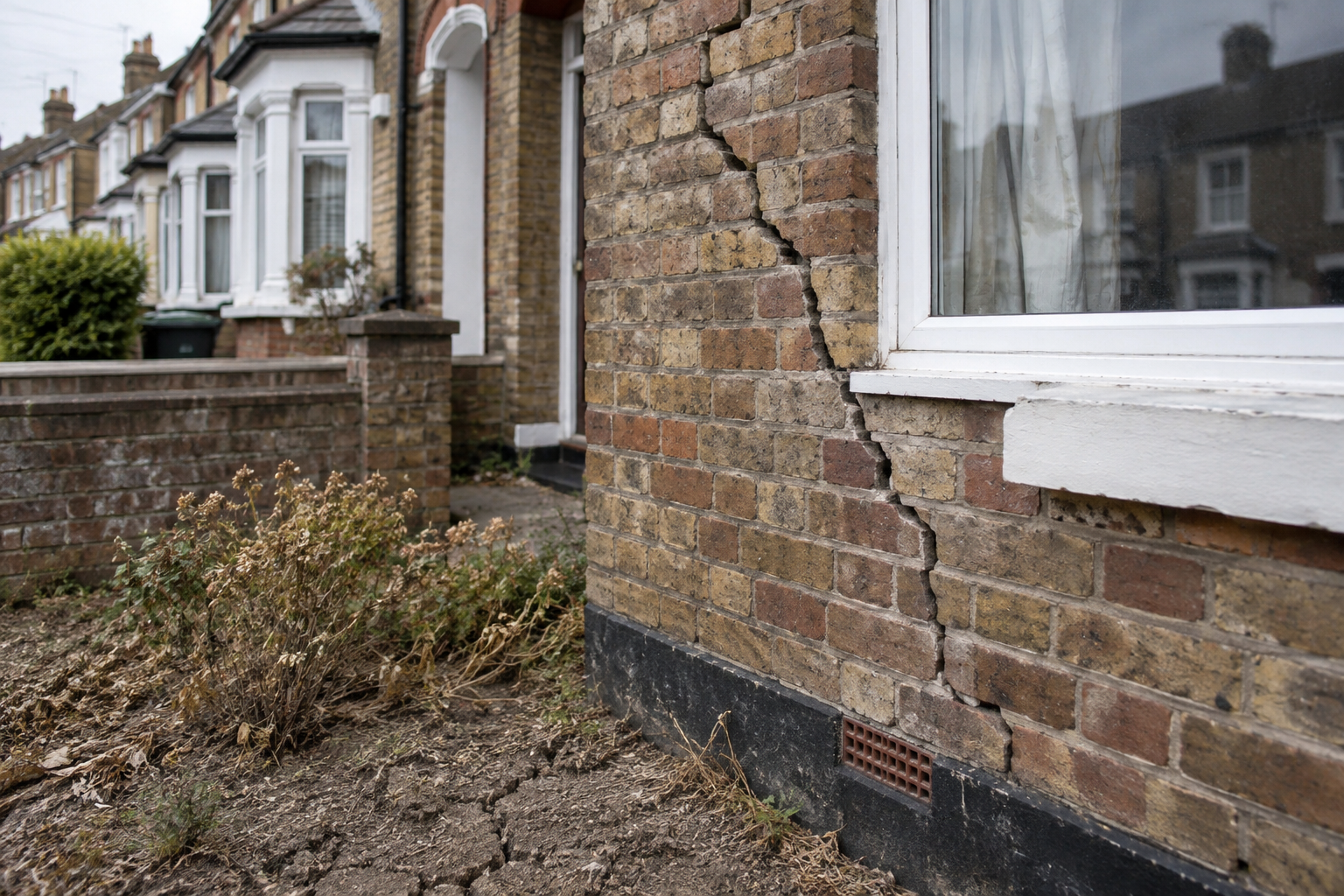
A crack is a clue, not a diagnosis. RICS and the Association of British Insurers describe expanding cracks in plaster or external brickwork, unexplained sticking doors or windows, and changes in solid floors as reasons to investigate. Diagonal cracks around openings can be associated with movement, but their position does not establish the cause on its own.
Minor cracking can also arise from changes in temperature and humidity or drying of new materials. A thin crack at the junction of a wall and ceiling does not automatically mean the foundations are moving. Equally, a narrow crack that is changing, or several signs appearing together, should not be dismissed simply because it looks small.
RICS highlights sudden cracks wider than 3mm as a particular reason for concern. Treat that as a prompt to seek advice, not a pass-or-fail rule for safety. The rate of change, location, construction, history and other symptoms all need consideration. A photograph or an online comparison cannot replace an inspection of the property.
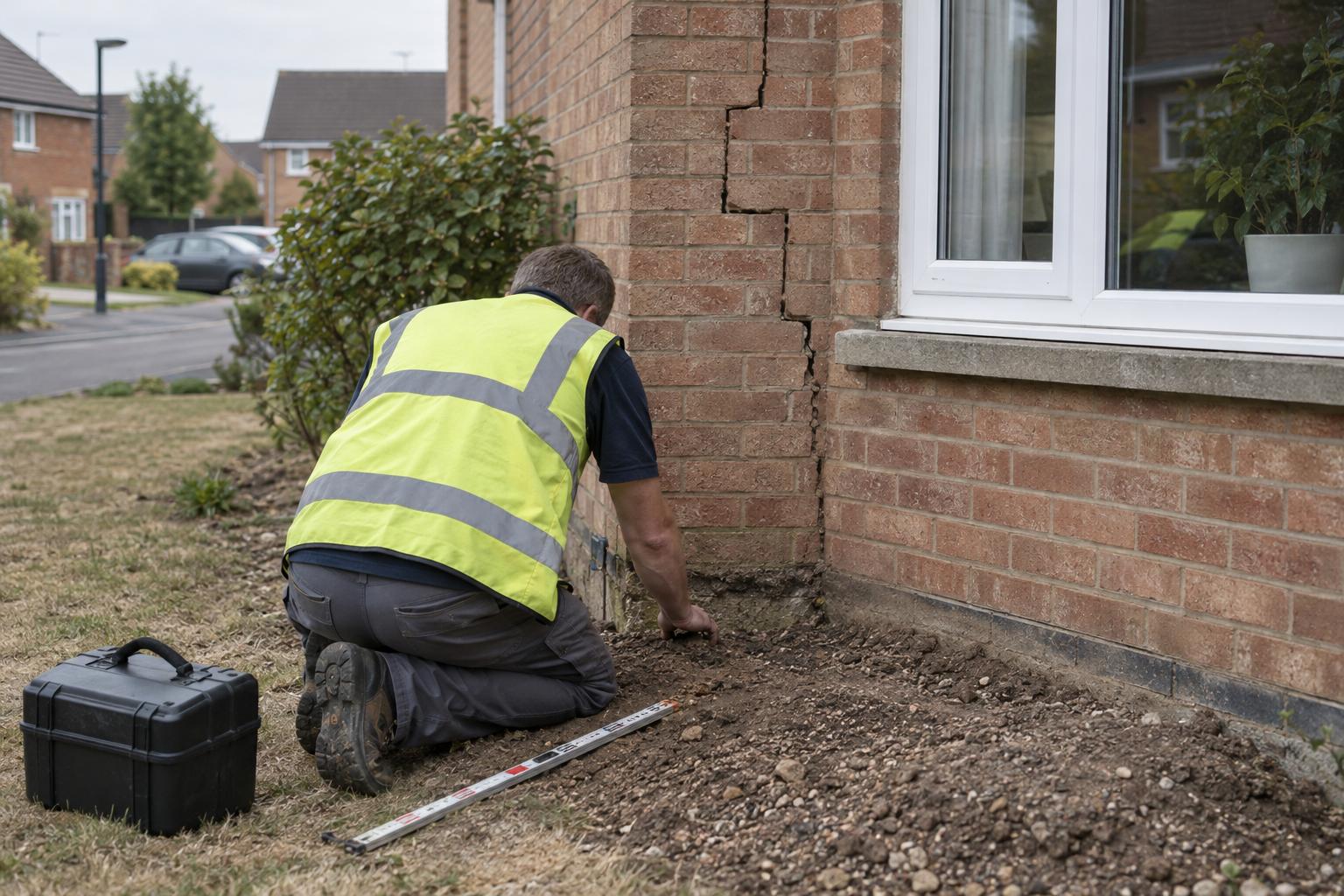
If movement is suspected, contact your buildings insurer or, if you rent, your landlord, and arrange appropriate professional advice. Record when the signs first appeared and take dated photographs with a scale, if safe. Avoid covering cracks or commissioning cosmetic repairs before the cause has been assessed. If there is an immediate danger, keep away from the affected area and seek urgent help.
Clay soil, trees and leaking drains: why ground moves
The British Geological Survey explains that some clay-rich soils change volume with moisture content. They shrink as they dry and swell when they absorb water. Prolonged dry weather can therefore affect foundations on susceptible soils. The presence of clay does not, by itself, prove that a particular house has subsidence; foundation design and local conditions matter too.
Trees and shrubs can take moisture from shrinkable clay through their roots. That is different from a root physically pushing against a wall or drain. A tree near a house is not automatically responsible for cracking. Species, size, soil composition, foundation depth and the building’s history are all relevant to assessing whether vegetation is contributing to movement.
There is no single safe distance that applies to every tree and every property. BGS advises seeking specialist guidance before planting trees near a house or removing mature trees that pre-date its construction. Removing a tree can change moisture conditions and, on some clay sites, contribute to swelling and heave. Do not fell a tree just because a crack has appeared.
Water can also create a problem. Leaking drains or water mains may soften the ground or wash material away from beneath foundations, particularly in susceptible sandy or gravelly soils. Drain investigations may be part of an assessment where the evidence points to leakage. A suspected drain problem needs checking, rather than assuming that every case is drought-related.
Former mining, filled ground and other local geological conditions can cause different movement mechanisms. BGS hazard information helps put a location into context, but a regional map is not a condition report for an individual building. New extensions, hardstanding and changes to drainage can also alter conditions around a house, so planned work should account for the actual site.
What a structural assessment and monitoring can establish
An investigation starts with the building and its history: where the cracks are, whether they have changed, how the property was built, and what work has already taken place. A structural engineer or appropriately qualified surveyor can advise on the next investigations. Depending on the suspected cause, this may involve drains, ground conditions or vegetation rather than foundations alone.
Monitoring is used to establish whether movement is continuing and how it changes over time. RICS notes that cracks may need monitoring for around 12 months and sometimes longer. That is not a fixed waiting period for every home: the appropriate duration and method depend on the case, and urgent concerns should not wait for a monitoring programme to finish.
Seasonal opening and closing of cracks can be useful evidence of moisture-related movement, but it does not establish that a problem has been resolved. Investigators need to interpret the pattern alongside other findings. Keep monitoring records, engineering reports and correspondence together so that later decisions about repair, insurance or a sale can be based on the same evidence.
The repair should address the identified cause. That may involve dealing with a leaking drain, managing vegetation with advice, or undertaking specified structural work. Filling a crack treats its appearance, not necessarily the reason it developed. Ask what evidence supports the proposed solution and how its effectiveness will be checked before paying for major works.
Underpinning is not an automatic response to subsidence. ABI guidance describes it as a possible response to extreme damage, rather than the starting point for every claim. Where foundation work is proposed, the design should be specific to the ground and structure. Whether it is needed, and which technique is suitable, is a professional judgement rather than something that can be decided from a news story.
Buying a house with past subsidence: records, mortgages and insurance
A history of subsidence is a reason for careful enquiries, not an automatic reason to abandon a purchase. The key questions are what caused the movement, what was done, and what evidence shows its subsequent behaviour. A property described as repaired or underpinned still needs its documents reviewed in the context of its present condition.
Ask the seller for the original investigation and engineering reports, repair specifications, completion records, any guarantees, insurance claim correspondence and monitoring results. Establish whether records relate to the whole property or only one part, such as an extension. Missing paperwork does not prove ongoing movement, but it can leave important questions unanswered before exchange.
A Certificate of Structural Adequacy may form part of the records following subsidence repairs. Read its actual scope, issuer, date and any qualifications; do not treat the name as a blanket guarantee of future performance. Ask your professional adviser what it establishes and whether a current assessment is needed. No single document automatically satisfies every lender or insurer.
Mortgage decisions depend on the lender’s requirements and the evidence for that property. Discuss the history with your lender or broker early, rather than assuming a normal valuation answers every structural question. A mortgage valuation is for the lender’s purposes; buyers may need their own survey and, where indicated, a separate structural assessment.
Check that suitable buildings insurance will be available before committing to the purchase. Tell prospective insurers about the history accurately and answer their questions fully. Terms, excesses, exclusions and premiums vary, so get a quotation for the actual property rather than relying on a general promise that repaired homes can always be insured.
Your conveyancer can review the legal documents and enquiries, while a structural specialist can interpret the engineering evidence. Those roles complement each other. A digital sales pack can make documents easier to share, but bringing files together does not establish whether movement has stopped. Resolve material uncertainties before making a binding commitment.
Adrian Hall, Chartered Engineer at Hall Davis Structural Engineers, said: “A past subsidence claim need not rule a house out. Buyers should ask what caused it, how it was repaired, and whether the property has been monitored since.”
Insurance claims and practical next steps
Check your own buildings policy for subsidence cover, the excess and any conditions. If you suspect damage, contact the insurer promptly and ask what evidence it needs and whether it will arrange investigations. Do not assume that every crack is covered, or that all policies use the same terms. Keep a record of the claim and instructions you receive.
For leasehold homes, responsibility may involve the freeholder, managing agent and the building’s insurer. Tenants should notify their landlord of signs of movement. Establish who holds the buildings policy and who can authorise investigations or repairs; avoid commissioning work on shared or structural parts without understanding the relevant responsibilities.
Ask for a clear explanation of the suspected cause, the proposed investigations and the next review date. Where monitoring is required, understand what would trigger a change in approach. Keep copies of reports and repair records after the claim closes: they can matter when you sell, remortgage or arrange future insurance.
Why this matters
For homeowners, identifying the cause of movement helps avoid unnecessary or ineffective work. For buyers, a clear history makes it easier to ask the right questions before exchange. Good records and property-specific advice matter more than a reassuring label, a dramatic crack photograph or a general hazard map.
Your questions answered
Does a diagonal crack mean my house has subsidence?
Not necessarily. Diagonal cracks can be associated with movement, but the cause needs assessment. New or growing cracks, unexplained sticking doors and changes in floors are reasons to seek professional advice.
Can I buy a house with previous subsidence?
Potentially, but check the cause, repairs, monitoring and current condition. Get advice on the engineering records, confirm your lender’s requirements and establish suitable insurance before committing.
Can you get a mortgage after subsidence?
It depends on the lender and the property’s evidence. Provide the history and repair records early. A certificate or previous repair does not guarantee mortgage approval.
What is a Certificate of Structural Adequacy?
It may document an assessment following repairs. Its value depends on its scope, date, issuer and qualifications. Ask your adviser what it confirms; it is not an unconditional guarantee against future movement.
Do tree roots always cause subsidence?
No. Trees can contribute by removing moisture from shrinkable clay, but soil, foundations and vegetation must be assessed together. Do not remove a mature tree without appropriate advice.
How long does subsidence monitoring take?
RICS notes that monitoring may take around 12 months or longer. The actual period depends on the investigation. Immediate safety concerns need prompt attention rather than waiting for monitoring to finish.
Does subsidence always require underpinning?
No. ABI guidance describes underpinning as a possible response to extreme damage. A repair should address the identified cause; a structural specialist can advise whether foundation work is necessary.
Does a clay soil map prove a house has subsidence?
No. A hazard map indicates susceptibility, not the current condition of a building. Property-specific assessment is needed to establish whether movement has occurred and what caused it.
Sources and scope
This general guide draws on the sources below and approved commentary from Adrian Hall; it is not a structural assessment, mortgage recommendation or promise of insurance cover.
- RICS: consumer guide to subsidence
- Association of British Insurers: subsidence guidance
- Association of British Insurers: what to do if subsidence happens
- RICS: home surveys consumer guide
- Intelligent Insurance: Certificates of Structural Adequacy
- British Geological Survey: shrink–swell property hazard information
- British Geological Survey: swelling and shrinking soils