Argyle Street homes: £980,000 groundworks proposed for Norwich subsidence site
Argyle Street homes would need £980,000 of groundworks under a Norwich council proposal reported in June, following an earlier tender disrupted by subsidence concerns.
What happened
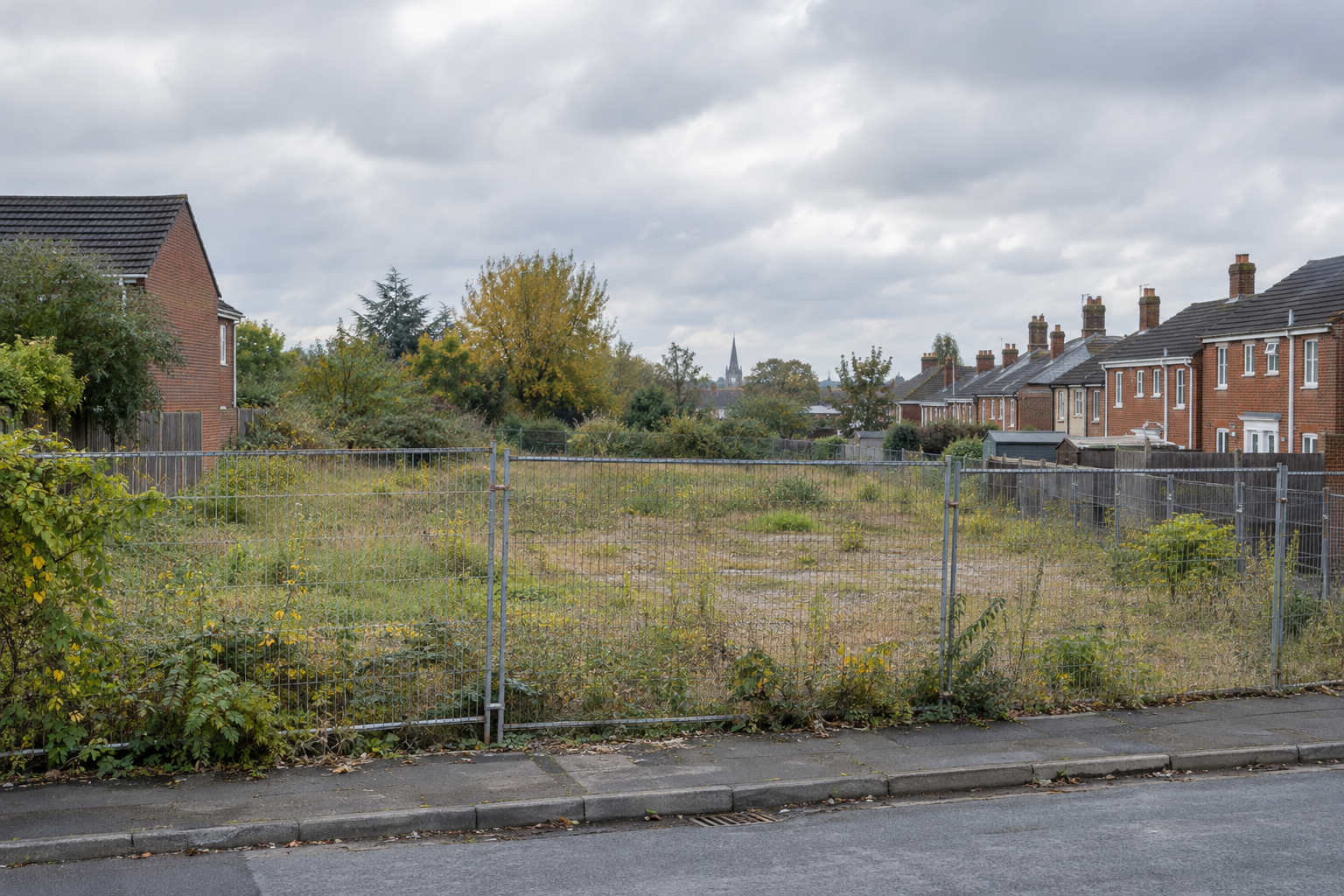
Argyle Street homes in Norwich were the subject of a proposed £980,000 groundworks contract, reported by the Norwich Evening News on 9 June 2026. Norwich City Council's cabinet was due to consider the proposal on 10 June. The works formed part of a reported £2.852 million scheme for 14 affordable homes on land affected by historic chalk mines.
The council's proposed approach would separate preparation of the ground from construction of the homes, according to the newspaper. The enabling works would cover ground remediation, stabilisation and piling before the main building work could begin. That makes treatment of the site a distinct stage of the development, rather than part of a single construction contract.
The housing plans were drawn up by WT Design, an architectural practice based in Ludham, the report said. They ranged from one-bedroom flats to four-bedroom houses, with every property intended for social rent. The proposed specification also included heat pumps, solar panels and electric vehicle charging points; the report did not provide a detailed breakdown of the housing mix.
The timing matters because the source describes a proposal awaiting a June decision, not a completed contract award or a construction start. It does not establish whether the cabinet subsequently approved the recommendation, who secured any contract or whether work began. As of 19 November 2026, the supplied material therefore supports reporting the plan and its background, but not presenting the homes as under construction.
The background
Nearly 20 previous homes were evacuated and later demolished because of subsidence risks, according to the Norwich Evening News. Tenants moved out in 2009 after tests identified a risk to the buildings. Those properties remained empty and boarded up for six years before demolition in 2015, leaving the development site vacant for about a decade by the time of the June report.
The newspaper linked the difficult ground conditions to historic chalk mines beneath the street. Subsidence involves movement or sinking of the ground supporting a property; it is not simply a description of damage to its walls. The distinction between visible building damage and the underlying ground problem is also explored in Property Pulse UK's coverage of subsidence repairs and ground movement.
Argyle Street's housing history predates the subsidence evacuations. According to the newspaper, a council clearance programme in the 1950s removed much of the two-up, two-down terraced housing around King Street and Ber Street. A proposal for the university to acquire surviving terraces, including homes in Argyle Street, for student accommodation subsequently fell through.
The report said 120 squatters then occupied the empty houses, established a co-operative and sought government financial support. The occupation began making national headlines in the late 1970s and became known as the Republic of Argyle Street. A £1 million renovation grant was agreed in 1981, but proposals for the council to sell or lease the site to the co-operative were blocked the following year.
The occupants were evicted in 1985 and the original homes were demolished, the newspaper reported. Replacement properties followed, but some were themselves demolished in 2015, around 30 years later. The current proposal therefore concerns land with two separate episodes of housing clearance, rather than an undeveloped site being brought into residential use for the first time.
Read moreSubsidence claims: Mainmark calls for repairs to address ground movement
What people are saying
The council's position, as reported in June, was that the project should proceed through two separately commissioned stages following further ground investigations. Its recommendation focused on dealing with the site's difficult conditions before the main housing build. The source contains no direct quotation from a councillor, council officer or resident, so it does not establish their individual views on the revised plan.
Contractors' concerns had already affected an earlier attempt to commission the scheme. According to the Norwich Evening News, four of six shortlisted contractors withdrew from a 2023 design-and-build tender because of concerns about the ground conditions. The final bidder also pulled out, leaving that attempt unable to deliver a construction contract.
The subsequent investigations informed the council's proposed change of approach, the newspaper reported. Four specialist contractors had been identified to bid for the enabling works. That is evidence of a revised procurement route, not confirmation that a specialist contractor had accepted the work, agreed a final programme or completed an assessment that removed all uncertainty.
WT Design's reported plans set out the intended accommodation and energy features, while the council's recommendation addressed how to prepare the land. These are different parts of the same project: a housing design describes what could be built, whereas the enabling works address the site beneath it. The source provides no engineering statement from WT Design or a contractor confirming how the proposed ground treatment would perform.
What happens next
The next decision identified in the source was the cabinet vote scheduled for 10 June 2026. Establishing what happened after that meeting would require the decision record or a subsequent council update. The June report alone cannot show whether the recommendation passed unchanged, was amended or was deferred, and it gives no confirmed date for residents to move in.
Under the proposed sequence, ground remediation, stabilisation and piling would precede construction, according to the newspaper. The main build would be commissioned separately rather than included in the earlier all-in-one tender model. The report does not give a duration for either stage, name a main building contractor or explain how the two contracts would be coordinated.
A cabinet contract decision also needs to be distinguished from the planning process. Planning permission and any conditions attached to it govern development, while procurement concerns who carries out the work. Property Pulse UK's reporting on delays in decisions on planning conditions explains that separate administrative stage; the Argyle Street source does not identify any outstanding condition holding up this particular scheme.
For the proposed residents, the central housing commitment in the report is social rent rather than homes offered for private purchase. For owners elsewhere facing subsidence concerns, the proposal is not evidence that their property needs the same treatment or faces the same costs. The separate issue of obtaining cover is examined in Property Pulse UK's reporting on home insurance refusals and specialist cover; the Argyle Street report contains no insurance terms for the planned homes.
Why this matters
For households seeking social housing in Norwich, the proposal offers 14 potential homes on land left empty after earlier properties were demolished. The reported tender withdrawals show how difficult ground conditions can interrupt delivery before construction begins. For homeowners elsewhere, the useful distinction is between a plan to treat the ground and evidence that treatment has been completed. The June report establishes the council's proposed route forward, but not its outcome or a date when these homes will become available.
Your questions answered
+How many new homes are planned for Argyle Street in Norwich?
The June report described 14 homes, ranging from one-bedroom flats to four-bedroom houses. WT Design, based in Ludham, designed the scheme.
+Will the new Argyle Street homes be for social rent?
Yes. According to the Norwich Evening News report, all 14 proposed homes would be available for social rent.
+Why were the old Argyle Street homes demolished?
Tenants left in 2009 after tests identified subsidence risks, the newspaper reported. The homes remained empty for six years before demolition in 2015.
+What is causing the ground problems in Argyle Street?
The Norwich Evening News linked the site's complex ground conditions to historic chalk mines beneath it. The proposed enabling works include remediation, stabilisation and piling.
+How much would the Argyle Street groundworks cost?
The reported proposal was for a £980,000 enabling-works contract within a £2.852 million housing scheme. These are figures from the June proposal, not confirmed final expenditure.
+Why did the earlier Argyle Street building tender fail?
According to the newspaper, four of six shortlisted contractors withdrew from the 2023 tender over ground-condition concerns. The final bidder also withdrew. The council subsequently proposed separating groundworks from the main build.
+When will the new Argyle Street homes be ready?
The supplied report gives no completion date. It describes a cabinet vote scheduled for 10 June 2026, but does not confirm the decision, a construction start or a timetable for occupation.
This story draws on reporting first published by Norwich Evening News.

Robert Ashdown, Period Property Specialist
Robert writes about caring for older, listed and period homes, including damp, structural movement and conservation rules. He has reported on heritage and housing for over fifteen years.