Vacant commercial property: owners name deterioration their biggest problem
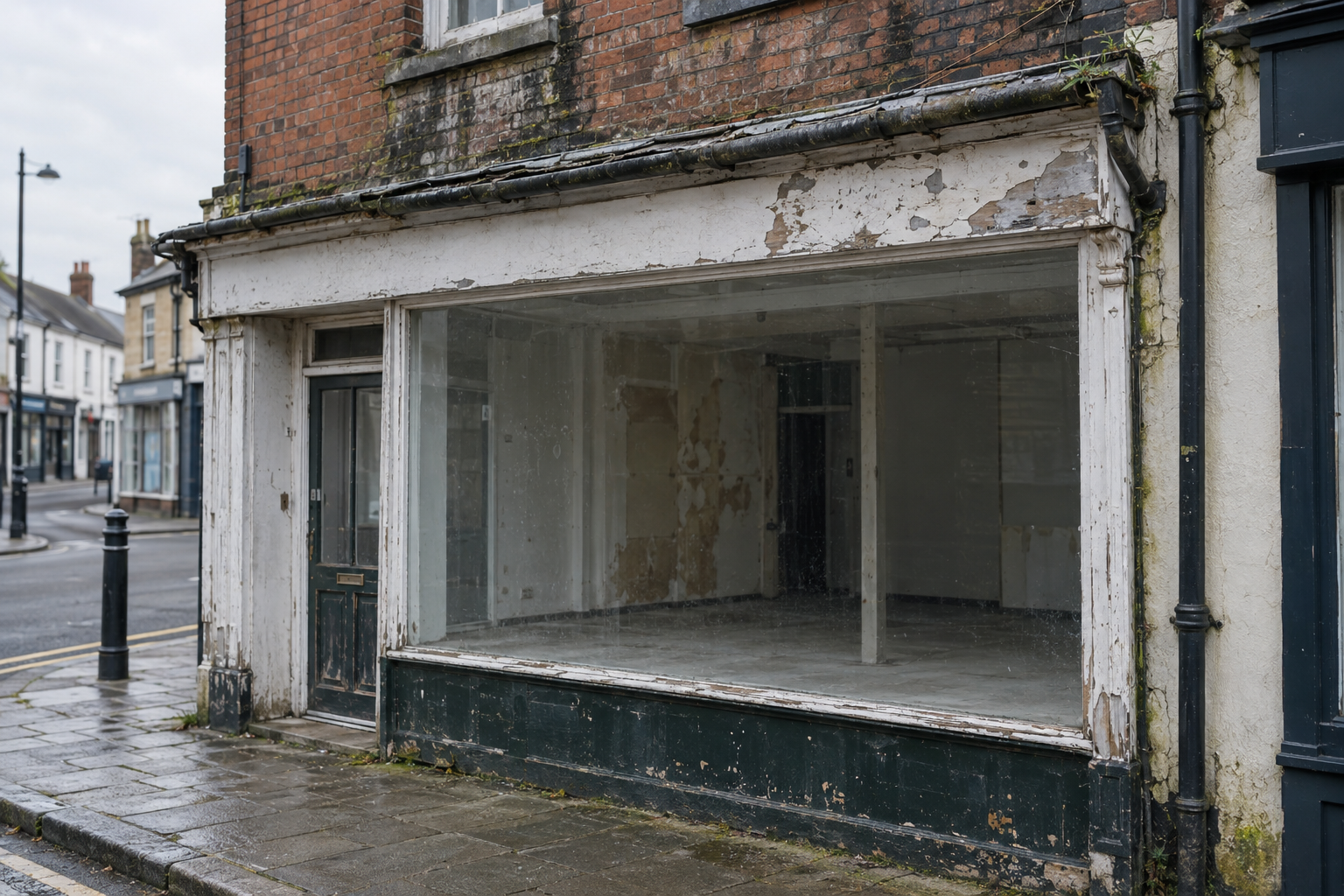
Vacant commercial property owners are more concerned about deterioration than theft, according to a survey that also highlights infrequent inspections at some empty buildings.
What happened
Vacant commercial property deterioration was the leading concern in a survey of 350 UK commercial property owners commissioned by SafeSite Facilities. Some 22% named the condition of their empty buildings as their single biggest problem. The findings put deterioration ahead of both water damage and several forms of crime in owners’ assessment of their properties.
Water damage was the biggest issue for 11% of respondents, followed by trespassing at 9%, according to the survey. Pest infestations and metal or cable theft each accounted for 8%. A further 7% selected theft, which the published findings listed separately from the removal of metal or cables.
Squatting and arson or fire damage were each named as the biggest problem by 6% of owners, SafeSite Facilities reported. Anti-social behaviour and vandalism or graffiti each accounted for 5%, while 3% chose fly-tipping. These figures describe owners’ main concern, rather than the share that had encountered each problem.
The survey separately asked respondents which problems they had experienced at vacant commercial property during the previous 12 months. Deterioration also led that measure, at 26%, but metal or cable theft was close behind at 25%. Anti-social behaviour affected 24%, pest infestations 21% and water damage 20%, according to the findings.
The distinction between those questions matters when interpreting the results: an issue can be widespread without being the one an owner considers most serious. Metal or cable theft, for example, ranked much higher on reported experience than on the single-biggest-problem measure. Neither question provides a breakdown of repair bills or insured losses.
The background
The findings sit alongside government efforts to bring disused high street buildings back into use. The Ministry of Housing, Communities and Local Government announced a £210m package in September 2026 for turning derelict buildings into shared workspaces, cafes and community hubs. That announcement concerns the future use of empty premises; the survey focuses on owners’ experience while buildings are vacant.
The two groups of buildings should not be treated as identical. The survey covers vacant commercial property, while the government package concerns derelict high street buildings, and the published findings do not establish an overlap. They also do not break down responses by building type, location or length of vacancy, limiting what can be concluded about particular local markets.
For owners considering a residential future for an older empty building, Historic England’s guidance on vacant-building conversions provides a separate housing and heritage context. Such guidance is distinct from the commercial owners’ survey. The survey does not assess whether respondents’ premises are suitable for conversion or whether they have permission for a different use.
Inspection frequency was another part of the SafeSite Facilities research. Nearly one in five owners said they inspected their vacant properties less often than once a week, including 3% who checked only monthly. A further 0.3% said they inspected only after a problem was reported, leaving those visits dependent on someone first raising an issue.
Read moreTesco landlord insurance launch adds cover for rented and holiday homes
What people are saying
Karen Alabaster, an executive at SafeSite Facilities, said empty properties could deteriorate quickly without plans to prevent or limit damage. She argued that the findings supported regular inspections. Her comments presented maintenance and oversight as important concerns for commercial landlords, rather than treating security against intruders as the only priority.
Alabaster also warned that deterioration could reduce a commercial property’s rental value and increase risk and insurance costs. Those were her assessments of the potential consequences, not measured financial results from the survey. The published findings give no average reduction in rent, increase in premiums or cost of putting a deteriorating building back into usable condition.
SafeSite Facilities commissioned the research, so its recommendations should be read alongside that role. The supplied findings identify the sample size but do not state when fieldwork took place or explain how owners were recruited. They therefore offer a picture of respondents’ experience, rather than establishing how many vacant commercial buildings across the UK have each problem.
For landlords, the insurance question is separate from the ranking of physical problems. General policy guidance is to check the actual contract and speak to the insurer or broker about a change in occupancy, rather than assume existing protection continues unchanged. The same need to distinguish occupancy and use is discussed in cover checks when a rented home becomes empty, although residential policy terms should not be applied to commercial premises.
What happens next
For owners reviewing an empty building, Alabaster’s recommendation points first to the arrangements for inspections and preventing deterioration. The survey does not specify an inspection interval that would be suitable for every property. In particular, its use of weekly visits as a reporting threshold should not be mistaken for a universal insurance requirement or a guarantee that problems will be avoided.
The inspection figures also leave an important question unanswered: whether owners who visited less often suffered more damage. No comparison between inspection frequency and reported problems appears in the supplied findings. Regular checks are the company’s recommendation, but the survey does not measure how much any particular schedule reduces deterioration, theft or water damage.
An owner assessing insurance needs would need policy-specific information beyond these results. The research does not identify which incidents led to claims, which were covered or whether any claims were refused. It consequently cannot establish whether deterioration itself would be insured, or whether a particular security or maintenance measure would lead to a lower premium.
For anyone considering improvements to a listed vacant building, heritage controls are a further issue to check separately from insurance. As explained in Historic England’s guidance on energy upgrades and consent, proposed work may raise consent questions. The survey does not identify listed properties or offer permission to carry out repairs or alterations.
The £210m high street announcement provides a policy response to some derelict buildings, but the supplied report gives no application timetable or property-level eligibility details. It also does not say that surveyed owners will receive funding. Owners therefore cannot use the survey or the headline funding figure alone to determine whether a particular vacant building qualifies for support.
Why this matters
For commercial landlords, the survey suggests that managing an empty building involves more than preventing break-ins. Respondents placed deterioration ahead of individual security problems, while SafeSite Facilities warned of possible effects on rental value and insurance costs. The practical distinction is between maintaining the property and knowing what its policy covers. The findings support reviewing both, but do not establish a universal inspection schedule, a likely repair bill or an entitlement to government funding.
Your questions answered
+What is the biggest problem with vacant commercial property?
Deterioration was the biggest problem for 22% of 350 UK commercial property owners surveyed for SafeSite Facilities. Water damage ranked second at 11%, followed by trespassing at 9%.
+How common is metal theft at empty commercial buildings?
In the SafeSite Facilities survey, 25% of respondents reported metal or cable theft at vacant commercial property during the previous 12 months. However, 8% named it as their single biggest problem.
+How often should vacant commercial property be inspected?
SafeSite Facilities recommends regular inspections, but the supplied findings do not set a universal interval. Nearly one in five respondents inspected less than weekly. Owners should check any inspection conditions in their own insurance policy.
+Does deterioration affect commercial property insurance costs?
SafeSite Facilities executive Karen Alabaster said deterioration could increase risk and insurance costs. The survey does not quantify premium changes or establish how an individual insurer would price a particular building.
+Does insurance cover deterioration in an empty commercial building?
The survey does not establish whether deterioration would be covered. It provides no policy wording or claims outcomes. Owners need to check their contract and discuss the building’s occupancy with their insurer or broker.
+Is there government funding for derelict high street buildings?
MHCLG announced a £210m package in September 2026 to turn derelict high street buildings into shared workspaces, cafes and community hubs. The supplied report does not give an application timetable or property-level eligibility details.
+When was the vacant commercial property survey carried out?
The supplied findings do not state the fieldwork dates. They say the survey covered 350 UK commercial property owners and asked about problems experienced during the previous 12 months.
This story draws on reporting first published by Property Reporter.

Sophie Carrington, Homes & Renovation Writer
Sophie writes about extensions, loft conversions and renovation projects. A former homes magazine sub-editor, she has renovated two Victorian terraces herself and focuses on costs, permissions and avoiding common pitfalls.