Historic England housing guide puts vacant buildings in focus
Historic England’s housing guide identifies potential for up to 670,000 homes in older vacant buildings, while setting out the checks developers need before conversion.
What happened
Historic England’s housing guide sets out how developers can assess disused historic buildings for conversion into homes. The publication, Heritage Works for Housing, was reported by Architects’ Journal on 3 October 2024. Its central proposition is that existing buildings could contribute to housing supply, provided developers work through the practical requirements of bringing them back into use.
Historic England commissioned the guidance, which Deloitte prepared. According to the heritage body, it is intended for small and medium-sized developers and covers the development process from early feasibility work to ongoing maintenance. That scope takes it beyond architectural design: it also addresses engagement with stakeholders, assessment of heritage value and the consents a project needs.
The report identifies potential for up to 670,000 homes through the reuse of England’s older vacant buildings. That is an estimate of what the building stock could accommodate, rather than a total of homes approved, funded or under construction. The source report does not give a delivery timetable, so the figure should not be read as a dated housebuilding commitment.
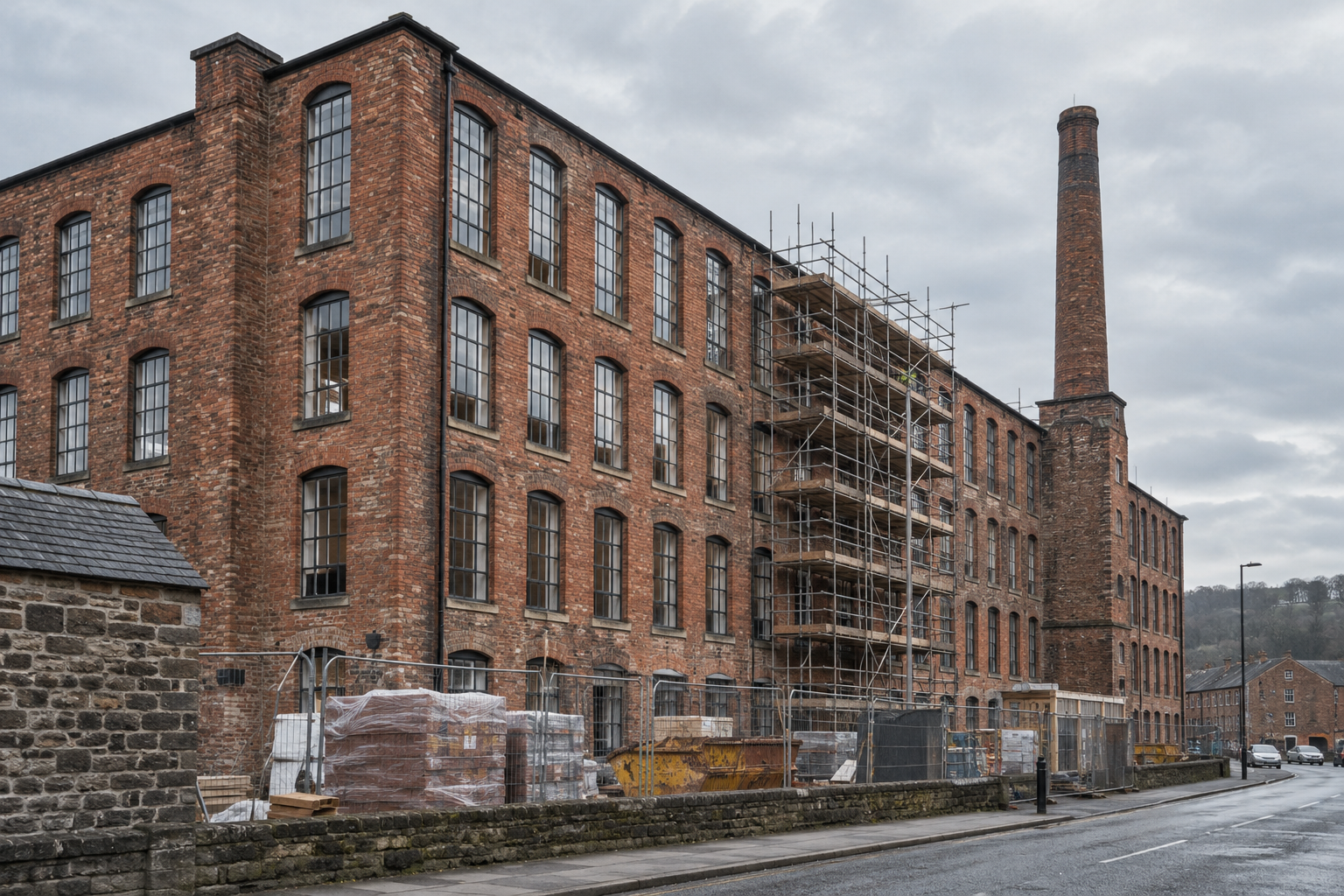
Within that wider opportunity, the report points to redundant textile mills in Yorkshire and Lancashire as having capacity for 42,000 homes. These are regional examples of the potential for residential reuse, not an announcement that particular mills will be converted. For buyers, the distinction matters: a national estimate says nothing about when a home in a specific building might become available.
The background
Historic England is the government’s statutory adviser on the historic environment. Its guidance brings housing development and the protection of historic buildings into the same discussion, rather than treating them as separate issues. The publication also sets out the development context and sector priorities at the time it was prepared in 2024; it should not be mistaken for a new announcement in October 2026.
An old building is not automatically a listed building, and the distinction affects the permissions required. Under England’s listed-building rules, works affecting a listed building’s special architectural or historic interest require listed building consent. Protection is not necessarily confined to the outside, as explained in the separate coverage of what Grade II listing protects.
Planning permission, listed building consent and building regulations serve different purposes. Depending on the building and proposed works, a conversion can engage more than one of these systems; guidance from Historic England does not itself grant permission. Owners considering changes to heating, windows or insulation can also consult the coverage of Historic England’s consent advice for listed-building energy upgrades.
Historic England argues that reusing under-used buildings could support the UK’s net zero ambitions as well as increase housing supply. In general, retaining an existing structure avoids the need to replace all of its fabric, but that does not establish the environmental performance of every conversion. The source report provides no project-level carbon calculations or estimates of residents’ future energy bills.
The inclusion of ongoing maintenance in the guidance is important because conversion does not end a building’s repair needs. Historic fabric remains part of the property after occupation, alongside whatever modern services and fittings have been installed. Separate reporting on the conservation-led repair of St Andrew’s Chapel provides another example of the relationship between retaining older fabric and adapting a building.
Read moreMackintosh House gains Category A protection alongside Glasgow gallery
What people are saying
Duncan Wilson, identified in the 2024 report as Historic England’s chief executive, supported adapting historic buildings for new housing. He said such buildings could provide homes suited to contemporary buyers while preserving the qualities that made them significant. His position was that residential reuse and conservation could work together, rather than that historic character should be removed to make conversion possible.
Wilson also pointed to Deloitte’s experience of delivering housing within historic buildings as the basis for its role in drafting the guidance. The publication therefore combines Historic England’s heritage remit with advice informed by development work. Its stated audience remains developers, however, rather than purchasers seeking a survey or legal advice on an individual converted home.
Tim Heatley, co-founder of developer Capital & Centric, reported that enquiries about conversion projects were running at four times those for new-build projects. He suggested that a connection with the past helped explain the appeal of historic buildings. This was an account of the enquiries he described in 2024, not a measure of completed sales or evidence that the same balance applies across today’s housing market.
The report also cites a 10% price premium for properties near a listed building as part of its case for the attraction of heritage settings. That claim concerns proximity to a listed building, not necessarily ownership of one or purchase of a converted historic property. It cannot establish what an individual conversion will sell for, and should not be treated as a guaranteed uplift in a development appraisal.
What happens next
For the developers targeted by the guidance, feasibility testing is one of the first subjects to address. In practical terms, a conversion proposal needs to establish whether the intended residential use can work within the building and whether the project is financially viable. The national housing estimates do not answer those questions for a particular mill, warehouse or other vacant property.
Heritage appraisal, stakeholder engagement and concept development are further parts of the process covered by the publication. A heritage appraisal identifies what matters about a building, helping inform decisions about what can change and what should be retained. The report’s emphasis on these stages makes understanding the existing property part of project preparation, rather than something to leave until a finished design is ready.
Consent and detailed design still need to be addressed for each proposal. Anyone considering a purchase for conversion should establish the building’s designation and the permissions relevant to the intended works before assuming residential use is achievable. Because the publication dates from 2024, applicants also need to check the planning policies and requirements that apply when they bring a scheme forward.
Maintenance planning remains relevant once homes are completed and sold. For someone buying a converted flat, the lease and other purchase documents should establish responsibility for shared elements such as the roof and external walls, and how their costs are divided. The guide’s attention to upkeep is therefore relevant to the long-term ownership of these homes, not only to the developer’s construction programme.
Insurance is another separate practical check when a property is being altered. Owners should tell their insurer about proposed renovation work and establish what cover applies during construction; the policy terms, rather than a general assumption, determine protection. The coverage of insurance checks before home renovation explains why arranging building work and checking cover need to be considered together.
Why this matters
Historic England’s guidance presents vacant older buildings as a potential source of housing, but its estimates are not promises of completed homes. For developers and buyers, the practical issues remain specific to each property: what can be changed, which permissions are needed and who will maintain the building afterwards. The 2024 publication offers a framework for examining those questions. It does not replace current planning checks, a property survey or legal advice before purchase.
Your questions answered
+What is Historic England’s housing conversion guide called?
It is called Heritage Works for Housing. Historic England commissioned Deloitte to prepare it for small and medium-sized developers considering residential conversions of historic buildings.
+When was the Historic England housing guide published?
Architects’ Journal reported the publication on 3 October 2024. It is a 2024 guidance document, not a new announcement in October 2026.
+How many homes could England’s vacant older buildings provide?
The report identifies potential for up to 670,000 homes. This is an estimate of capacity, not a total of approved developments or a commitment to deliver homes by a particular date.
+How many homes could old mills provide in Yorkshire and Lancashire?
The report estimates that redundant textile mills in Yorkshire and Lancashire could accommodate 42,000 homes. It does not announce conversion plans for individual mills.
+Does Historic England’s guide give permission to convert a building?
No. The guide explains development considerations but does not grant permission. Planning permission, listed building consent and building regulations may each be relevant, depending on the property and proposed work.
+Are homes near listed buildings worth more?
The report cites a 10% premium for properties near a listed building. That is not a guaranteed uplift for an individual home and does not establish the value of a historic building conversion.
+What should I check before buying a converted historic flat?
Check the relevant permissions and establish responsibility for maintenance through the lease and purchase documents. Shared roofs and external walls can involve costs divided between owners.
This story draws on reporting first published by Architects' Journal.

Eleanor Whitfield, Property Correspondent
Eleanor covers the UK housing market, from monthly price indices to regional trends. She previously reported on business and economics for regional newspapers in Yorkshire and holds a degree in economics from the University of Leeds.