Doncaster Dome listed: what Grade II status protects
Doncaster Dome’s Grade II listing in 2023 recognised its distinctive leisure architecture, bringing extra protection without requiring the building to remain unchanged.
What happened
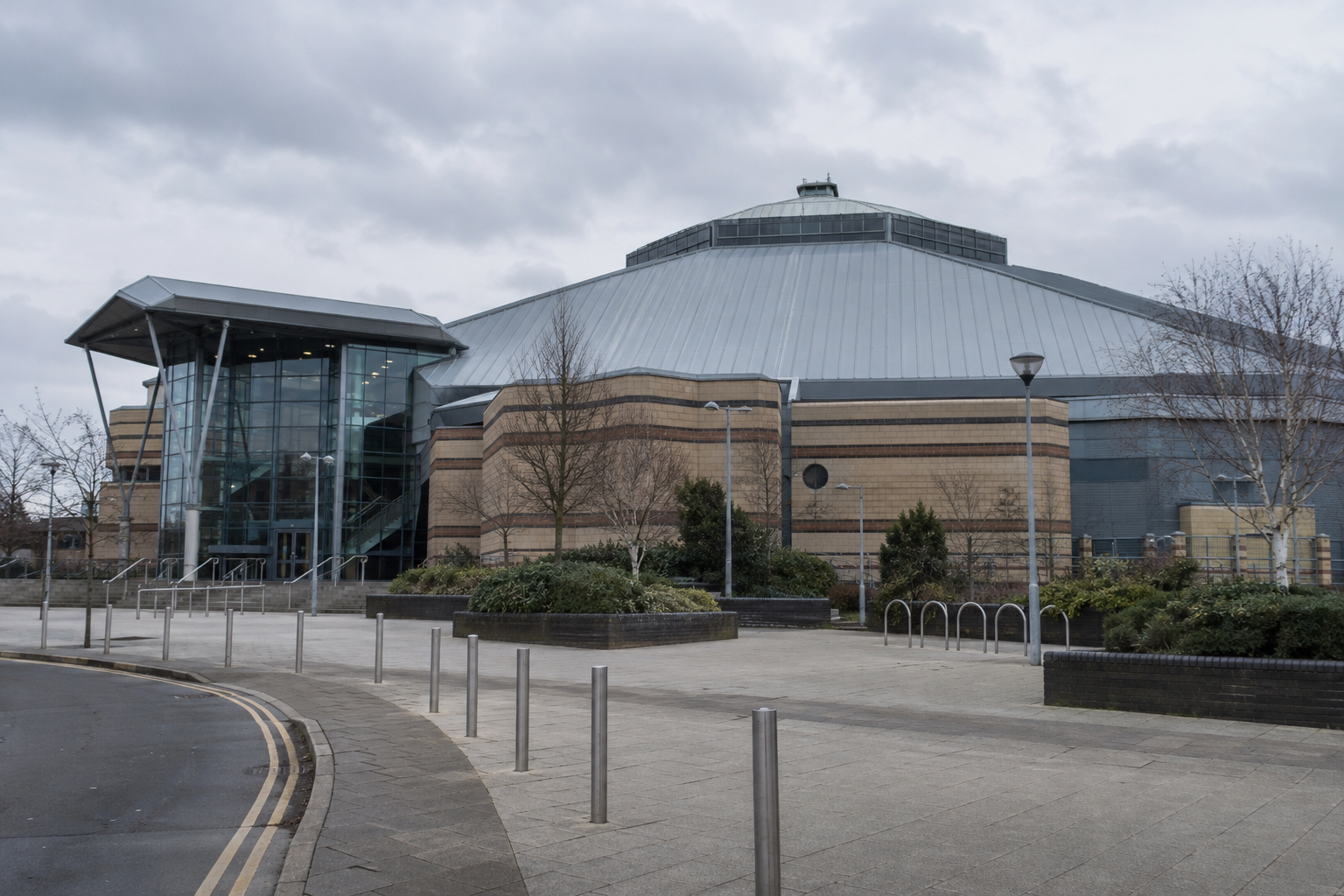
Doncaster Dome’s Grade II listing brought a major example of late-20th-century leisure architecture under heritage protection in 2023. The designation, reported by the BBC on 13 December 2023, recognised a building completed in 1989. According to Historic England, its architectural and historic interest justified inclusion on the National Heritage List for England.
The designation concerns a working leisure centre rather than a building preserved solely as a historic attraction. The BBC described facilities including swimming pools, flumes and an ice rink, with Doncaster Culture and Leisure Trust running the venue. For its operator, listing introduced heritage considerations into decisions about the building’s future.
Historic England identified the centre’s strong geometric forms, banded polished walls and prominent steel structure as important features. Its assessment emphasised an architectural approach intended to make recreation enjoyable, rather than concentrating only on competitive sport. That distinction helps explain why the building itself received recognition alongside the activities it accommodates.
According to Historic England, the Dome was recognised as Europe’s largest leisure centre at the time of construction. That was a historical assessment of its scale, not a claim about its position today. The designation therefore reflects both its physical design and its place in the development of large leisure venues.
Historic England named the Dome as one of a group of 16 sites listed in 2023 for architectural and historic importance. The organisation manages England’s national heritage list on behalf of the government. The register identifies protected buildings, sites and landscapes, rather than simply recommending places worth visiting.
The background
Princess Diana officially opened the Dome on 29 November 1989, according to the BBC’s account and archive photographs. The council had commissioned the £25m development as part of an effort to support economic regeneration. Its public role therefore extended beyond providing somewhere to swim or skate.
The Twentieth Century Society said the centre occupied a former coalfield site on the edge of Doncaster. That setting placed a new leisure destination on land associated with the area’s industrial history. The architects were Faulkner-Brown Hendy Watkinson Stonor, according to the BBC report.
The Twentieth Century Society described the project as the practice’s most ambitious building up to that point. The architectural heritage charity said its conception looked towards a new kind of park for the coming century. It also recorded that promotional material advertised a flume ride as Britain’s largest, a claim relating to the attraction’s original marketing.
The BBC reported that the Dome drew more than one million visitors a year after opening and received several leisure awards. Those figures describe its early success, not verified attendance in 2026. They provide context for the building’s significance as a destination designed for large numbers of people.
Under England’s listing system, a building does not have to be centuries old to qualify for protection; architectural and historic interest are the central considerations. Different periods and building types can therefore appear on the same national register. The listing of Barn Close and its Arts and Crafts interiors illustrates how another designation can focus on a very different domestic setting.
Read moreSt Andrew’s Chapel retrofit wins award for conservation-led repair
What people are saying
Michael Hart, chief executive of Doncaster Culture and Leisure Trust, told the BBC he was “very surprised” by the recognition because the building was relatively young. Once he considered the venue and its facilities, however, he said he understood the decision. His response reflected the contrast between the Dome’s modern appearance and public expectations of a listed building.
Hart supported the protection as a way of retaining the venue for future generations. He linked that value to the experiences and memories people build through visiting it. His comments presented preservation as compatible with the centre’s continuing public purpose, rather than as a reason to stop using it.
David Hornsby, the council’s design and conservation officer, drew attention to the large entrance atrium. He explained that leisure centres of the period were intended to offer an escape from ordinary daily surroundings. That interpretation puts the Dome’s expansive internal spaces within a wider approach to leisure design.
Historic England’s assessment also recognised the building’s ongoing use, referring in 2023 to a varied programme of sport and cultural events. Its interest was therefore not limited to the circumstances of the 1989 opening. The Twentieth Century Society, meanwhile, highlighted the project’s ambition within the architects’ work and its forward-looking approach to recreation.
What happens next
The BBC’s December 2023 report did not announce a refurbishment scheme, a closure or a programme of works following the listing. It also did not provide a later account of how the operator would manage the designation. The available evidence establishes the recognition and the responses at that time, not the centre’s condition or development plans in October 2026.
Under England’s listed building rules, consent is required for demolition and for alterations or extensions that would affect a building’s special architectural or historic character. That can include internal work as well as changes visible from the street. Grade II status should therefore not be treated as protection for the exterior alone.
Listed building consent and planning permission are separate controls, so a project may require one or both. The relevant local planning authority assesses applications, with heritage effects forming part of its consideration. The Reedham House demolition dispute provides a separate example of the tensions that can arise between redevelopment proposals and the retention of older buildings.
Listing does not impose a blanket ban on repairs, adaptation or improvements. The practical question is whether proposed work would harm the features that give the building its special interest, and whether consent is needed before work starts. The conservation-led retrofit at St Andrew’s Chapel offers a separate example of repair and adaptation being considered together, although it does not establish what would be acceptable at the Dome.
For anyone responsible for a listed property in England, the national register and the local authority’s conservation team are useful starting points before commissioning changes. Owners should not assume that an unmentioned interior feature falls outside protection simply because a list entry concentrates on the exterior. Carrying out work requiring listed building consent without obtaining it can be a criminal offence, making early checks important for both major redevelopment and smaller alterations.
Why this matters
Doncaster Dome’s designation shows that heritage protection can apply to familiar modern buildings, not just castles, churches and period homes. For property owners and buyers in England, the practical lesson is to check listed status before planning alterations, including internal work. Listing does not prevent a building from remaining useful, but it changes how proposals must be assessed. The Dome’s operator welcomed protection in 2023 as a way to retain its public role for future generations.
Your questions answered
+Is Doncaster Dome a listed building?
Yes. Doncaster Dome received Grade II listed status in 2023, according to Historic England. The BBC reported the designation on 13 December 2023.
+Why was Doncaster Dome listed?
Historic England recognised its architectural and historic interest, highlighting its geometric design, polished banded walls and steel structure. Its assessment also emphasised an approach to leisure centred on enjoyment rather than competitive sport alone.
+When did Doncaster Dome open?
Princess Diana officially opened Doncaster Dome on 29 November 1989. The building was completed that year, according to the BBC report.
+How much did Doncaster Dome cost to build?
The centre cost £25m to build, according to the BBC. The council commissioned it to help support economic regeneration.
+Who designed Doncaster Dome?
Faulkner-Brown Hendy Watkinson Stonor designed the leisure centre. The Twentieth Century Society described it as the practice’s most ambitious building up to that point.
+Can a Grade II listed building be altered?
Yes, but listed building consent is required for alterations or extensions affecting its special architectural or historic character. Listing does not prohibit all change, and planning permission may also be needed.
+Does Grade II listing protect the inside of a building?
Protection is not limited to the exterior. Internal alterations can require listed building consent if they affect the building’s special architectural or historic character. Owners should check proposals with the local planning authority before starting work.
This story draws on reporting first published by BBC.

Robert Ashdown, Period Property Specialist
Robert writes about caring for older, listed and period homes, including damp, structural movement and conservation rules. He has reported on heritage and housing for over fifteen years.