Flood risk in England: two million unaware of danger to their homes, agency warns
Flood risk in England is going unrecognised by more than two million people, according to an Environment Agency warning urging households to check and prepare.
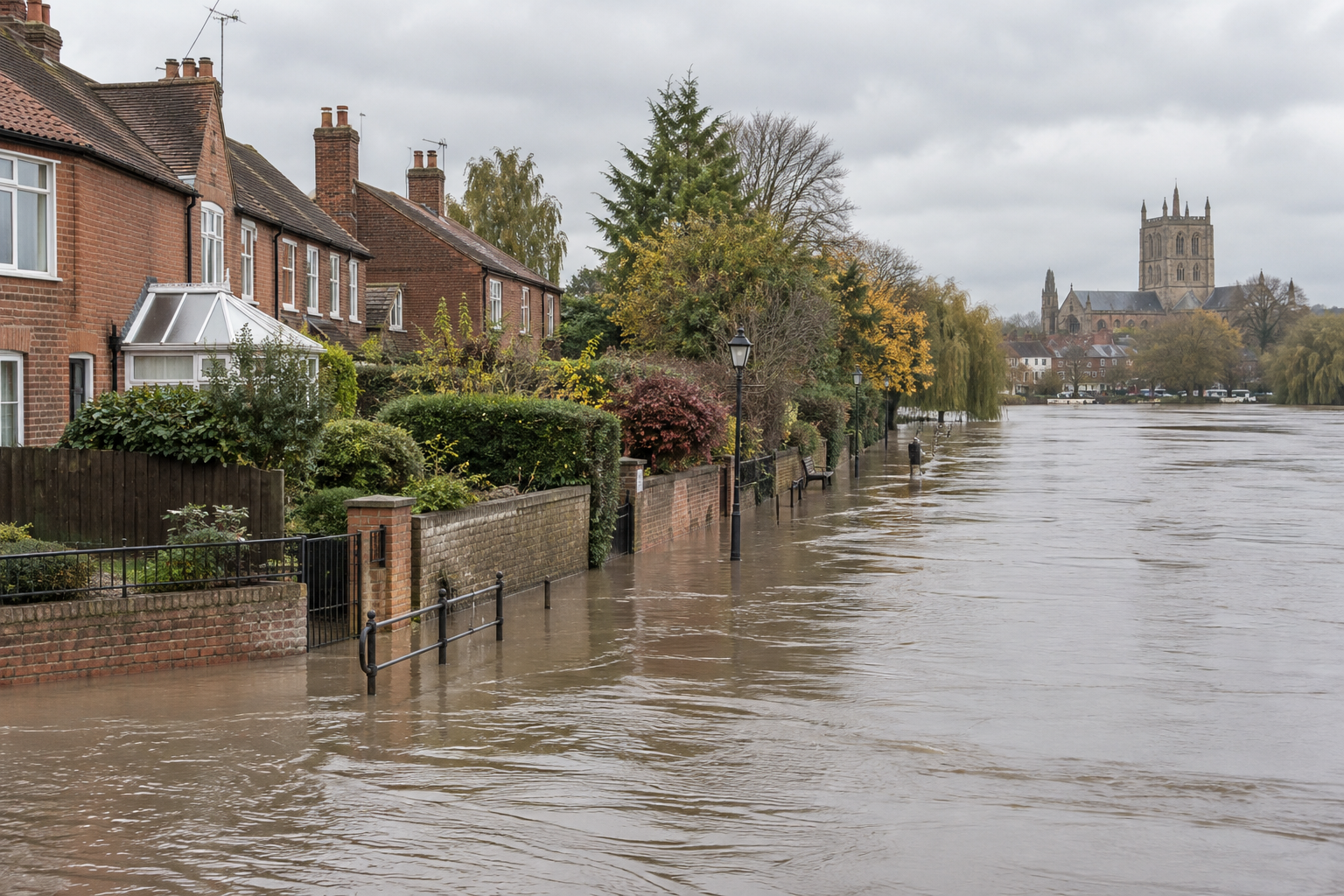
What happened
Flood risk in England is not being recognised by more than two million people whose properties could be affected, according to an Environment Agency warning reported on 30 September 2026. The agency urged residents to check their exposure and prepare. Its warning accompanied a Met Office outlook pointing to an increased chance of wet and windy weather during October, November and December.
The Environment Agency said six million properties in England were at risk of flooding. Caroline Douglass, its director for flood and coastal risk management, said about one-third of people at risk did not believe they faced that threat. The warning concerns awareness among residents, rather than a forecast that all those properties will flood this winter.
The figures also need to be read with care: the agency’s overall exposure figure counts properties, while its awareness warning refers to people. These are different measures, so the report should not be read as identifying more than two million separate homes whose occupants are unaware. Nor does it establish how many residents in any particular town misunderstand their risk.
For households, the agency’s immediate request was to use the government website to check whether their property was at risk. That makes an address-level check more useful than relying on a general impression of the local area. The England-wide figure alone cannot establish the likelihood of water entering a particular house, flat or other building.
The geographical scope matters for readers elsewhere in the country. The Environment Agency’s six-million-property figure and awareness warning apply to England, while the Met Office discussed the UK’s seasonal weather prospects. Residents in Scotland, Wales and Northern Ireland should not treat the English totals as a measurement of exposure where they live.
The background
The Met Office placed the autumn warning against a summer of drought, extreme heat and wildfires, and flooding across the UK during the previous year. Those contrasting conditions are important for households deciding whether a dry summer makes flooding less pressing. According to the Met Office, drought conditions could remain even while the risk of flooding increased.
Reservoir recovery is central to that distinction. The Met Office said drought would persist across large parts of the UK until reservoirs returned to normal levels, and that above-average winter rainfall would be needed. A spell of heavy rain therefore would not, by itself, establish that the wider water-supply position had recovered.
For property owners, flood exposure and water availability are separate questions to follow. The first concerns the possibility of damage from water; the second concerns the condition of supplies over a longer period. Property Pulse UK’s reporting on England’s low reservoirs and household water supplies examines that supply-side pressure.
The Met Office said several large-scale weather patterns were influencing the outlook, with El Niño among them. Will Lang, its chief meteorologist, described El Niño’s UK influence as a modest change in the chances of wetter and windier weather. His explanation did not present it as a single cause capable of determining the whole winter.
A three-month outlook serves a different purpose from a forecast for a particular day or a local flood warning. It describes the relative likelihood of broad conditions across the period, not a timetable for individual storms. The increased chance of a wet autumn therefore provides a reason to prepare, but not evidence that a named street will flood on a given date.
Read moreHome insurance after flooding costs £239 more a year in comparison study
What people are saying
Douglass focused on the gap between the agency’s assessment of exposure and residents’ own understanding. Her advice was to check the government’s flood-risk information and take steps to prepare. The emphasis was on finding out before water arrives, rather than waiting for a household’s assumptions about its location to be tested by severe weather.
Lang said the Met Office outlook favoured wetter, windier and milder conditions than usual overall for October to December. He linked that shift in the odds to greater potential for flooding. These descriptions cover the period as a whole; they do not mean every week will have the same weather or that colder spells are excluded.
The Met Office also identified early indications that conditions could become drier, colder and calmer later in the winter. That was a tentative signal, not a firm promise of relief after December. The distinction matters when reading seasonal forecasts: an early indication for a later period should not replace attention to nearer-term forecasts and warnings.
Neither organisation’s position amounts to a prediction of damage to a specific property. The Environment Agency was addressing exposure and preparedness, while the Met Office was discussing weather probabilities. For buyers, that leaves a separate need to consider a home’s circumstances, including the insurance questions explored in Aviva’s warning about new homes in flood-risk areas.
The warning did not provide a projected number of insurance claims, a repair-cost estimate or a forecast for premiums. Those costs should not be inferred from the six-million-property total. The separate ABI figures on average home insurance premiums concern insurance pricing, rather than the likelihood that an individual property will flood.
What happens next
The immediate action identified by the Environment Agency is a government website check for the property concerned. Existing residents can use that information when considering preparations; prospective buyers can make it part of their investigation before committing to a purchase. An England-wide headline is not a substitute for checking the address that matters to the household.
Preparation also means distinguishing background risk from a live event. Flood-risk information helps households understand exposure, while current forecasts and warnings help them respond as conditions develop. The outlook reported on 30 September should be read with its issue date in mind, rather than treated as a continuously updated account of weather throughout October, November and December.
For people buying a home, flood risk belongs alongside the other checks made during conveyancing. A seller’s account of previous flooding, environmental searches and available insurance terms address different parts of the decision. None of those questions can be answered solely by knowing that the Met Office expects an increased chance of wet weather nationally.
Households reviewing their insurance should distinguish cover for the building from cover for its contents. In general, a landlord’s buildings policy does not insure a tenant’s own belongings, while policy wording sets out the protection purchased. Checking that distinction is practical context for the agency’s preparedness message, not evidence that this warning changes anyone’s existing contract.
Reservoir levels remain a separate issue to watch through the winter. The Met Office said above-average rainfall would be needed for recovery, so a local flood should not automatically be taken as the end of drought conditions. Equally, continued concern about water supplies does not remove the need to follow flood information for an exposed property.
Why this matters
For homeowners and renters, the Environment Agency’s warning makes checking personal exposure more useful than relying on a dry summer or assumptions about the neighbourhood. Buyers also need to separate a national weather outlook from the checks needed for a particular property. The Met Office’s forecast raises the case for preparation, but it does not predict damage to individual homes. Reservoir recovery, meanwhile, remains a separate concern even where heavy rain brings flooding.
Your questions answered
+How many properties in England are at risk of flooding?
The Environment Agency says six million properties in England are at risk. That is an exposure figure, not a forecast that six million properties will flood this winter.
+How many people do not know their home is at risk of flooding?
According to the Environment Agency warning reported on 30 September 2026, more than two million people in England are unaware their properties face flood risk.
+How do I check if my house is at risk of flooding?
The Environment Agency advises residents to check their property’s flood risk on the government website. An address-level check is more useful for an individual household than the England-wide total.
+Will the UK have a wet winter in 2026?
The Met Office outlook reported on 30 September indicated increased chances of wet, windy and mild conditions during October to December. It also identified early signs of drier, colder and calmer conditions later in winter.
+Can there be flooding during a drought?
Yes. The Met Office said flooding could occur while drought conditions persisted. It said reservoirs needed to return to normal levels and that recovery would require above-average winter rainfall.
+Is El Niño causing the UK flood risk?
The Met Office said El Niño was one of several influences on the weather outlook. Will Lang described its UK effect as a modest shift towards wetter and windier conditions, rather than the sole cause.
+Does my landlord’s insurance cover my belongings against flooding?
In general, a landlord’s buildings insurance does not cover a tenant’s own possessions. Buildings and contents insurance protect different things, and the policy wording determines the cover purchased.
This story draws on reporting first published by Guardian Property.

Eleanor Whitfield, Property Correspondent
Eleanor covers the UK housing market, from monthly price indices to regional trends. She previously reported on business and economics for regional newspapers in Yorkshire and holds a degree in economics from the University of Leeds.