England drought: low reservoirs put household water supplies under pressure
England drought measures are being stepped up as depleted reservoirs threaten household supplies, while three water companies await permission for wider restrictions on business use.
What happened
England drought measures are being intensified to protect public water supplies after parts of six counties entered severe drought, the Guardian reported on 15 October 2026. The affected areas are in Devon, Cornwall, Dorset, Somerset, East Sussex and West Sussex. The designation covers parts of those counties, rather than necessarily every household within their boundaries.
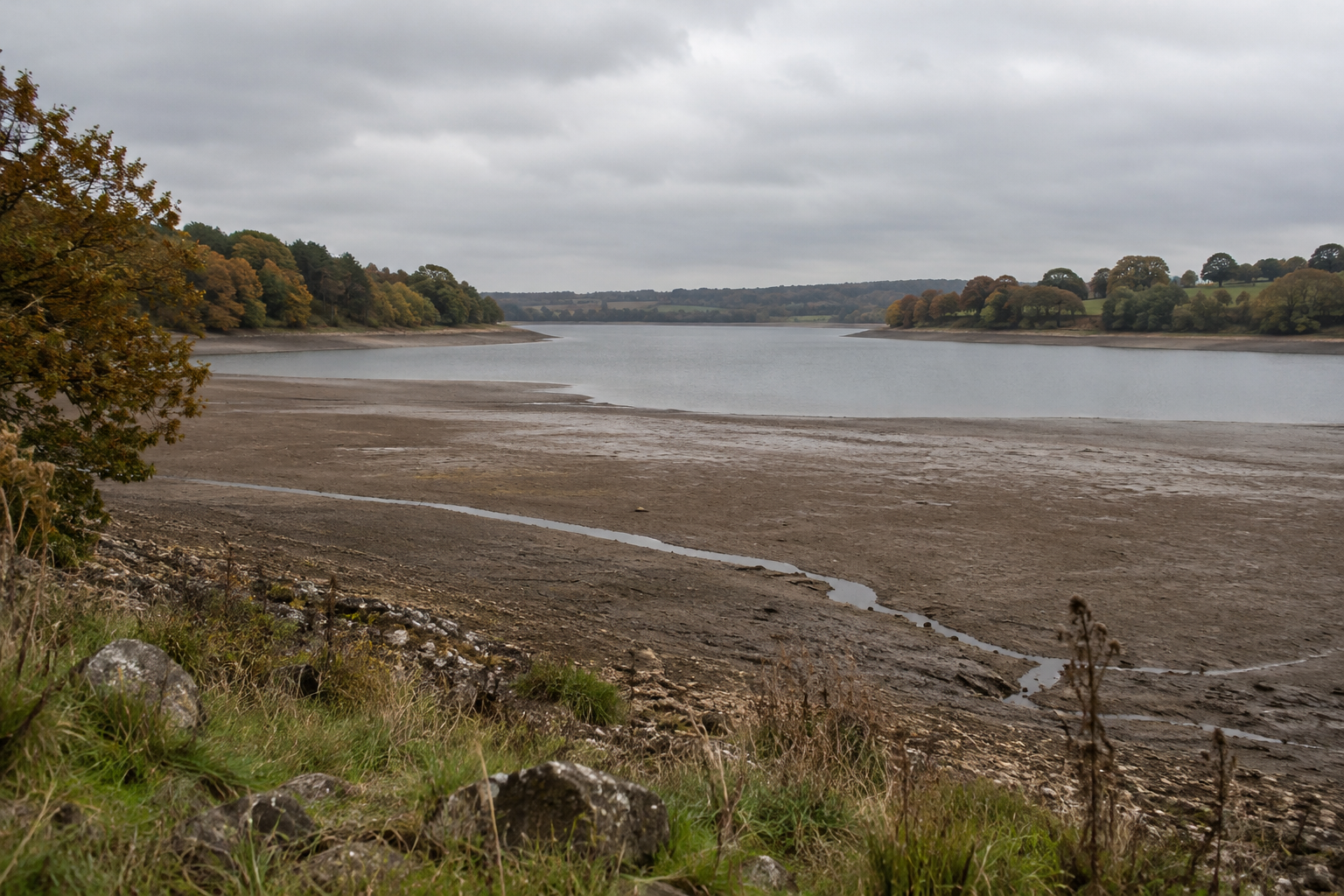
Ardingly reservoir was just 19% full, according to figures in the report. It serves about 95,000 properties in Haywards Heath, Uckfield and nearby areas. That makes its depleted storage directly relevant to a substantial number of homes and other premises, although the report did not announce a date when their supplies might be interrupted.
Wimbleball reservoir was at 16% storage, the Guardian reported. It supplies South West Water customers in East Devon, North Devon, Somerset and West Dorset, as well as Wessex Water customers in West Somerset. The Environment Agency said it would normally expect reservoir storage to be around 75% at this time of year.
The report also identified concerns about smaller South West Water reservoirs serving Devon and Cornwall. Drift and Stithians supply 56,000 households in Cornwall, while the Tottiford and Venford group serves 47,000 households in Devon. No storage percentages were given for those reservoirs, so their position cannot be compared numerically with Ardingly or Wimbleball.
Water minister Emma Hardy instructed the Environment Agency to put public water supplies first where severe drought creates an unavoidable conflict with environmental rules, according to the report. That instruction recognises that maintaining supplies may carry an environmental cost. It does not mean that every environmental protection has been suspended.
The background
The south-east and south-west experienced their driest April-to-September period in more than a century, according to the Guardian. The report linked the dry conditions to the climate crisis and said they followed the UK’s hottest summer on record. Reservoir levels in both regions have suffered as a result.
The storage figures concern individual reservoirs, not the percentage of water remaining across an entire county or company network. Wimbleball’s role in serving customers of two companies illustrates why a reservoir’s reach does not map neatly onto a single supplier. For households, the relevant information is therefore their own supplier’s assessment, alongside the wider regional drought position.
The additional restrictions being sought concern non-essential business water use, according to the report. They are distinct from a general instruction to stop supplying homes. Golf clubs, private schools and commercial car washes are among the premises that could be affected, but the source did not set out the proposed rules or exemptions in detail.
For property owners, prolonged dry weather also raises a separate question about ground movement. As general property context, some clay soils shrink as they dry, which can contribute to subsidence; that does not establish damage at any particular address. Property Pulse UK’s guide to why regional subsidence projections are not a verdict on an individual home explains that distinction.
The drought report contains no estimate of building damage, repair costs or resulting home-insurance premiums. A low reservoir reading should therefore not be treated as evidence that a property has suffered an insured loss. For the separate question of policy costs, the Property Pulse UK article on home-insurance renewal quotes and annual price changes provides relevant context.
Read moreSubsidence payouts reach £297m as clay-soil risks affect homebuying
What people are saying
Environment secretary Angela Eagle said the drought was on a scale not experienced for decades and that the government was increasing its support and planning. Speaking after a meeting of the National Drought Group, she said ministers were working closely with water companies to protect public supplies. She also urged people to consider how they could conserve water over the coming weeks.
Environment Agency chief executive Philip Duffy said water companies needed to act now rather than wait for a change in the weather. He called on them to follow their drought plans and take the measures needed to maintain public supplies. His statement placed responsibility for operational action with the companies, alongside the agency’s regulatory role.
Duffy also asked the public to reduce water use, saying this would leave more water in rivers and the wider environment. He identified farmers, wildlife and nature as beneficiaries of lower demand. The appeal therefore went beyond household supply security: it also addressed pressure on water resources shared by people, agriculture and ecosystems.
South East Water, South West Water and Southern Water want permission to impose non-essential user bans on businesses, the Guardian reported. Two of the applicants operate in areas now classified as being in severe drought. At the time of publication on 15 October, Eagle had not announced approval, despite calling for stronger drought planning.
The National Drought Group said the government and Environment Agency would increase their oversight through daily checks on reservoir and river levels. It also announced closer monitoring of water quality. These measures reflect two separate concerns in the report: the amount of water available and the environmental consequences of reduced flows.
What happens next
A decision on the three companies’ applications is the next unresolved policy step identified in the report. It gave no approval timetable or start date for wider business restrictions. Commercial property owners and occupiers should distinguish an application for powers from an approved restriction before assuming that particular activities have been prohibited.
The heightened water-quality monitoring will focus on risks associated with lower dilution of sewage, according to the National Drought Group. Less water in the environment can increase the consequences of pollution. The Guardian report did not announce that household tap water was unsafe, and its environmental warning should not be read as a drinking-water notice.
Businesses that abstract water will face additional compliance checks, the group said. These checks are intended to establish whether they are taking only the quantities they are permitted to take. They are separate from the proposed restrictions on non-essential business use: one concerns compliance with existing permissions, while the other would introduce additional limits.
For households, the immediate action requested by both Eagle and Duffy was to use water carefully and reduce demand. The report did not provide a household saving target, a recovery date for the reservoirs or a timetable for ending the drought response. It also did not announce nationwide domestic restrictions, so local supplier notices remain important when checking which rules apply.
Homeowners concerned about cracks or other possible movement should keep that issue separate from announcements about reservoir storage. As general consumer guidance, suspected building damage needs an assessment rather than a diagnosis based on regional drought status alone. Property Pulse UK’s coverage of subsidence claims and repair delays provides further context on the distinct repair and insurance process.
Why this matters
For households served by the named reservoirs, the reported storage levels make local water-supply updates particularly important. The government’s stated priority is to protect public supplies, but wider business restrictions remained undecided on 15 October. Homeowners, renters and landlords should distinguish those proposed limits from rules already in force. The report also gives no basis for assuming that tap water is unsafe or that a particular building has subsidence; both require separate, specific information.
Your questions answered
+Which parts of England are in severe drought?
Parts of Devon, Cornwall, Dorset, Somerset, East Sussex and West Sussex were in severe drought, according to the Guardian’s report of 15 October 2026. The designation does not necessarily cover every property in those counties.
+How low is Ardingly reservoir?
Ardingly was 19% full, according to figures reported by the Guardian. It serves about 95,000 properties in Haywards Heath, Uckfield and surrounding areas.
+Who gets water from Wimbleball reservoir?
Wimbleball supplies South West Water customers in East Devon, North Devon, Somerset and West Dorset, plus Wessex Water customers in West Somerset. Its storage stood at 16%, according to the report.
+Will the drought mean my water is cut off?
The report warned of threats to public supplies but did not announce household supply interruptions. Ministers and the Environment Agency said protecting public water supplies was the priority.
+Have new business water restrictions been approved?
As reported on 15 October, approval had not been announced for applications from South East Water, South West Water and Southern Water. Proposed non-essential user bans could affect golf clubs, private schools and commercial car washes.
+Does the drought warning mean tap water is unsafe?
The report did not say household tap water was unsafe. It described increased environmental water-quality monitoring because lower water levels reduce sewage dilution and raise pollution risks.
+Does severe drought mean my house has subsidence?
No. Drying clay soils can contribute to subsidence, but a regional drought designation does not establish damage at an individual property. The report provided no estimate of building damage.
+When will reservoir levels recover?
The report gave no recovery date. The National Drought Group announced daily monitoring of reservoir and river levels, while ministers and the Environment Agency asked people to reduce water use.
This story draws on reporting first published by Guardian Drought.

David McAllister, Insurance Correspondent
David covers home insurance, premiums and claims. Based in Glasgow, he previously reported on financial services and has written extensively on subsidence and flood cover.