LV= subsidence claim: family awaits rebuild after three-year dispute
An LV= subsidence claim has left a family awaiting major repairs, while the insurer reviews an annual premium increase from £400 to £2,500.
What happened
An LV= subsidence claim made in 2023 remained unresolved when the Guardian reported the family's complaint on 29 September 2026. The household, which includes three young children, said damage to its extension and conservatory had worsened while it waited for repairs. LV= General Insurance has since accepted that a full rebuild is needed, according to the report.
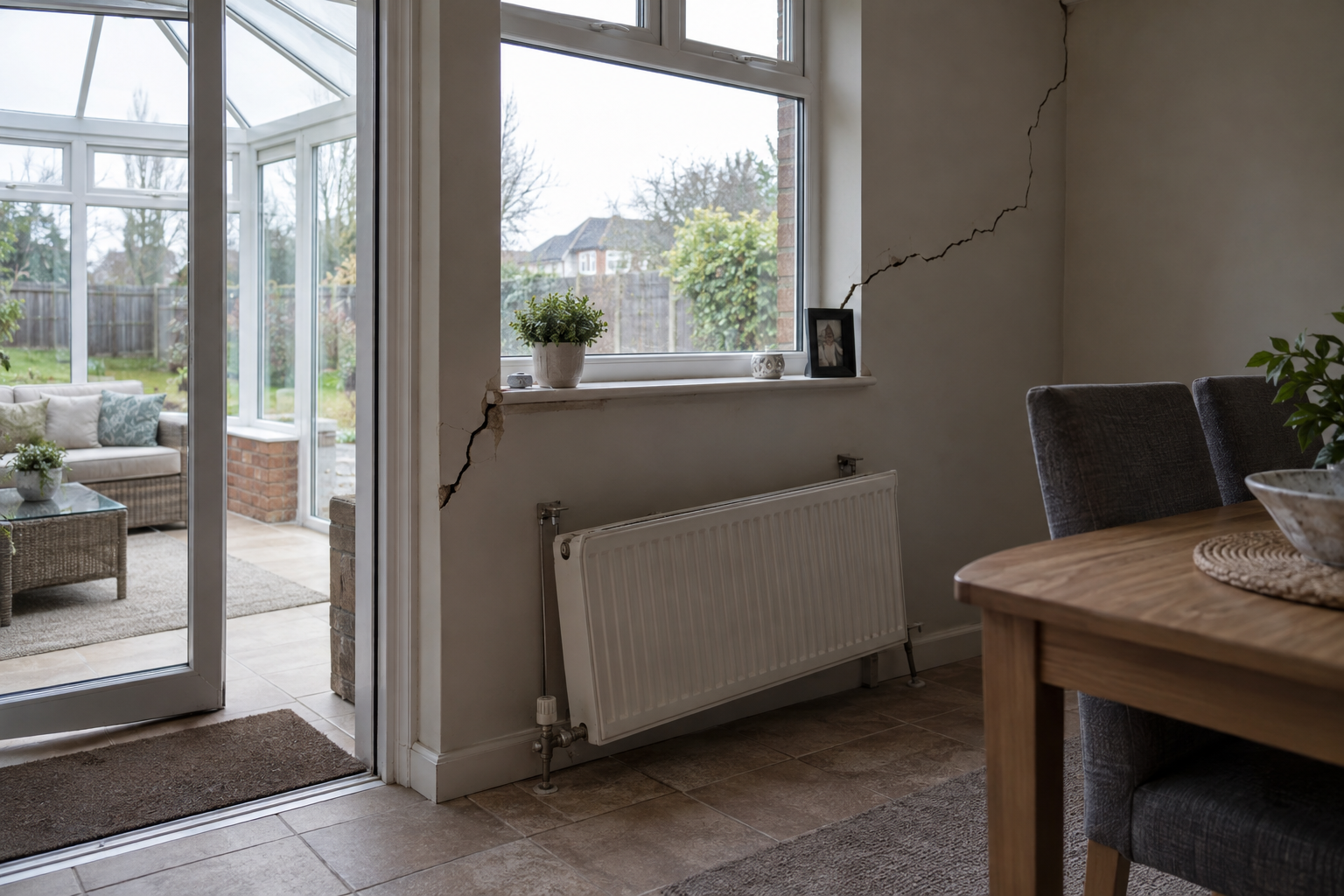
The policyholder described substantial cracks inside the property and said a radiator had broken away from the wall. They told the Guardian they had sent evidence of the deterioration to LV= but felt their concerns were not being addressed. These details were reported by the family; the article did not include a separate assessment of whether the occupied home was structurally unsafe.
The dispute concerns both the time taken and the proposed scope of repairs. The family said LV= had favoured limited work rather than the more substantial repairs recommended by independent experts. The insurer's subsequent acknowledgement that rebuilding was necessary marked a change in the proposed response, but the report did not establish when that decision was made.
LV= told the Guardian that work would start once designs and the relevant council processes were complete. No firm start date or completion timetable appeared in the report, leaving the family without a published schedule for the rebuild. The case brings a household-level perspective to the wider issue of subsidence claims and long repair waits.
The background
The family first notified LV= of subsidence damage affecting two parts of the home: its extension and conservatory. Subsidence means the ground beneath a building moves downwards, potentially affecting the support provided by its foundations. The source did not give the property's location, age or construction details, so the case cannot establish the risk to other homes nearby.
The Guardian placed the complaint against a background of drought-related subsidence, explaining that dry conditions can cause soil to shrink and nearby trees can worsen the effect. That connection also underlies a separate forecast of £250m in subsidence claims over four months. A forecast of insurance losses, however, does not determine the cause of movement at an individual property.
According to the report, the family had already arranged for several trees to be removed on LV='s advice. That action had not resolved the problem. The report did not identify those trees, give their removal dates or provide monitoring results showing how movement changed afterwards.
LV= said it had obtained a quotation for underpinning in February 2026, although that work did not take place. Underpinning is work intended to strengthen or extend the support beneath existing foundations; it is different from repairing surface cracks. The report did not disclose the quotation's value or explain why the quoted work was not carried out.
The family commissioned an independent surveyor in May 2026 after reaching a deadlock with the insurer, the Guardian reported. That surveyor concluded that the damaged extension required either underpinning or rebuilding. The recommendation presented two substantial repair options, rather than establishing that underpinning alone would necessarily be the final solution.
Read moreHome insurance after flooding costs £239 more a year in comparison study
What people are saying
The family's central allegation was that cost-cutting and delay had left them living with worsening damage. They described the insurer's earlier proposals as insufficient and said they had struggled to secure action despite supplying evidence. Those allegations reflect the policyholder's account; the Guardian report did not include an independent finding that LV= had deliberately delayed repairs to save money.
LV= said it recognised the family's frustration and regarded the claim as serious. Its explanation was that subsidence cases can take a long time because the cause of ground movement must be addressed before permanent repairs begin. That position distinguishes work intended to stop further movement from work intended to restore the damaged building.
The insurer attributed both the subsidence and the delay to a neighbour's eucalyptus tree, which it said the neighbour would not remove. The Guardian report did not include a response from that neighbour or an independent determination of responsibility for the tree. It also did not explain how LV= intended to proceed if the tree remained in place.
Alongside the repair dispute, the family said its annual premium had increased from £400 to £2,500 and expressed concern that the claim was the reason. LV= said it was reviewing the increase through its complaints procedure, but the report gave no explanation for the pricing decision. Broader movements in home insurance prices and renewal quotes do not, by themselves, explain an individual policyholder's increase.
What happens next
The next steps identified by LV= were completion of the rebuild designs and the council processes associated with the work. The report did not specify which permissions or approvals were outstanding, so it would be premature to describe this as a particular planning dispute. Nor did it establish whether the work would cover both the extension and conservatory in the same way.
The unresolved tree issue also leaves an important gap in the published account. LV= said the cause of movement needed to be addressed before permanent repairs, while also saying that rebuilding would follow completion of designs and council processes. The report did not set out how those requirements would fit together or whether any further tree-related action had been agreed.
For a household facing a similar claim, the practical distinction is between confirmation that repairs are needed and a documented plan to deliver them. Written details of the proposed work, outstanding conditions and expected dates can make that distinction clearer. A decision to rebuild should not be treated as evidence that work has been booked or that every obstacle has been resolved.
The premium complaint is a separate outstanding matter in LV='s account. Its review did not amount to a promise of a reduction, refund or compensation, and none was reported. Keeping renewal notices, correspondence and dated evidence of damage provides a clear record of the pricing and repair issues without assuming that they will have the same outcome.
The information supplied for this story contains no later update confirming that construction has begun or the premium review has concluded. The latest stated position remains the one reported on 29 September 2026: LV= accepted the need for rebuilding, with preparatory steps still outstanding. There is also no reported agreement on temporary accommodation, so no conclusion can be drawn about whether it was requested, offered or covered.
Why this matters
For homeowners, this case shows why agreement on the need for major repairs is different from having a confirmed timetable. According to the Guardian's report, the family still faced outstanding design and council steps after LV= accepted rebuilding was necessary. The premium review was also unresolved. Households handling similar claims need to distinguish the proposed repair, any conditions holding it up and the insurer's separate response to complaints about price or service.
Your questions answered
+What happened with the LV= subsidence claim?
A family claimed in 2023 for damage to its extension and conservatory. By the Guardian's report on 29 September 2026, repairs remained outstanding and LV= had acknowledged that a full rebuild was required.
+Why did LV= say the subsidence repairs were delayed?
LV= attributed the delay and ground movement to a neighbour's eucalyptus tree, which it said the neighbour refused to remove. It said the cause of movement needed addressing before permanent repairs.
+When will LV= start rebuilding the damaged property?
LV= said work would begin after designs and council processes were complete. The published report provided no firm start date or completion timetable.
+How much did the family's home insurance premium increase?
The family said its annual premium rose from £400 to £2,500. LV= said it was reviewing the increase through its complaints procedure; no outcome was reported.
+Did an independent surveyor recommend underpinning?
The surveyor commissioned by the family in May 2026 recommended either underpinning or rebuilding the damaged extension. LV= subsequently acknowledged that a full rebuild was needed.
+Did removing trees stop the subsidence?
According to the Guardian, the family had several trees removed on LV='s advice, but the problem persisted. LV= separately identified a neighbour's eucalyptus tree as the cause of movement.
+Has the home been declared unsafe?
The family described serious deterioration, including cracks and a radiator breaking away from a wall. The report did not include an independent assessment declaring the occupied home structurally unsafe.
This story draws on reporting first published by Guardian Property.

James Okafor, Consumer Affairs Reporter
James writes about the practical side of moving home — conveyancing, surveys and mortgages. Before joining Property Pulse UK he spent six years on a consumer rights desk investigating complaints against estate agents and lenders.