Traditional building retrofit centre planned for former Falkirk factory
Traditional building retrofit research will gain a new Falkirk base, with £1m backing for a facility focused on improving older properties while conserving their character.
What happened
Traditional building retrofit research is to gain a new base in Camelon, Falkirk, Historic Environment Scotland (HES) announced on 23 September 2026. Its national Retrofit Centre for Traditional Buildings will form part of Scotland’s Centre of Excellence for Canals and Traditional Skills. For owners of older homes, the project’s focus is on developing ways to improve building performance without sacrificing historic fabric.
HES said the retrofit facility has £1m in support from the UKRI Arts and Humanities Research Council, through its Research Infrastructure for Conservation and Heritage Science programme, known as RICHeS. The money backs a specialist research and training facility. The announcement does not offer grants for individual households carrying out improvements.
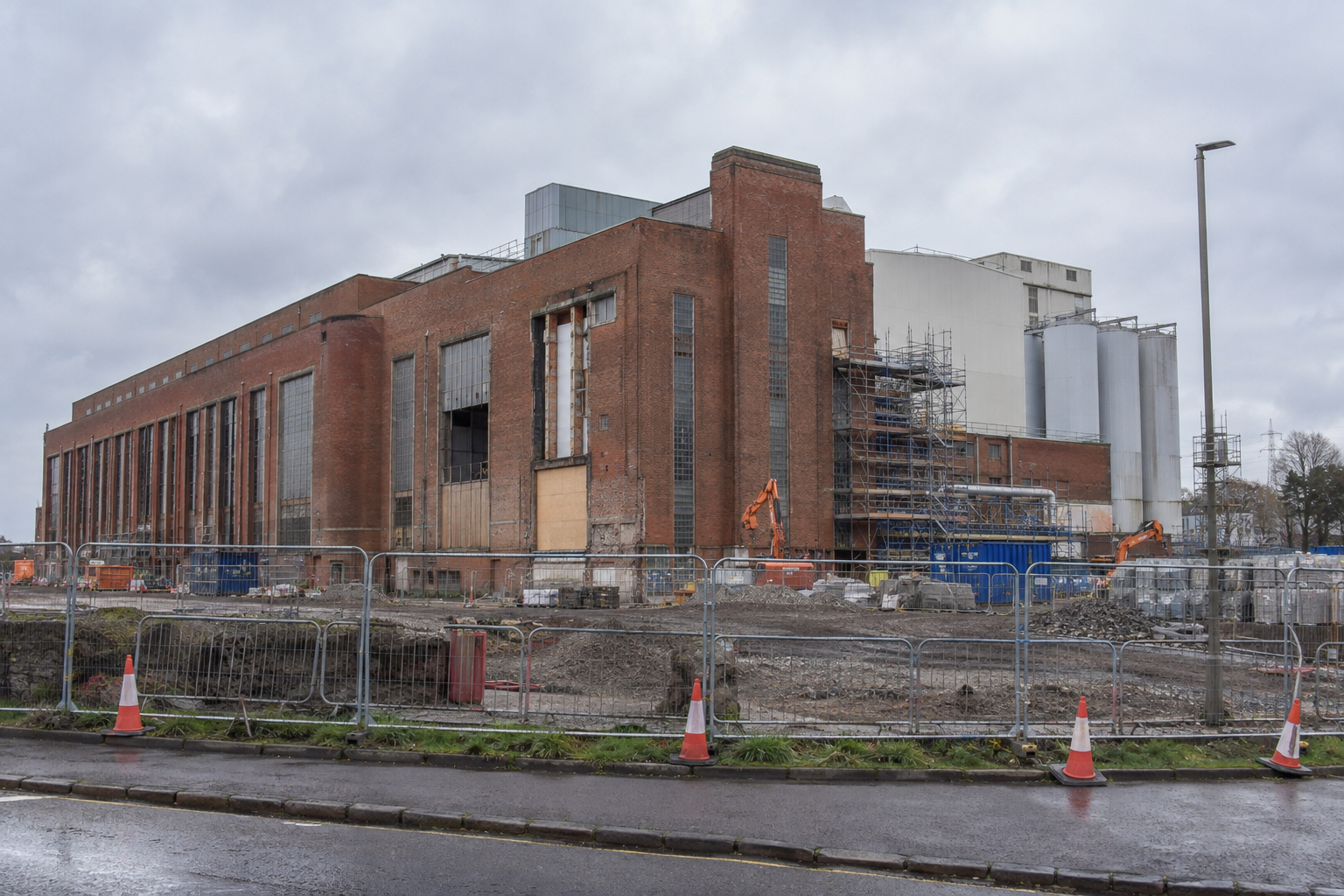
The wider centre is taking shape at the former AG Barr Irn Bru factory in Camelon, according to HES. Scottish Canals is leading the project in partnership with the heritage body. HES reported that substantial construction work was progressing both inside and outside the building when it issued the announcement.
The planned retrofit facilities include a research workshop, a collection of retrofit materials, a heritage science laboratory and space for sharing knowledge, HES said. The centre will also house specialist equipment and provide training. HES expects its work to benefit the UK beyond Scotland, although the announcement does not set out how homeowners elsewhere would access its services.
HES said the new facility would work alongside the Engine Shed in Stirling in supporting heritage skills and science. The announcement places research and practical training within a broader canals and traditional skills project. It does not give an opening date, a timetable for courses or a booking process for the Falkirk facility.
The background
The scale of Scotland’s traditional building stock helps explain the project’s focus. HES cited the 2024 audit of Scotland’s historic environment, which estimates that almost 500,000 buildings use traditional construction. That includes around 18% of homes, making the subject relevant to a substantial share of households rather than only owners of prominent historic properties.
The same audit estimates that traditional construction accounts for 24% of offices, 33% of shops and 41% of public buildings in Scotland. Those figures show why the centre’s remit extends beyond housing. HES links the work both to reducing emissions and to responding to climate change and the quality of indoor environments.
Retrofitting means making changes to an existing building to improve its performance, rather than replacing it with a new one. In older properties, energy improvements need to be considered alongside the way the building manages moisture, ventilation and heat. That broader approach also matters in home renovation decisions about daylight and summer comfort, where performance involves more than winter heating alone.
HES said the facility would use heritage science to develop solutions suited to traditional buildings while supporting their conservation. The emphasis on specialist training connects with the wider issue of heritage skills gaps affecting repairs to Scotland’s older homes. Research into suitable methods and the availability of people able to use them are related parts of maintaining this building stock.
The funding arrangements distinguish the retrofit facility from its host project. HES lists £4m of Scottish Government funding through the Falkirk and Grangemouth Growth Deal for the wider centre, alongside support from the National Lottery Heritage Fund, the Regeneration Capital Grant Fund, Scottish Canals, HES and the Pride in Place Impact Fund. The separate £1m RICHeS award supports the Retrofit Centre for Traditional Buildings.
Read moreHeritage skills gaps raise questions for repairs to Scotland’s older homes
What people are saying
Colin Tennant, HES’s head of technical conservation, said bringing the retrofit facility into the wider centre would expand the resources available for caring for the historic environment. His explanation covered infrastructure and monuments as well as traditional buildings. The intended scope therefore includes assets such as canals and aqueducts, not just improvements to domestic properties.
Tennant said the new location would allow HES to offer more training and undertake more heritage science research. He also identified collaboration as a benefit of bringing the activities together. Those are the organisation’s expected gains from the move; the announcement does not provide figures for future training places or research capacity.
Richard Millar, chief operating officer of Scottish Canals, described the partnership as an example of two public bodies combining their work. He said the wider centre would help retain and develop the traditional skills needed to care for canals and historic places. The retrofit facility adds building performance research to that existing skills remit.
Millar’s stated aim was to prepare future generations to improve traditional buildings while retaining their heritage value. That presents conservation and better performance as joint objectives, rather than treating one as a substitute for the other. Neither his comments nor HES’s announcement set a standard package of works that owners should apply to every older home.
HES also connects the centre to Scotland’s national net zero ambitions. Its position is that improving traditional buildings is necessary to that effort, alongside adapting to climate change. The announcement does not quantify expected carbon reductions, household energy savings or changes to bills, so it cannot establish the financial return from any particular retrofit measure.
What happens next
The next stages depend on the construction and fitting out of the wider Camelon centre. HES’s September announcement described work as progressing but did not provide a completion deadline. Owners and tradespeople interested in using the facility therefore still need details of when its training, equipment and other resources will become available.
HES advertised an opportunity to see some of the equipment intended for the retrofit facility during Doors Open Days at the Engine Shed in Stirling on 26 and 27 September 2026. Visitors were also due to hear about the wider project and future opportunities for learning and volunteering. Those advertised dates have now passed; the announcement does not report attendance or outcomes.
For people seeking examples of the work, HES pointed to two digital demonstrations on its Sketchfab profile. These are a Traditional Energy Efficiency model and a Traditional Building Adaptation model. HES described them as illustrations of the kinds of retrofit measures researched and taught at the centre, rather than assessments of an individual property.
Homeowners considering how to pay for improvements should distinguish this research funding from finance offered to households. The £1m award is for the facility, not a sum available for owners to claim. Separate retrofit mortgage and social housing finance schemes have their own purposes and conditions; the Falkirk announcement does not create eligibility for them.
For landlords and owner-occupiers, a further question is how the centre’s research will reach those commissioning work on homes. HES has described a UK-wide knowledge-sharing role, but has not published arrangements for domestic advice, testing requests or access to the materials library in this announcement. Those details will determine how directly households can use the new resource.
Why this matters
For owners and landlords of traditional homes, improving energy performance involves decisions about the existing building as well as new equipment or materials. HES’s planned centre could strengthen the research and skills available to support those decisions, with intended benefits across the UK. It is not, however, a new household grant scheme or a confirmed advice service. Access arrangements, training dates and published research will determine how useful the facility becomes to people planning work.
Your questions answered
+Where will Scotland’s Retrofit Centre for Traditional Buildings be?
HES says it will be within Scotland’s Centre of Excellence for Canals and Traditional Skills at the former AG Barr Irn Bru factory in Camelon, Falkirk.
+When will the Falkirk retrofit centre open?
HES did not give an opening date in its 23 September 2026 announcement. It said internal and external construction work at the wider centre was progressing.
+Can homeowners apply for the £1m retrofit funding?
The £1m supports the research and training facility through the UKRI Arts and Humanities Research Council’s RICHeS programme. The announcement does not offer grants to individual homeowners.
+What will the retrofit centre do?
HES says it will combine training, research and specialist equipment to support improvements to traditional buildings. Planned resources include a research workshop, retrofit materials library and heritage science laboratory.
+How many homes in Scotland are traditionally built?
The 2024 historic environment audit estimates that around 18% of Scottish homes use traditional construction. Across homes and other property types, the estimated total is almost 500,000 buildings.
+Will the retrofit centre help people outside Scotland?
HES expects UK-wide benefits from research and knowledge sharing. Its announcement does not explain how homeowners outside Scotland would access the facility’s services.
+Will the centre provide advice for my older house?
The announcement does not set out a domestic advice service or access arrangements for individual owners. HES has described research, training and knowledge-sharing functions, with further practical details still needed.
This story draws on reporting first published by Historic Environment Scotland News.

Eleanor Whitfield, Property Correspondent
Eleanor covers the UK housing market, from monthly price indices to regional trends. She previously reported on business and economics for regional newspapers in Yorkshire and holds a degree in economics from the University of Leeds.