Heritage skills gaps raise questions for repairs to Scotland’s older homes
Heritage skills gaps reported by Scottish employers have implications for maintaining older homes, as Historic Environment Scotland calls for stronger training and clearer career routes.
What happened
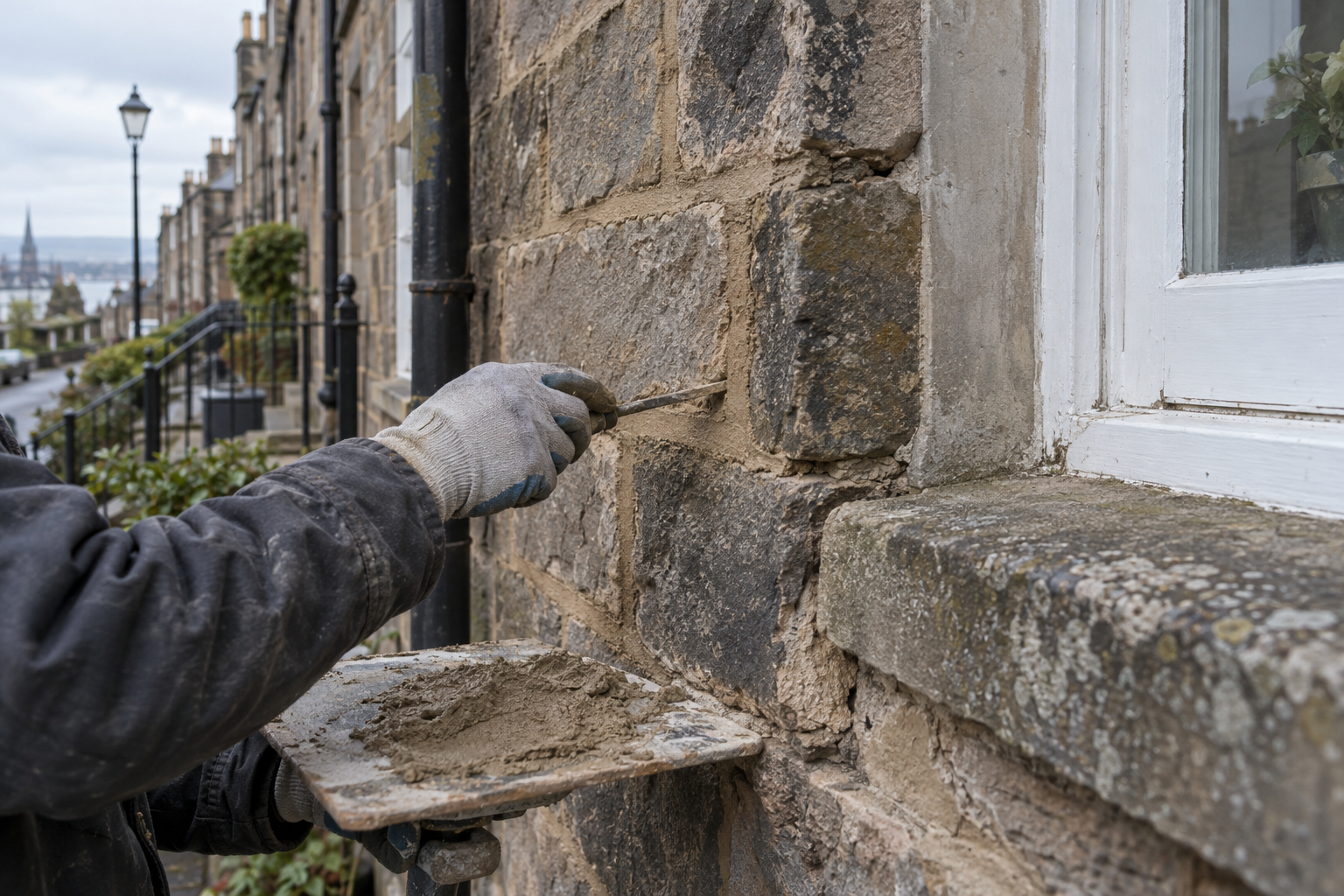
Heritage skills gaps extend beyond the upkeep of Scotland’s monuments to the workforce needed for everyday building repairs, according to Historic Environment Scotland (HES). Its latest Employers’ Skills Survey found that 79% of respondents in Scotland’s historic environment sector had gaps in skills or knowledge. HES said specialist expertise was needed to maintain homes as well as public buildings and historic sites.
Traditional and specialist skills were the most frequently identified area of difficulty, reported by 54% of responding organisations, HES said. The finding concerns the availability of expertise within the sector, rather than the condition of individual properties. It does not mean that 54% of older homes need repairs or that the same proportion of contractors lack suitable skills.
Problems also affected the routes through which workers acquire those skills. According to HES, 58% of respondents reported difficulties with training provision, while 49% said routes into the sector and onwards through a career were not clear and accessible. Those findings point to separate challenges in providing learning opportunities and helping people navigate them.
Looking ahead, 77% of respondents identified a shortage of skilled or qualified professionals among the main drivers of future skills and labour problems, HES said. An ageing workforce was identified by 67%. These are employers’ assessments of future pressures, not a count of unfilled jobs or a forecast of how many workers will retire.
HES reported that 40% expected skills gaps to have a considerable effect on organisational growth, while 25% anticipated a huge effect on sustainability. The announcement did not provide estimates of additional repair costs or waiting times for homeowners. It also did not give the survey’s sample size or fieldwork dates, limiting how precisely readers can assess its coverage.
The background
HES is Scotland’s lead historic environment body and a charity working across heritage, education and environmental protection. According to the organisation, it cares for more than 300 properties of national importance and researches architectural and archaeological sites and landscapes. Its workforce interests therefore cover a wider range of activity than domestic renovation alone.
The organisation said traditional skills help keep homes, schools, libraries and community buildings protected against wind and rain and suitable for continued use. For owners, that makes the issue relevant to ordinary maintenance, not just major restoration projects. The wider decisions involved in improving an existing property also feature in coverage of daylight and summer comfort in home renovation.
Traditional construction can require repair methods and materials suited to the existing building, rather than an approach chosen solely because it works in modern construction. Listed status creates a separate consideration: some alterations require listed building consent. The listing of Barn Close and its Arts and Crafts interiors illustrates how heritage protection can cover internal features as well as a building’s exterior.
One established training route is HES’s Craft Fellowship programme, which began in 1996 and reaches its 30th anniversary in 2026. HES said it has helped more than 60 people develop specialist craft expertise over that period. The disciplines have included stone carving, blacksmithing, stained glass and thatching, showing the range of knowledge involved in caring for historic fabric.
According to HES, fellows develop practical experience with specialist organisations outside HES and with experienced practitioners. The organisation also highlighted heritage science, digital technology and innovation as areas contributing new approaches to understanding and conserving buildings and places. Its assessment therefore concerns both established craft knowledge and newer technical expertise, rather than treating heritage work as a single occupation.
Read moreGlasgow Cathedral spire repairs tackle damage linked to rusting steel fixings
What people are saying
Dr David Mitchell, HES’s Director of Cultural Assets, said Scotland needed to strengthen its workforce to care for buildings and places used in everyday life. He linked the survey findings to a need for action now on future skills. His comments placed the emphasis on developing people, rather than announcing a new requirement for property owners.
Mitchell said employers wanted clearer career routes, accessible training and opportunities to learn from experienced professionals. He argued that HES, industry, employers, training providers and government all had responsibilities in addressing those needs. The response he described would involve organisations working together rather than relying on one training programme or institution.
Mitchell also presented the fellowship programme’s anniversary as evidence of the value of sustained investment in specialist workers. He called for that approach to be developed alongside apprenticeships and other routes into training. His stated aim was to help people enter heritage careers, deepen their expertise and transfer knowledge between generations.
HES highlighted the research during Heritage Careers Week, held from 5 to 9 October 2026. According to the organisation, the annual employer-led initiative promotes the variety of heritage careers and seeks to improve access and diversity. It is intended to reach people considering their first job, changing careers or returning to employment.
HES said employers work with Developing the Young Workforce regional groups and local schools to provide in-person and online activities during the week. Families and schools are among the audiences, alongside people exploring employment options. That outreach addresses awareness of heritage work, a different task from providing the specialist instruction needed once someone enters the sector.
What happens next
HES said the research forms part of the Skills Investment Plan for Scotland’s Historic Environment. The plan brings sector organisations together to improve training, career progression and specialist workforce development. The announcement did not set a new recruitment target, funding total or deadline for closing the gaps identified by employers.
The routes HES said it supports include apprenticeships, workplace learning, short courses and specialist training. These offer different ways to build knowledge, but the announcement did not specify available places, entry requirements or application dates. Anyone considering training would need to check the details of individual opportunities rather than treat the survey announcement as a recruitment offer.
For owners preparing repairs, the practical distinction is between finding a contractor and finding one with experience relevant to the building and proposed work. Asking about comparable projects and the intended materials can help clarify that fit. These are general procurement checks, not new rules introduced by HES or a guarantee about the quality of a particular contractor.
Owners planning energy improvements also need to separate access to finance from the technical suitability of the work. Coverage of retrofit mortgages and social housing finance schemes addresses the funding side of that decision. The HES findings concern workforce capability and do not establish which energy measures would be appropriate for any particular older home.
The survey covers respondents in Scotland’s historic environment sector, so its percentages should not be applied to every UK building firm or local repair market. Nor does the announcement establish that a particular project will be delayed. For homeowners and landlords, local availability, the condition of the property and the scope of the proposed work remain questions to establish separately.
Why this matters
For owners and landlords of older Scottish homes, HES’s findings highlight the importance of access to people with appropriate repair expertise. They do not establish that bills will rise or that every project faces a delay. The useful distinction is between the sector-wide training problem and the needs of an individual building. Planning work involves checking relevant experience, suitable methods and any consent requirements, while the wider response depends on employers, training providers and public bodies developing the workforce.
Your questions answered
+How many heritage employers in Scotland report skills gaps?
According to Historic Environment Scotland, 79% of employers responding to its latest Employers’ Skills Survey reported skills or knowledge gaps. That percentage describes survey respondents, not all Scottish employers.
+Which heritage skills are in short supply?
HES said traditional and specialist skills were the most commonly identified gap, reported by 54% of respondents. The announcement did not provide a shortage ranking for individual trades.
+Will heritage skills shortages make home repairs more expensive?
The HES announcement did not estimate repair costs or price increases for homeowners. It reported employers’ concerns about skills, training and future workforce pressures, rather than measuring domestic repair bills.
+Do heritage skills matter for ordinary older homes?
Yes. HES said traditional and specialist expertise is needed to repair and maintain homes, schools, libraries and community buildings, as well as prominent historic sites.
+What is the HES Craft Fellowship programme?
It is a specialist craft development programme that began in 1996. HES said it has supported more than 60 people, with practical learning covering crafts including stone carving, blacksmithing, stained glass and thatching.
+How can people train for heritage careers in Scotland?
HES said it supports apprenticeships, workplace learning, short courses and specialist training. Its announcement did not give application dates, entry requirements or the number of places available.
+When was Heritage Careers Week 2026?
Heritage Careers Week ran from 5 to 9 October 2026. HES described it as an employer-led initiative promoting heritage careers and routes into the sector.
This story draws on reporting first published by Historic Environment Scotland News.

Robert Ashdown, Period Property Specialist
Robert writes about caring for older, listed and period homes, including damp, structural movement and conservation rules. He has reported on heritage and housing for over fifteen years.