Retrofit mortgages: what the 2024 finance schemes offered households
Retrofit mortgages and a social housing pilot announced in August 2024 offered different ways to fund improvements, with savings dependent on qualifying work and delivery.
What happened
Retrofit mortgages and a separate social housing finance pilot were announced in August 2024 to help fund lower-carbon homes, according to Edie’s report published on 15 August 2024. The initiatives addressed different groups: individual mortgage borrowers and social landlords. Their announced terms are historical, rather than confirmation of what households can obtain on 15 October 2026.
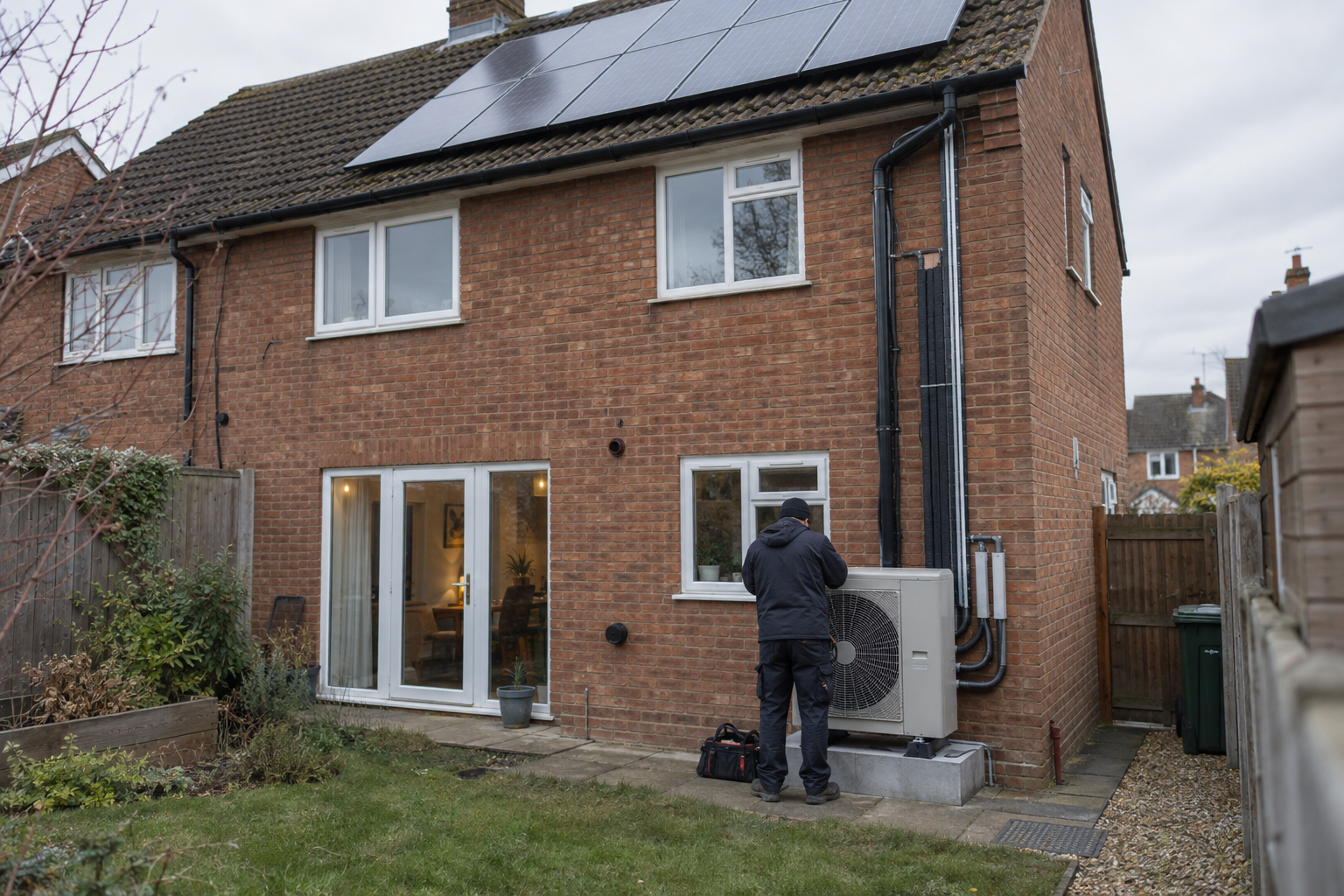
London-based lender Perenna partnered with heating provider Heatio on a mortgage offer tied to completed home improvements. According to the launch details reported by Edie, borrowers had to install a qualifying solar panel system or heat pump within two years. Completing that work would trigger a reduction in their mortgage interest rate.
The announced reduction was 0.20 percentage points, applying to the outstanding mortgage balance for the remaining term. The report illustrated the benefit as roughly £500 less in annual mortgage payments on a £300,000 mortgage. That was an example, not a stated saving for every borrower, and it did not establish the household’s net benefit after installation costs.
Separately, a consortium led by consultancy and venture builder Pineapple Sustainable Partnerships planned to test retrofit finance across up to 1,000 homes owned by Places for People. According to the report, the pilot combined energy-efficiency improvements with lower-carbon heating. Its purpose was to test a model that other social landlords could eventually adopt.
NatWest, British Gas, Tallarna and Sero joined Places for People and Pineapple in the consortium, Edie reported. Tallarna brought software and insurance expertise, while Sero’s contribution covered retrofit technology and billing services. This was a landlord-led programme, distinct from Perenna’s mortgage offer for individual households.
The background
Retrofit means improving an existing building rather than replacing it with a new one. Measures can address energy lost through the building or change how heat and electricity are supplied. The two initiatives reported in August 2024 focused on financing those changes, rather than simply identifying which technologies were available.
For social landlords, the proposed service combined access to funding with professional assessments of each property’s energy performance, according to Edie. Experts would help identify suitable improvements, while the programme would also support communication with residents. The model therefore addressed the practical organisation of works as well as the initial funding requirement.
The pilot also intended to measure environmental and health benefits alongside the financial value of using less energy. According to the report, its wider ambition was a commercially viable approach that could operate across Britain’s social housing sector. Those were objectives for the trial, not evidence that savings or health improvements had already been delivered.
The affordability case extended beyond social housing. University of Edinburgh research reported that week found low-income households paid between 10% and 20% more for gas and electricity than wealthy households between 2011 and 2019, according to Edie. The research covered owned and privately rented homes as well as social housing; it was not an evaluation of either finance scheme. Energy costs are also distinct from the housing payments discussed in coverage of rental affordability pressures.
For mortgage borrowers, an improvement-linked discount is only one part of the cost of owning a home. The underlying mortgage rate, balance and repayment period remain important, alongside the cost of the installation itself. That distinction also matters in the wider relationship between mortgage rates and family-home affordability: a rate incentive does not remove the need to assess the whole household budget.
Read moreGlasgow Cathedral spire repairs tackle damage linked to rusting steel fixings
What people are saying
NatWest Group’s director and sustainability lead Marcos Navarro said the social housing project would explore how energy improvements and financing could ease landlords’ financial burden. He also identified better-quality, more comfortable homes as intended benefits. According to his comments reported by Edie, NatWest wanted to use the experience with Places for People to support other social landlords.
The Department for Energy Security and Net Zero welcomed the social housing initiative, the report said. Miatta Fahnbulleh, then a junior minister in the department, linked more efficient social homes and lower-carbon heating with reduced emissions and stronger energy independence. Her comments described the policy benefits sought from the programme, rather than measured results from the pilot.
Heatio founder and chief executive Simon Roberts argued that access to green home technology had been concentrated among wealthier households. According to his launch comments, the partnership with Perenna aimed to make heat pumps and solar panels easier to finance and manage. His position focused on the upfront affordability barrier facing households considering these technologies.
The government’s role in the mortgage initiative was more direct than an endorsement. Edie reported that DESNZ provided financial support through its Green Home Finance Accelerator, although the amount was not disclosed. The department’s involvement did not, in the supplied report, establish that installation costs would be fully covered for borrowers.
Ed Miliband, then the energy secretary, had also said he would investigate stamp duty or council tax changes to reward homeowners who reduced heating emissions, according to Edie. The report said his team intended to support growth in green mortgages. These were separate policy intentions, not announced tax entitlements attached to Perenna’s offer.
What happens next
Under Perenna’s announced terms, the key step for borrowers was completing a qualifying installation within the two-year window. A pledge to improve the home was not, by itself, the stated trigger for the discount. The supplied report did not provide a full list of technical eligibility requirements or explain what evidence borrowers would need to submit.
Perenna and Heatio also encouraged homeowners to obtain a complimentary, tailored home energy improvement plan, according to the report. That plan could look beyond the first solar panel or heat pump installation. However, the report did not say that every further measure identified by the plan would attract another mortgage discount or receive funding.
For the social housing consortium, the next task was to test whether the combined funding and delivery model could work at a larger scale. The August 2024 report did not give a completion date, a property-by-property schedule or measured household bill savings. It therefore provides no basis for saying that all 1,000 homes subsequently received improvements.
The supplied launch information also does not confirm current mortgage availability, pricing or eligibility on 15 October 2026. Anyone considering such an offer would need current lender terms before relying on the historic discount. Wider mortgage costs facing buyers provide context, but cannot establish whether this particular product remains open or competitive.
The same distinction applies to the proposed tax incentives and any wider social housing rollout. The report recorded an intention to investigate tax changes and an ambition to extend the pilot, not completed policy decisions. Current confirmation from the relevant government department, lender or housing provider would be needed before treating those plans as an available household benefit.
Why this matters
For homeowners, the August 2024 announcements showed how borrowing incentives could support energy improvements, but the mortgage discount was not a calculation of total savings after installation costs. For social tenants, the proposed benefits depended on their landlord delivering suitable work. Neither group can use launch promises as proof of current availability or completed improvements. The practical distinction is between finance offered, work carried out and savings actually achieved.
Your questions answered
+What is a retrofit mortgage?
It is a mortgage linked to improvements in an existing home’s energy performance. Perenna’s August 2024 offer promised a rate reduction after a qualifying solar panel or heat pump installation.
+How much was Perenna’s green mortgage discount?
The announced reduction was 0.20 percentage points on the outstanding mortgage balance for the remaining term. The report gave an illustrative annual mortgage payment saving of roughly £500 on a £300,000 mortgage.
+What work qualified for the Perenna mortgage discount?
The August 2024 offer required a qualifying solar panel or heat pump installation within two years. The supplied report did not include the complete technical eligibility rules.
+Is the Perenna and Heatio mortgage still available?
The supplied information describes the August 2024 launch. It does not confirm availability or terms on 15 October 2026, so current information from the lender is needed.
+Which social homes were included in the retrofit pilot?
The pilot was planned for up to 1,000 Places for People homes. Pineapple Sustainable Partnerships led the consortium, which included NatWest, British Gas, Tallarna and Sero.
+Did the government fund the green mortgage scheme?
According to the August 2024 report, DESNZ financially supported the Perenna and Heatio initiative through its Green Home Finance Accelerator. The amount was not disclosed.
+Were stamp duty discounts announced for energy improvements?
The report said Ed Miliband intended to investigate stamp duty or council tax changes rewarding lower heating emissions. It did not announce an enacted tax discount or eligibility rules.
This story draws on reporting first published by Edie.

Hannah Greaves, Legal Affairs Reporter
Hannah reports on leasehold reform, freehold rights and property law. She studied law at the University of Bristol before moving into journalism and follows legislation closely as it passes through Parliament.