Home renovation survey raises questions over daylight and summer comfort
Home renovation decisions should balance daylight with summer comfort, designers say, after a manufacturer-backed survey found mixed views about natural light in completed extensions.
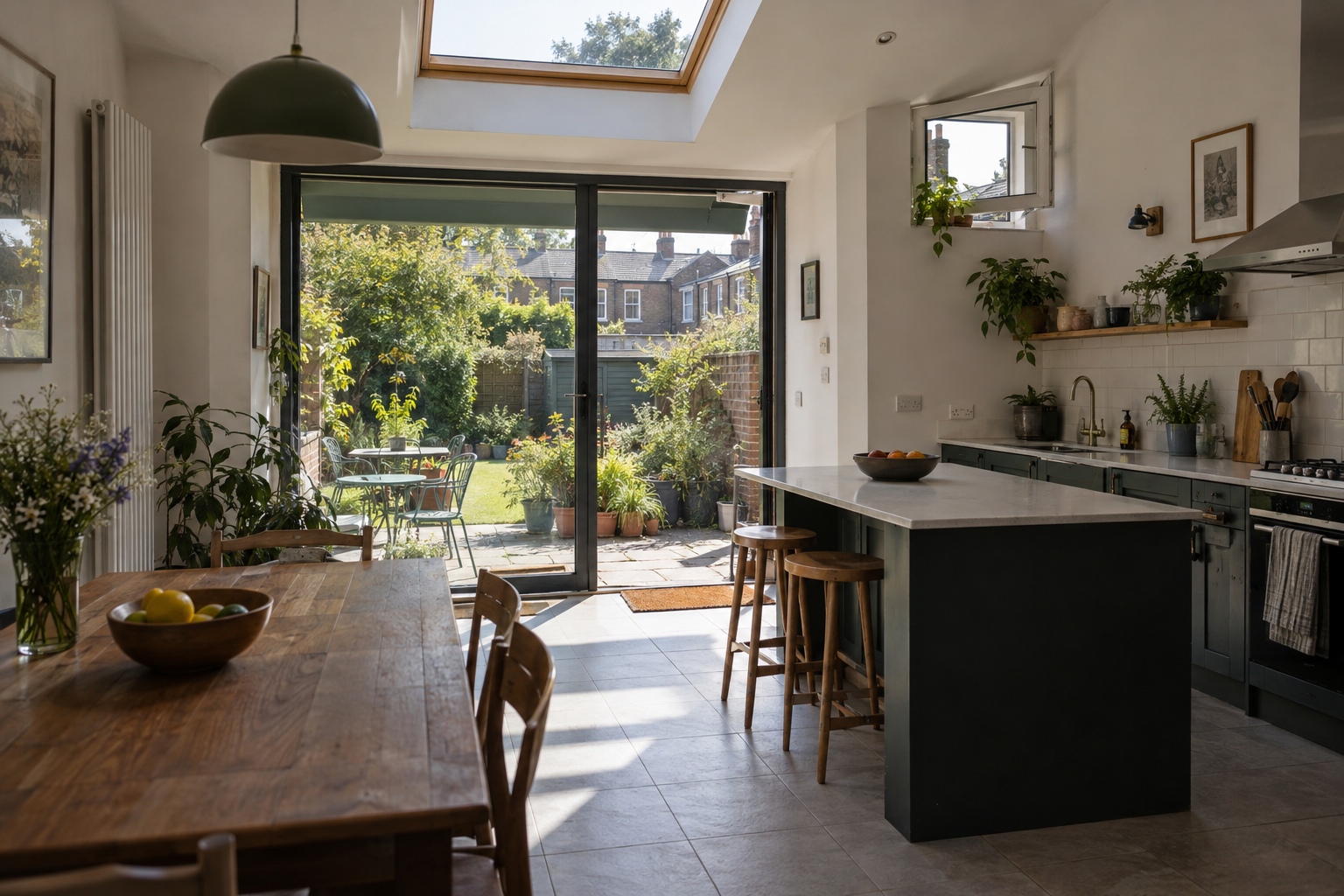
What happened
A home renovation survey has highlighted a gap between adding space and getting the daylight right, prompting designers to urge earlier consideration of summer comfort. Roof window manufacturer VELUX commissioned the research among 2,000 UK homeowners. The findings were reported by the Daily Express on 28 August 2026.
Among respondents who had completed an extension, 40% said their new space had about the right amount of natural light. That finding does not establish that the remaining homeowners disliked their renovation overall. The published figures do not separate people who wanted more daylight from those who thought their extension had too much.
The research also found that 13% wished they had paid more attention to daylight when designing their space. One in ten said improved daylight would encourage them to spend more time in the renovated area. These answers concern how people experience their homes, rather than measured light levels or recorded room temperatures.
When extension owners recalled their original priorities, extra space ranked first at 37%, followed by natural light at 35% and energy efficiency at 24%. Space therefore led daylight by only two percentage points. The figures suggest that daylight was already an important consideration, even though the finished result did not always match expectations.
Asked which features they believed added value to a property, 51% of homeowners selected plentiful natural light, putting it ahead of building structure, transport links and décor. That is a finding about owners’ perceptions, not evidence of a particular increase in sale price. The published account gives no valuation premium for a brighter extension.
The background
The climate context is a shift towards hotter, drier UK summers, according to Met Office projections cited in the report. Hot spells are also expected to become more frequent and intense. For renovation projects, the designers’ concern is that choices made now may remain part of a home long after its owners’ current experience of summer weather.
According to the design advice accompanying the survey, the direction a room faces and the position of its windows affect both daylight and heat gain. A heavily glazed extension can provide a bright interior, but its comfort also depends on shading and ventilation. The amount of glass alone cannot answer how that space will perform during hot weather.
Loft conversions present a related design question, the report says: additional usable space needs a plan for managing heat as well as admitting light. VELUX recommends considering whether warm air can escape through openings at higher levels. Its advice treats ventilation as part of the initial design, rather than something to address only after a room becomes uncomfortable.
The European Green Paper The Housing We Need For The Future We Want estimates that around 85% of Europe’s existing building stock will remain standing in 2050. Developed by VELUX Group, Building Performance Institute Europe and other partners, it argues for adapting buildings already in use. That European estimate is not a separate forecast for British homes.
Energy efficiency formed part of the survey’s renovation priorities, but the published findings include no project budgets or financing estimates. For households considering related work, the distinction between design choices and paying for them is covered in the retrofit finance schemes offered to households in 2024. Material choices are a separate consideration, explored in coverage of carbon evidence and the Timber in Construction Roadmap; neither subject establishes whether a particular room will stay cool.
Read moreGlasgow Cathedral spire repairs tackle damage linked to rusting steel fixings
What people are saying
Mark Hood, director of architecture at Resi, argues that British renovation briefs need to move beyond pursuing more space and glazing. He says homeowners have traditionally sought to capture sunlight, whereas hotter summers make managing it increasingly important. His recommendation is to consider orientation, ventilation and external shading together from the outset.
Hood points to approaches used by European neighbours accustomed to warmer summers. His argument is not that British homes should become darker, but that designers should balance daylight with comfort throughout the year. That position distinguishes useful natural light from an unchecked ambition to maximise the amount of sunlight entering a room.
Richard Williams, senior architectural development manager at VELUX, says the historic emphasis on retaining winter warmth needs to sit alongside summer performance. He argues that daylight, shading, ventilation and thermal comfort should work together. His concern is the long life of renovation work, rather than simply making a room comfortable in the season when it is completed.
The Green Paper takes a broader position, linking improvements to existing homes with climate change, energy security, affordability and health. Separately, the source reports that 40% of Europeans say daylight affects their physical or mental wellbeing. That European figure should not be presented as a finding from the survey of 2,000 UK homeowners, and the account does not provide its underlying sample details.
VELUX’s commercial role is relevant when assessing the findings: it sells roof windows as well as commissioning the research and contributing to the Green Paper. The published account does not provide the UK survey’s fieldwork dates, full questionnaire or the size of the completed-extension subgroup. Those omissions limit how closely readers can examine the percentages or apply them to other renovation projects.
What happens next
For households still drawing up plans, VELUX recommends asking how the proposed room will perform on the hottest and coldest days before building work starts. That means considering prolonged heat alongside winter warmth, not judging a design only by its appeal in mild weather. Its advice puts these questions at the briefing stage, when the arrangement of the space is still being decided.
The manufacturer also recommends examining the direction the room faces and where glazing will sit. It says external shading can intercept solar heat before it enters the building and should be considered alongside window choices. The published guidance does not prescribe a single glazing area or shading arrangement suitable for every extension.
Ventilation needs an equally explicit place in the plan, according to VELUX. Its suggested questions include whether warm air has a route out at a higher level. The survey does not assess individual ventilation systems, so it cannot tell an owner which equipment or opening arrangement will solve overheating in a particular property.
For listed homes, design preferences may also need to be reconciled with heritage protection. Listed building consent may be required for alterations affecting a building’s special character, a separate issue from the daylight findings. The protection of Barn Close’s Arts and Crafts interiors in Stanwix illustrates why renovation planning can involve internal features as well as a property’s exterior.
VELUX’s final recommendation is to consider the conditions a renovation could face by 2050, including summer temperatures and winter energy efficiency. The source sets out design advice, not a new regulatory requirement or funding offer. For owners with completed extensions, it also provides no measured diagnosis of overheating: dissatisfaction with daylight and excessive room temperature remain different questions.
Why this matters
For homeowners spending money on an extension or loft conversion, the findings raise a practical question about how the finished room will feel, not just how much space it adds. Resi and VELUX recommend discussing daylight, shading and ventilation before construction begins. The figures need careful interpretation, however: they do not prove widespread regret about renovation spending, measure overheating or establish a resale premium. Their clearest use is to inform the design brief, rather than predict an individual project’s outcome.
Your questions answered
+Are most homeowners unhappy with their extensions?
The reported survey figures do not establish that. Among respondents with completed extensions, 40% said natural light levels were about right. That is not the same as measuring overall satisfaction with the building work.
+How many homeowners were in the VELUX renovation survey?
VELUX commissioned research among 2,000 UK homeowners. The published account does not state how many had completed an extension, so the base for the extension-specific findings is not given.
+Does natural light add value to a house?
In the survey, 51% of homeowners believed plentiful natural light added value. The findings measure opinion, not sale prices, and provide no estimate of how much extra a brighter home might fetch.
+Will a glass extension get too hot in summer?
The designers say comfort depends on orientation, glazing position, shading and ventilation. The survey does not test individual extensions or establish that every heavily glazed room will overheat.
+What should I consider before planning a loft conversion?
The advice accompanying the survey recommends planning for heat management as well as daylight. VELUX specifically suggests considering ventilation early, including whether warm air can escape through higher-level openings.
+Can external shading help keep an extension cool?
According to VELUX, external shading can reduce solar heat before it enters a building. The manufacturer recommends considering it alongside glazing choices, but gives no single specification suitable for every home.
+Are there new renovation rules because of hotter summers?
This report announces no new regulatory requirement. It presents survey findings and design recommendations from VELUX and Resi about daylight, shading, ventilation and year-round comfort.
This story draws on reporting first published by Daily Express.

Sophie Carrington, Homes & Renovation Writer
Sophie writes about extensions, loft conversions and renovation projects. A former homes magazine sub-editor, she has renovated two Victorian terraces herself and focuses on costs, permissions and avoiding common pitfalls.