Timber in Construction Roadmap puts carbon evidence at the centre of material choices
Defra’s Timber in Construction Roadmap encourages better carbon measurement, with RICS highlighting the evidence needed to assess timber across a building’s full life.
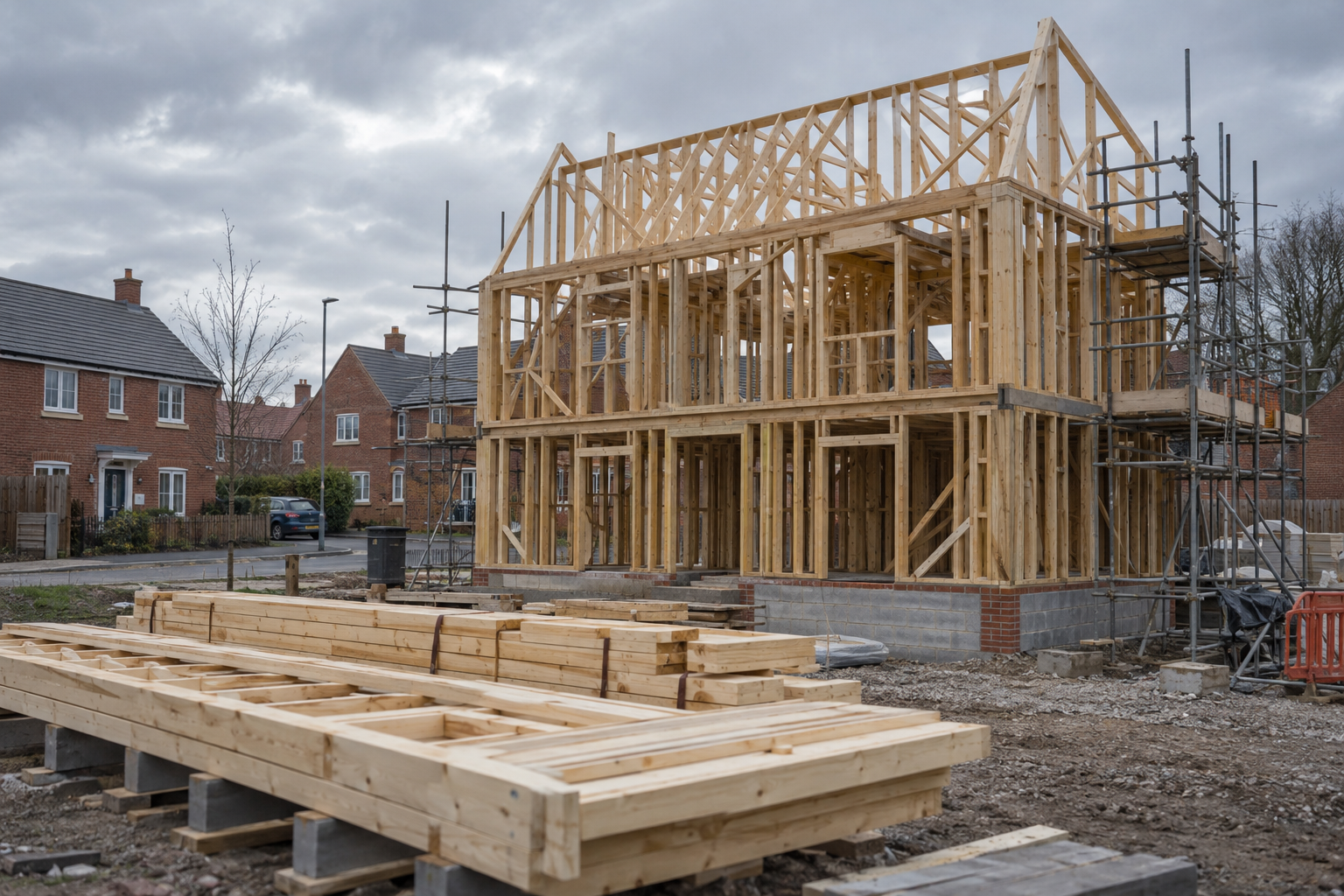
What happened
The Timber in Construction Roadmap encourages the use of carbon evidence when choosing construction materials, according to a RICS account published on 13 December 2023. The Department for Environment, Food and Rural Affairs (Defra) developed the plan to encourage homegrown timber in sustainable construction. Its approach links that ambition to better information about the environmental effects of building with wood.
RICS said it helped develop the roadmap as a member of a working group alongside housing and environmental stakeholders. The organisation described its contribution as supporting a balance between meeting housing needs and securing sustainable construction materials. Its involvement concerned how the plan was developed, rather than an assessment of any individual housing scheme.
According to RICS, the roadmap encourages the use of two resources: the RICS Whole Life Carbon Assessment and the Built Environment Carbon Database. The assessment supports a consistent method of measuring emissions. The database gives users access to information about products and projects, helping them examine the evidence behind material choices.
The announcement dates from 2023 and should not be read as a new policy launch in October 2026. RICS’s account describes the roadmap’s aims and the measurement resources it supports. It does not report how many timber homes have subsequently been built or quantify any emissions reductions achieved through the plan.
The background
Whole-life carbon assessment looks beyond a building’s energy use while it is occupied. In general terms, it considers emissions associated with materials, construction, use and the eventual end of the building’s life. This distinction matters when discussing sustainable construction: an assessment of the materials used is not the same thing as a forecast of household heating bills.
RICS said the second edition of its Whole Life Carbon Assessment launched in September 2023 with support from the Department for Transport. It expanded on the first edition and covers all building types and infrastructure across their life cycles. That scope means the assessment is not limited to timber housing or to the initial construction stage.
The Built Environment Carbon Database has a different function, according to RICS. It provides product-level and project-level information, alongside a way to share assessment results and compare them with similar projects. A measurement method and a collection of evidence serve complementary purposes: one guides the assessment, while the other helps users access and examine data.
Defra’s roadmap says reliable, consistently used carbon information is needed for every construction material, including timber. That requirement places timber within a wider assessment of material choices rather than treating its use alone as proof of environmental performance. The published account offers no numerical comparison between timber, steel, concrete or other materials.
Read moreFlood risk in England: two million unaware of danger to their homes, agency warns
What people are saying
RICS identifies potential material-cost and reliability benefits from timber, whether it is grown domestically or imported. However, it also points to challenges in sourcing those products. Its position is that a timber strategy needs evidence to address those issues, rather than relying only on the availability or appeal of a particular material.
Defra places particular emphasis on the quality of environmental product declarations for timber products. These documents provide environmental information about products, but the roadmap says the underlying data must be comprehensive and consistent. The focus is therefore not simply on whether a declaration exists, but on whether its information can support a sound assessment.
Defra also calls for a better understanding of how timber construction affects a building’s lifespan. The roadmap connects that question with the frequency of demolition and replacement construction, and the emissions those activities produce. This is a request for evidence about long-term performance, not a finding that timber buildings necessarily last longer or have shorter lives.
Transport is another area where Defra wants the effects of timber construction to be understood. That sits alongside the roadmap’s interest in homegrown wood, but the RICS account does not quantify any transport advantage for domestic supplies. RICS presents consistent measurement as a way to build an evidence-based case for timber, without publishing a universal carbon-saving figure.
What happens next
The next steps described in the 2023 account concern building the evidence base. Defra’s priorities include improving product information and understanding the consequences of building lifespan and transport. The account gives no timetable for completing that work, so it cannot establish when those evidence gaps will be resolved.
For project teams, RICS identifies the carbon assessment and database as resources that can support this work. It says the database allows assessment results to be shared and compared with similar projects. The roadmap encourages these tools, but the published account does not announce a legal requirement for every homeowner or developer to use them.
For buyers considering a home marketed as sustainable, the distinction between a material description and a measured result is important. A timber specification identifies a construction choice; a whole-life carbon assessment examines its emissions in a broader project context. Defra’s emphasis on consistent evidence supports asking what assessment underpins an environmental claim, rather than assuming the material label supplies the answer.
For homeowners planning building work, the announcement does not provide a product recommendation, a household grant or an estimate of potential savings. Nor does it set out a timetable for changing an existing property. The practical information it supplies is about how construction carbon can be assessed, not a new obligation to replace existing materials with timber.
Why this matters
For UK buyers and homeowners, the roadmap makes the evidence behind a sustainable-building claim worth examining. RICS’s account points to assessment across a building’s life, while Defra highlights product information, lifespan and transport. Those considerations go beyond whether a home contains timber. The announcement does not promise lower purchase prices or household bills, and it creates no stated homeowner obligation. Its practical relevance is the framework it offers for assessing construction choices.
Your questions answered
+What is the Timber in Construction Roadmap?
It is Defra’s plan to encourage homegrown timber in sustainable construction. RICS’s December 2023 account says it also promotes better carbon evidence to inform decisions about construction materials.
+What role did RICS have in the timber roadmap?
RICS helped develop the roadmap through a working group involving housing and environmental stakeholders. It said its contribution supported balancing housing needs with sustainable material sourcing.
+What is a whole-life carbon assessment?
It examines emissions across a building’s life, rather than only its energy use during occupation. RICS said its second edition, launched in September 2023, covers all building types and infrastructure.
+Does building with timber always mean lower carbon emissions?
The RICS account does not establish that. Defra calls for consistent evidence about materials, including timber product data, transport emissions and the effects of building lifespan.
+What is the Built Environment Carbon Database?
According to RICS, it provides product-level and project-level carbon data. It also allows users to share assessment results and compare them with similar projects.
+Does the timber roadmap require me to change my home?
The December 2023 account announces no requirement for homeowners to replace existing materials. It describes a construction strategy and encourages resources for measuring carbon.
+Will timber construction make new homes cheaper?
RICS identifies potential material-cost benefits, but the account gives no savings estimate or evidence of lower sale prices. It does not establish how any construction savings would affect buyers.
This story draws on reporting first published by RICS.

Hannah Greaves, Legal Affairs Reporter
Hannah reports on leasehold reform, freehold rights and property law. She studied law at the University of Bristol before moving into journalism and follows legislation closely as it passes through Parliament.