England drought: proposed business water bans aim to protect supplies
England drought restrictions could extend to businesses as three water companies seek government approval to curb demand and protect supplies to homes and communities.
What happened
England drought restrictions could reach businesses that have so far remained outside household hosepipe bans, according to the Guardian’s report on 14 October 2026. South East Water, Southern Water and South West Water are seeking permission to restrict non-essential commercial water use in parts of their supply areas. The proposals concern reducing demand while depleted reservoirs and low river flows threaten supplies.
The applications could prevent golf clubs and private schools from using mains water on courses and playing fields, the Guardian reported. Commercial car washes could also have to stop operating under the proposed restrictions. These are potential measures requiring approval, rather than confirmed bans covering every business served by the three companies.
The Department for Environment, Food and Rural Affairs, known as Defra, must give permission for the restrictions. According to the Guardian, the government had not responded to the applications by the time its report was published. The information available therefore does not establish an approved start date or the final geographical coverage of any business ban.
The proposals would address a difference between household and commercial restrictions during the drought. The Guardian reported that businesses in affected areas had been excluded from hosepipe restrictions applying to the public over the preceding three months. It said car-wash power hoses can consume up to 25 litres a minute, illustrating why commercial demand is now receiving attention.
For residents, the applications concern efforts to preserve the water available for everyday supply, rather than an announced interruption to household services. The distinction matters when reading warnings about shortages: seeking restrictions on some activities is not the same as announcing that taps will stop running. The wider pressure on England’s reservoirs and household water supplies provides the context for the companies’ requests.
The background
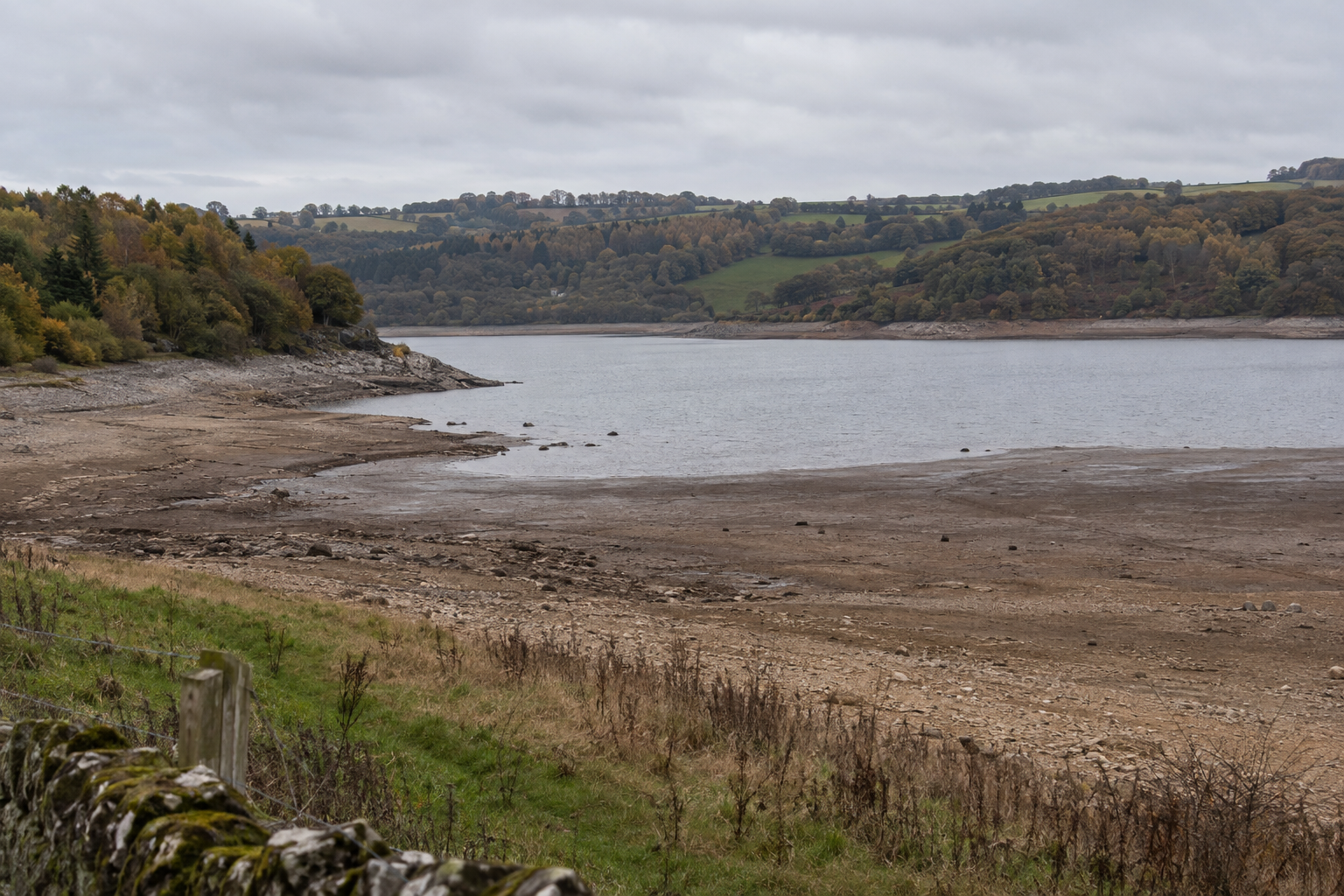
Eleven areas of England remained in drought, with Yorkshire entering drought status on 9 October 2026, according to the Guardian. England’s reservoirs stood at 54% capacity, which the report described as 21% below the expected autumn level. Across England and Wales, 19 reservoirs or reservoir groups were below half full, and eight were exceptionally low, compared with five in August.
The reported shortages vary between supply areas, making local reservoir figures more useful to residents than a national average alone. Ardingly reservoir near Haywards Heath in West Sussex, which supplies 280,000 people, held 1.05 billion litres against a capacity of 5.2 billion litres. The Guardian described its level as exceptionally low.
In the south-west, Colliford reservoir on Bodmin Moor was 37% full, according to the report, holding 10.68 billion litres against a total capacity of 28.5 billion litres. It supplies 255,000 households in Cornwall. Wimbleball reservoir in Exmoor, Somerset, which supplies 390,000 people, was 18% full, with 3.8 billion litres stored against a capacity of 21.3 billion litres.
Rainfall has not yet provided the sustained recovery needed, according to the Met Office figures cited in the report. England received about 65% of its usual September rainfall, with the largest shortfalls in eastern and southern areas. The Met Office said above-average rainfall over a sustained seven-month period was needed to bring every affected area out of drought, although parts of Wales were already showing early recovery after a nationwide drought declaration in July.
Prolonged dry weather also has a separate significance for property owners: clay soils can shrink as they lose moisture, contributing to movement beneath some buildings. That is a different issue from restrictions on water use, covered in the reporting on drought-related subsidence damage. A regional drought declaration does not establish that a particular home has suffered damage; assessing an individual property’s subsidence risk requires more than an area-wide label.
Read moreEngland drought: low reservoirs put household water supplies under pressure
What people are saying
Sam Bottomley, South West Water’s director for drinking water services, said the region was reaching a particularly difficult stage of a prolonged drought. He explained that the company continued to use reservoir storage to supply customers while river flows remained too low to support public supply. His assessment links the proposed demand restrictions to the need to retain enough stored water until conditions improve.
Bottomley also cautioned against assuming that the arrival of rain marks the end of drought. He said some rivers remained at their lowest levels and that significant rain was not forecast for the coming weeks. According to his account, the immediate priorities were reducing consumption and conserving reserves while waiting for rivers and reservoirs to recover.
Mark Owen, head of fisheries at the Angling Trust, supported further restrictions on non-essential use because of the continuing harm to rivers and fish. He also called for water companies to tackle leakage and reduce unsustainable withdrawals from rivers. Owen questioned the consistency of stopping residents from washing cars at home while allowing commercial car washes to continue.
Southern Water said a threat to supplies in Hampshire and the Isle of Wight justified its application for a drought order affecting the River Test. The Guardian reported that the order would allow abstraction below levels previously considered ecologically safe in a chalk stream that provides rare salmon habitat. Southern is also seeking business restrictions to reduce consumption alongside that request for greater access to river water.
What happens next
Defra’s decisions on the business restrictions are the next formal step identified in the report. If permission is granted, the companies could impose the relevant controls within the approved areas. Until the scope and timing are confirmed, the applications alone do not tell a homeowner whether a particular local car wash, school or golf club will be affected.
The companies are also changing how they manage available sources of water. According to the Guardian, South East Water and South West Water had already received permission to alter river abstraction to help conserve reservoir storage. Those permissions are separate from the outstanding applications to restrict commercial use, so approval of one measure should not be read as approval of the other.
Environmental conditions will remain important alongside the amount of water stored for customers. The latest Defra figures cited by the Guardian showed exceptionally low river flows in seven English areas, including the Derwent in the north-east, the Yare and Ely Ouse in eastern England, and the Tone and Hampshire Avon catchments in the south-west. The report warned that recovery from very low flows can take years, with consequences for spawning fish and river health.
For anyone arranging work or services at a property, the practical distinction is between existing household restrictions and any newly approved business rules. Residents should check the notice for their own supplier and address rather than assume a proposal applies throughout a company’s region. Businesses will likewise need the final terms before they can establish whether their particular activity is restricted or when any change takes effect.
Why this matters
For households in the affected supply areas, the proposals show that water companies are seeking further ways to reduce demand while reserves remain low. They could also affect local services, including car washing and the watering of sports grounds. The key point is that applications are not approved bans: residents and businesses need the final local notices to understand what applies. Nothing in the supplied report confirms that household water services will be interrupted.
Your questions answered
+Which water companies want to restrict business water use?
South East Water, Southern Water and South West Water have applied for non-essential use bans in parts of their regions, according to the Guardian’s report on 14 October 2026.
+Have the business water bans been approved?
Defra had not responded to the applications when the Guardian reported on 14 October 2026. The source does not confirm an approved start date or the final areas covered.
+Could car washes close because of the drought?
Commercial car washes could be stopped from operating under the proposed restrictions if approval is granted. The applications do not establish that every car wash in the three companies’ supply regions would be affected.
+Will the drought mean water is cut off to homes?
The report describes measures intended to preserve supplies, not an announced interruption to household services. The proposed business restrictions aim to reduce demand while reservoirs and rivers remain depleted.
+How low is Wimbleball reservoir?
Wimbleball reservoir in Somerset was 18% full, according to the Guardian’s report. It held 3.8 billion litres against a capacity of 21.3 billion litres and supplies 390,000 people.
+Why hasn't autumn rain ended the drought?
England received about 65% of its normal September rainfall, according to Met Office figures cited in the report. The Met Office said sustained above-average rain over seven months was needed to end drought across all affected areas.
+Does drought mean my house has subsidence?
No. Dry conditions can cause clay soils to shrink, contributing to movement beneath some buildings. A regional drought declaration does not show that an individual home has suffered subsidence.
This story draws on reporting first published by Guardian Drought.

Eleanor Whitfield, Property Correspondent
Eleanor covers the UK housing market, from monthly price indices to regional trends. She previously reported on business and economics for regional newspapers in Yorkshire and holds a degree in economics from the University of Leeds.