UK home insurance: Scotland gales follow record claims
UK home insurance faces renewed weather pressure as gales reach north-west Scotland, following record claims and forecasts of an underwriting loss for the sector.
What happened
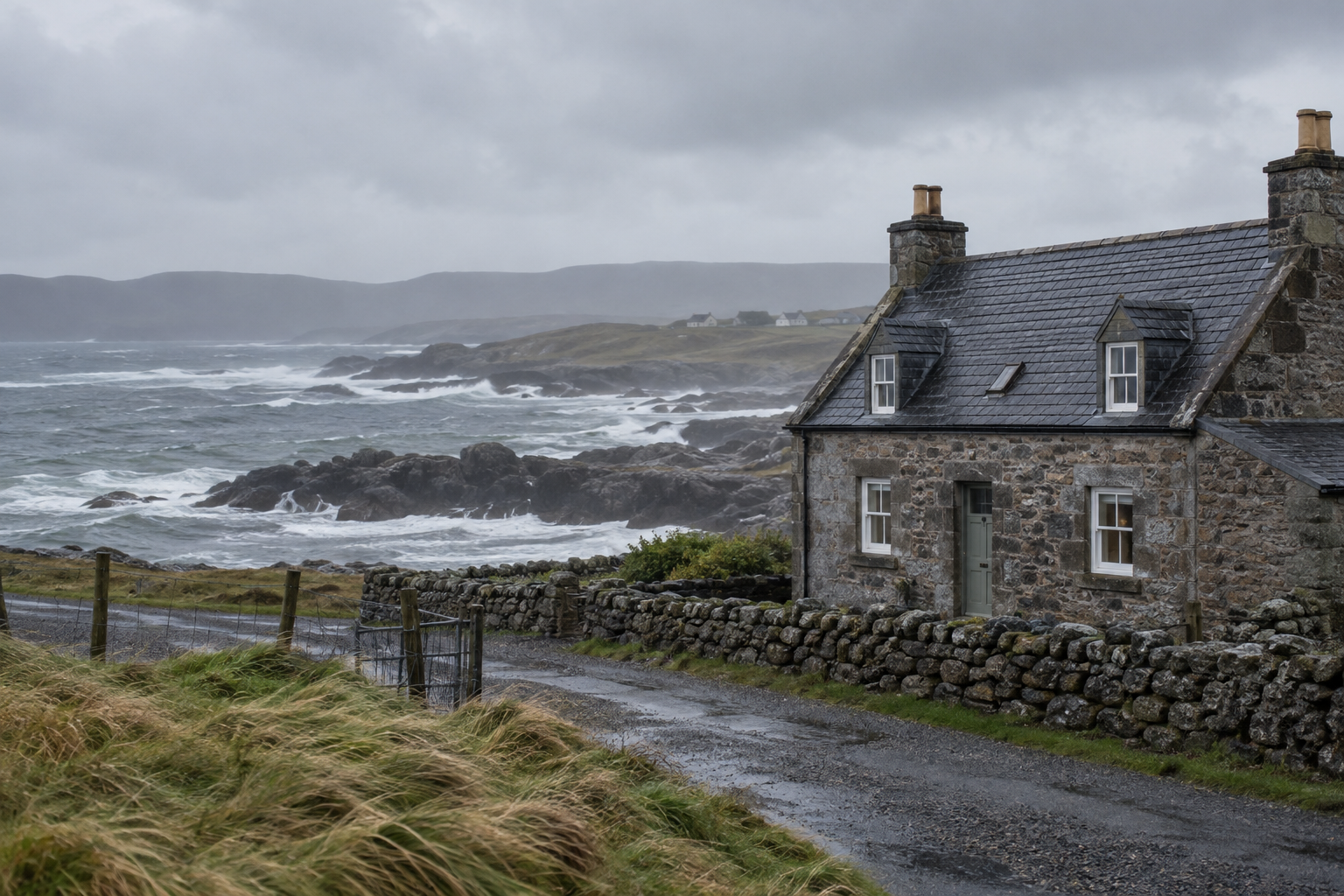
UK home insurance faces another weather-related claims risk after the Met Office issued a wind warning for north-west Scotland on 14 October 2026. The warning came against a backdrop of record property insurance payouts, with both Deloitte and EY forecasting that home insurers would spend more on claims and expenses than they earned in premiums this year.
The yellow warning covered the Highlands and Western Isles between 10am and 7pm on Wednesday. The Met Office forecast gusts of 50mph to 60mph, potentially reaching 70mph on exposed coastlines and hills. It warned of possible disruption to roads, railways, flights and ferries, alongside short interruptions to electricity supplies.
According to the forecast reported on 14 October, the low-pressure centre and the most severe conditions were expected to remain hundreds of miles from the UK. Most of England and Wales was expected to remain largely dry. That distinction matters for households: this was a regional weather warning, not a forecast of damaging winds across the country.
The Association of British Insurers, or ABI, said UK property insurers paid £6.1 billion in claims during 2025, the highest annual total in its series, which began in 2017. Weather-related claims accounted for £1.2 billion, an increase of 14.0% on 2024. Those annual figures describe the wider claims burden, rather than losses attributable to this week’s weather.
The report did not provide a damage assessment or insured-loss estimate for the October gales. A warning identifies possible impacts; it does not establish how many homes were damaged or how many claims insurers will receive. For affected households, the immediate distinction is between the forecast hazard and any damage subsequently found at their property.
The background
Storm damage payments for homes rose by 32.0% to £244 million in 2025, according to the ABI. The average storm payout reached £2,450, which was £750 more than a year earlier. Both figures help explain why insurers can face pressure even when a new weather event affects only part of the country.
Storm Éowyn, which struck in January 2025, generated £378 million in UK insured losses, according to catastrophe data specialist PERILS. The Met Office described it as the country’s strongest windstorm in more than a decade. PERILS’ event-loss estimate is a separate measure from the ABI’s annual home storm-damage total and should not be added to it.
Premiums have not followed the same upward path as those claims figures. The ABI’s Property Insurance Premium Tracker put the average combined buildings and contents premium at £375 in the first quarter of 2026, down 5.0% from a year earlier. As explained in the coverage of home insurance renewal quotes and annual price falls, a market average is not a promise about an individual renewal.
Heat and drought have added a different source of damage. The Met Office said summer 2026 was the UK’s hottest on record, while the Environment Agency confirmed on 29 July that seven areas of England, covering 51.4% of the country, were in drought. On shrinkable clay soils, prolonged drying can cause the ground beneath foundations to contract.
The ABI said home insurers paid £72 million for subsidence claims in the second quarter of 2026. The average settled claim reached a record £20,000, compared with £17,820 in the first quarter. These are settlement figures, not a standard repair price for every affected home; the damage, investigation and work needed differ between properties.
Read moreHome insurance after flooding costs £239 more a year in comparison study
What people are saying
Deloitte’s December forecast put the home insurance market’s net combined ratio at 102.1% for 2026, following an expected 98.0% in 2025. A ratio above 100% means claims and expenses exceed premium income on that measure. The forecast concerns underwriting performance, rather than necessarily establishing an insurer’s overall result after investment income.
EY’s March forecast put the 2026 ratio at 103.0%, equivalent to £1.03 in claims and expenses for every £1 earned in premiums. Deloitte also expected premiums to fall by about 7.0% during 2026 as competition increased. These are forecasts from separate firms, not confirmed full-year results or announcements of a particular insurer’s next renewal prices.
Individual insurers have reported signs of a subsidence surge. Hastings Direct said its August monthly subsidence volume was its highest on record, almost 140.0% above August 2025. Aviva chief executive Amanda Blanc said the company was reassessing subsidence reserves and its pricing models, while AXA UK expected a surge year without confirming whether it would set a record.
Steven Coxon, head of subsidence at Claims Consortium Group, identified 2018, 2022 and 2025 as surge years and said ground conditions had not recovered at the start of 2026. Actuarial firm Milliman separately found that 2025 soil moisture deficit data resembled conditions in 2018 and 2022. Coxon warned that repeated surges could change insurers’ approach to underwriting homes in exposed areas.
The Building Cost Information Service has raised a separate concern about the amount of cover purchased. It warned that rebuilding costs were rising faster than sums insured and that drought was widening the underinsurance gap. Its message to brokers was to obtain updated rebuilding-cost information before renewal, rather than assume an existing insured amount remained adequate.
What happens next
Subsidence creates a longer claims timetable than the immediate passage of a windstorm. Damage commonly becomes apparent in late summer and autumn, while changing moisture levels can cause further movement in drought-affected ground. The practical consequences of investigations and repairs are examined in the coverage of subsidence claims and long repair waits.
Aviva’s reserve review and AXA UK’s expectation of a surge year point to claims costs that insurers are still assessing. The available figures do not establish when those costs might feed into premiums or by how much. Neither the Deloitte nor EY forecast gives households a reliable percentage increase to apply to their next renewal.
For owners reviewing cover, the rebuilding figure deserves attention alongside the premium. Buildings insurance generally concerns the cost of reconstructing the property, rather than its sale price or the amount outstanding on a mortgage. BCIS’s warning therefore makes the basis of the insured amount an important renewal check, especially where the policyholder must specify a rebuilding sum.
An area’s exposure to subsidence also needs to be distinguished from evidence about a particular house. As the guide to subsidence projections and individual property risk explains, broad risk figures are not a diagnosis of structural damage. Buyers and owners should not treat a regional drought declaration or an insurer’s national claims increase as proof that their own foundations have moved.
The next test for the sector will be whether further claims and pricing data support the projected underwriting losses. The £375 average premium relates to the first quarter, while the latest subsidence settlement figures cited cover the second quarter. Those different reporting periods mean the figures cannot yet show the full financial effect of the summer drought or October’s weather.
Why this matters
For homeowners, the ABI’s lower average premium does not remove the need to check cover. Record property payouts, higher subsidence settlements and BCIS’s rebuilding-cost warning raise separate questions about price, damage and underinsurance. Buyers should also distinguish regional exposure from evidence about a specific home. The Scotland warning adds an immediate local concern, but it does not establish nationwide damage or a fixed increase in future premiums.
Your questions answered
+Which parts of Scotland were covered by the wind warning?
The Met Office’s warning covered the Highlands and Western Isles on 14 October 2026. It forecast gusts of 50mph to 60mph, with up to 70mph possible on exposed coasts and hills.
+Will UK home insurance prices rise in 2026?
The forecasts cited do not establish an increase for individual households. Deloitte expected average premiums to fall by about 7.0% in 2026, although rising claims costs and insurer pricing reviews create pressure for future changes.
+What is the average cost of buildings and contents insurance?
The ABI reported an average combined buildings and contents premium of £375 in the first quarter of 2026. That was 5.0% lower than a year earlier, but it does not predict an individual household’s quote.
+How much do subsidence insurance claims cost?
According to the ABI, the average settled subsidence claim reached £20,000 in the second quarter of 2026, up from £17,820 in the first quarter. Individual claims depend on the damage and work required.
+Why does drought increase subsidence risk?
Prolonged dry weather can make shrinkable clay soils contract beneath foundations. Damage commonly becomes visible in late summer and autumn, and changing ground moisture can cause further movement.
+Should buildings insurance cover my home's market value?
Buildings insurance generally covers reconstruction costs, not the property’s sale price or mortgage balance. BCIS warned that rebuilding costs were outpacing sums insured, making updated rebuilding-cost information important before renewal.
+What does an insurance combined ratio above 100% mean?
It means claims and expenses exceed premium income on that measure. EY’s forecast ratio of 103.0% represents £1.03 spent for every £1 earned in premiums. It does not necessarily describe the overall result after investment income.
This story draws on reporting first published by Insurance Business America.

Sophie Carrington, Homes & Renovation Writer
Sophie writes about extensions, loft conversions and renovation projects. A former homes magazine sub-editor, she has renovated two Victorian terraces herself and focuses on costs, permissions and avoiding common pitfalls.