Parliament restoration: delays add £420m a year as MPs face choice over moving out
Parliament restoration delays are adding an estimated £420m a year, a Commons committee says, as MPs weigh relocation options costing up to £39.2bn.
What happened
Parliament restoration delays are adding an estimated £420m a year to the programme, according to the Commons Public Accounts Committee (PAC). In findings reported on 4 November 2026, the cross-party committee warned that postponing decisions also leaves the Palace of Westminster exposed to a major fire or another catastrophic failure. Its intervention puts the cost of waiting alongside the much larger headline refurbishment estimates.
The committee said maintenance already costs about £1.5m a week and could rise to £2m without action. That spending keeps the estate operating but does not deliver the comprehensive restoration under discussion. According to the report, continued inaction would leave the palace deteriorating despite the work needed to keep it in use.
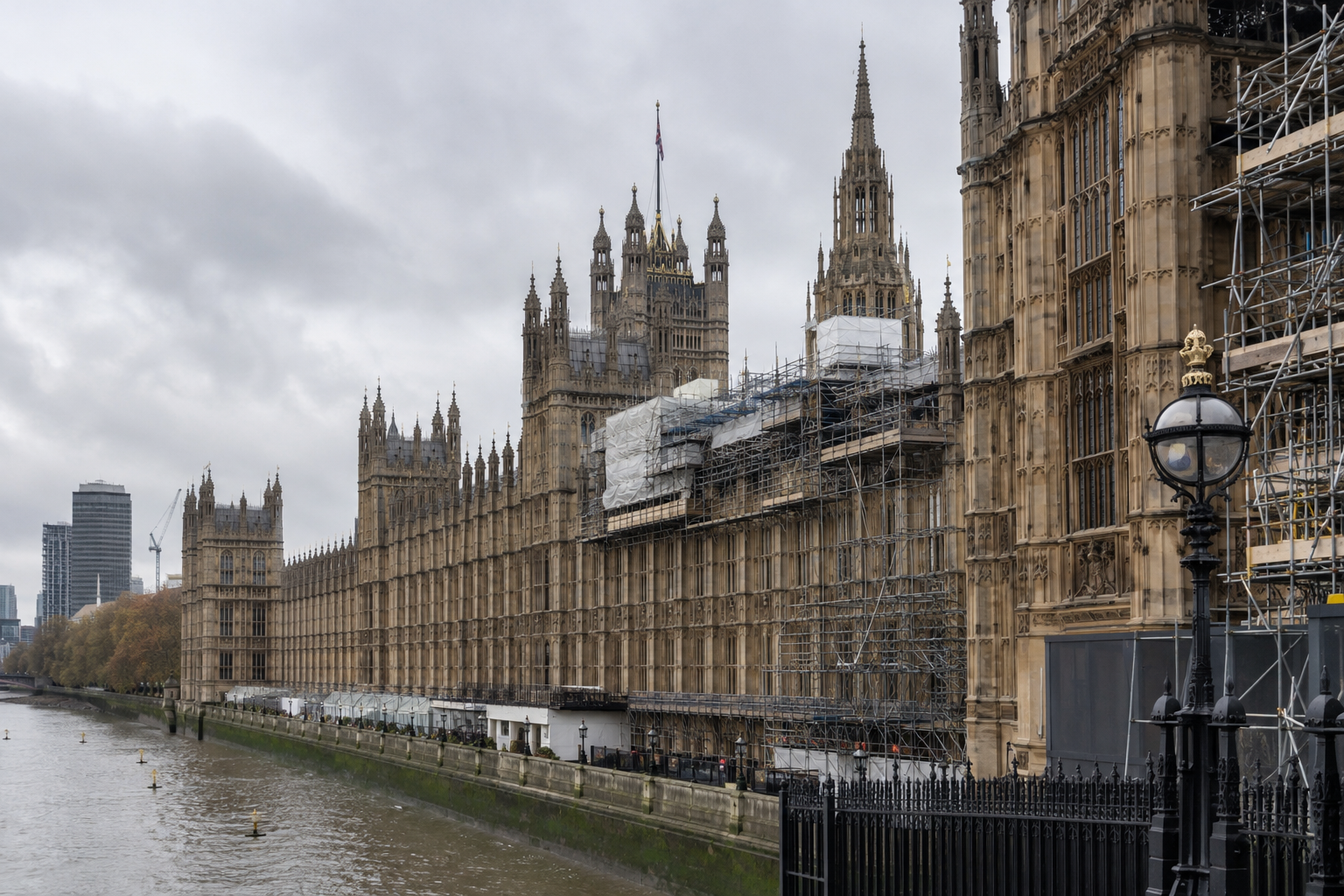
The problems include failing plumbing, water entering through roofs and deteriorating stonework, according to the account of the committee’s findings. Scaffolding protects areas affected by masonry problems, while outdated electrical systems are a principal source of fire risk. Fire patrols operate around the clock as part of the measures intended to protect the building.
Two restoration options remain after an initial four proposals were reduced, the report said. One involves moving both parliamentary chambers elsewhere, while the other would stage the departures and work over a much longer period. Their estimated costs and durations differ substantially, making the arrangements for occupying the estate a central part of the decision.
The PAC did not endorse either option, saying that choosing a particular restoration programme was outside its role. Instead, it called for better evidence, clearer responsibility and more effective engagement with MPs and peers. The committee’s recommendations therefore concern how Parliament reaches and scrutinises a decision, rather than prescribing the building scheme itself.
The background
The Palace of Westminster is Grade I-listed and forms part of a Unesco world heritage site, according to the source report. Its Victorian buildings combine a working parliamentary estate with internationally important historic fabric. The maintenance problems sit within the wider challenge of protecting historic places, also reflected in coverage of the heritage at risk register.
Decisions about when and how to undertake a comprehensive restoration have repeatedly stalled amid disagreement and rising costs, the report said. Responsibility has been treated as a matter for MPs and peers rather than the government. That distinction matters because a parliamentary decision is needed to settle the approach, even as officials continue managing the estate’s immediate condition.
Under the full relocation option, the Commons would move to Richmond House, a nearby government building, and the Lords would use the QEII conference centre. Staff would move into buildings on the north side of the parliamentary estate, according to the proposals described in the report. The overall project is estimated to cost about £15.6bn and take up to 24 years.
The staged option would take between 38 and 61 years and cost about £39.2bn, according to the reported estimates. It would include the Commons using the Lords chamber for up to two years. Those figures describe the overall programme: the report does not say that MPs would spend the whole project period away from their usual chamber.
For owners of historic homes, the relevant context is that maintaining a protected building and altering it are not necessarily the same task. In England, works affecting a listed building’s special architectural or historic character generally require listed building consent, although not every routine repair does. Property Pulse UK’s coverage of Historic England’s guidance on listed building upgrades explains the consent issues surrounding improvements.
Read moreMackintosh House gains Category A protection alongside Glasgow gallery
What people are saying
Sir Geoffrey Clifton-Brown, the Conservative MP who chairs the PAC, blamed political reluctance for the failure to make decisions. He argued that Parliament needed to consider not only the growing financial bill but also the damage a catastrophic failure could cause to the country’s morale and international reputation. His warning extended to possible injuries or deaths.
Clifton-Brown used the Notre Dame fire as a comparison for the potential destruction of an important historic building. He described the dangers as real and increasing, rather than merely theoretical. The warning concerned what could happen if risks remain unresolved; it was not a report of a new fire at Westminster.
The PAC also questioned the projected cost of preparing temporary premises. It highlighted an estimated £417m refurbishment of the QEII centre and about £2bn to prepare the northern estate for relocation. The committee considered those figures high and pointed to Canada’s less expensive provision of a temporary chamber during work on its parliamentary estate.
More broadly, the committee was concerned that the restoration approach could be driven by which temporary buildings were available, rather than those buildings being arranged around the project’s requirements. It also criticised the complexity of the programme’s governance. Together, those concerns address both the practical delivery of the work and the ability to hold decision-makers accountable.
A Parliament spokesperson welcomed the committee’s scrutiny and said safety work was already taking place across the estate for people working there and visiting. The response acknowledged the committee’s warning about continued deterioration without action. It did not announce a final choice between the two restoration options or a new confirmed construction start date.
What happens next
The PAC wants the clerks of the Commons and Lords, who formally oversee the process, to produce a plan within six months for engaging parliamentarians properly. The report said that engagement had been insufficient so far. This is a recommended next step for the decision-making process, not a deadline for completing restoration work.
The committee also called for stronger cost estimates and a timetable to support a decision on the main project in 2030. The figures attached to the two options should therefore be understood as estimates rather than settled final bills. The reported recommendations do not establish 2030 as the date when construction will begin.
Temporary accommodation needs more urgent attention, according to the PAC, including certainty about whether the proposed buildings will be available and what preparing them will cost. Those questions affect the practical feasibility of moving the chambers. The committee wants accommodation to serve the restoration plan rather than dictate its shape.
The PAC recommended simplifying governance and establishing a new restoration and renewal select committee. That body would allow MPs to question senior officials about the programme. These remain recommendations in the report; the source does not confirm that the new committee has been established or that revised oversight arrangements have been adopted.
For householders, the practical comparison is planning a major project around both the building work and continued occupation, not applying Westminster’s costs to domestic repairs. Decisions about moving out can also prompt questions about insurance during building work or an absence from home. Property Pulse UK’s guide to insurance checks before home renovation covers that separate consumer issue.
Why this matters
For UK homeowners, particularly those responsible for listed buildings, Westminster illustrates the distinction between keeping a property usable and resolving its underlying defects. The PAC says delay is increasing both costs and risks at Parliament, although its estimates cannot be applied to domestic projects. For taxpayers, the immediate issue is whether Parliament can establish credible costs, suitable temporary premises and clear accountability before committing to a programme that could last decades.
Your questions answered
+How much will Parliament restoration cost?
The two remaining options are estimated at about £15.6bn for full relocation and £39.2bn for staged relocation. The Public Accounts Committee wants more robust estimates; neither figure is a confirmed final bill.
+How long will Parliament restoration take?
The full relocation project could take up to 24 years. The staged option is estimated to last between 38 and 61 years. These are overall programme durations, not necessarily the time each chamber would spend elsewhere.
+Why is Parliament considered a fire risk?
The report identifies outdated electrics as a principal fire risk. The Palace of Westminster requires 24-hour fire patrols, and the committee warns that delaying comprehensive restoration leaves serious risks unresolved.
+Where would MPs and Lords move during restoration?
Under full relocation, the Commons would use Richmond House and the Lords would move to the QEII conference centre. Under the staged option, the Commons would use the Lords chamber for up to two years.
+How much does Parliament cost to maintain each week?
Maintenance costs about £1.5m a week, according to the committee’s findings. The PAC says that could reach £2m without action on the wider restoration programme.
+Will Parliament restoration start in 2030?
The report does not confirm a 2030 construction start. The committee calls for better estimates and a timetable to support a decision on the main project in 2030.
+Who decides how Parliament is restored?
The issue has been treated as a decision for MPs and peers rather than the government. The Public Accounts Committee has recommended improvements to the process but has not endorsed either restoration option.
This story draws on reporting first published by Guardian Heritage.

James Okafor, Consumer Affairs Reporter
James writes about the practical side of moving home — conveyancing, surveys and mortgages. Before joining Property Pulse UK he spent six years on a consumer rights desk investigating complaints against estate agents and lenders.