Listed building energy upgrades: Historic England explains consent rules
Listed building energy upgrades can include heat pumps, solar panels and insulation, according to Historic England’s July 2024 advice, but permissions depend on their impact.
What happened
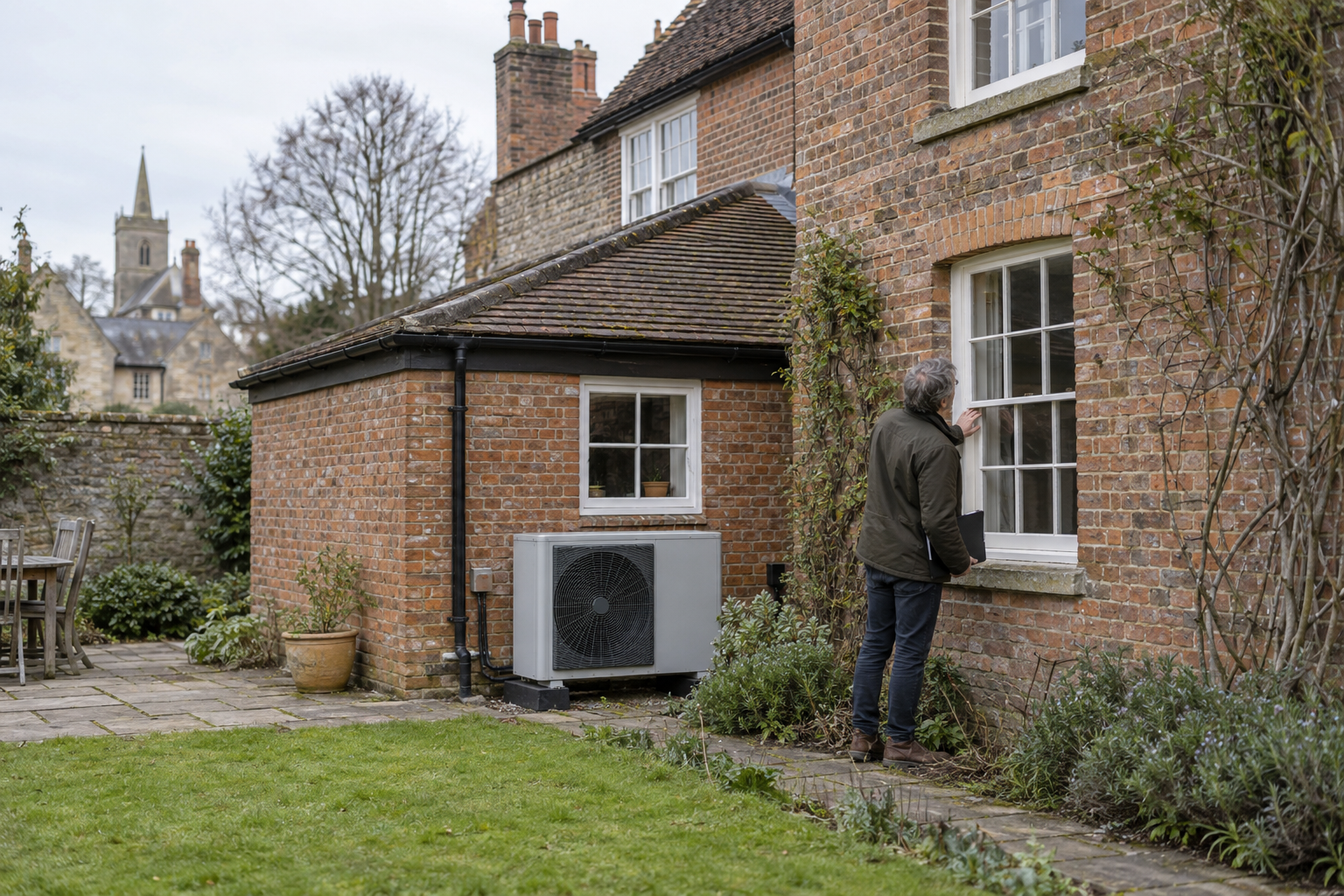
Listed building energy upgrades can include heat pumps, solar panels and insulation, according to Historic England’s advice reported by the Museums Association on 25 July 2024. The heritage body set out how owners and planning authorities could improve energy performance while protecting the features that make historic properties important. Its central message was that conservation and action on climate change need not conflict.
The publication, Adapting Buildings for Energy and Carbon Efficiency, was aimed mainly at local authorities, heritage consultants and others involved in planning decisions. Historic England said it was intended to make decisions on energy improvements clearer and more consistent. For homeowners, that means the advice concerns how proposals should be assessed, rather than providing automatic approval for a particular product or installation.
The note draws an important distinction between work that affects a listed building’s special interest and work that does not. According to Historic England, some changes made in response to climate change will not affect that interest and therefore will not require listed building consent. Where the work would affect it, consent is required; the environmental purpose of a project does not remove that test.
The advice covers draught-proofing, insulation, boilers and other heating systems, heat pumps, changes to windows and solar panels. Historic England presented these as areas where clearer information could help owners of listed buildings and properties in conservation areas understand their options. The July 2024 publication was guidance reflecting planning policy at that time, not an announcement that heritage protections had been removed.
The background
Historic England recommends assessing the building as a whole before choosing improvements. Its advice calls for attention to the property’s particular construction, circumstances and historic importance, alongside the needs of its occupants. The objective is to identify a combination of changes that cuts energy use and carbon emissions while maintaining a safe, comfortable place to live.
That approach also asks those preparing proposals to consider how different changes would work together. Historic England says the assessment should take account of energy, carbon and cost, rather than looking at each proposed measure in isolation. For an owner considering both heating changes and insulation, the practical implication is to assess them as parts of one project, not assume that separate choices will produce the best overall result.
Listing is not simply protection for the appearance of a building from the street: internal features can also contribute to its special interest. The listing of Barn Close and its Arts and Crafts interiors illustrates why owners need to understand what matters about their particular property. Historic England’s consent distinction therefore concerns the effect of the proposed work, rather than merely whether equipment would be visible outside.
Listed status and conservation-area designation are also different forms of protection. In general, listing concerns an individual building’s architectural or historic interest, while conservation-area designation concerns an area’s character or appearance; a property can fall within both. Although Historic England’s advice addresses owners in both settings, its statement about listed building consent should not be read as saying every home in a conservation area is itself listed.
Read moreMackintosh House gains Category A protection alongside Glasgow gallery
What people are saying
A Historic England spokesperson told the Museums Association that reducing climate impacts and protecting historic buildings were compatible objectives. The organisation’s position was that keeping existing buildings occupied, maintained and adaptable could help reduce emissions, waste and demand for resources. It placed repair and continued use alongside retrofit, rather than presenting new equipment as the only route to better environmental performance.
Historic England also argued that adaptation was necessary to keep older buildings safe and usable as the climate changes. That gives the guidance two related purposes: reducing the emissions associated with buildings and helping properties respond to changing conditions. According to the organisation, conserving historic significance should be part of that work, not a reason to assume all adaptation is impossible.
For local authorities, Historic England wanted the note to support constructive, consistent decisions in line with national planning policy and carbon-reduction commitments. Its position was not that every proposal should succeed, but that energy improvements should be considered alongside the need to conserve significance. That distinction is relevant to conservation-led repair and retrofit at St Andrew’s Chapel, another story examining the relationship between adapting buildings and protecting their character.
Historic England’s emphasis on assessing each building also matters in the wider debate about improving older housing. The separate question of limits to energy upgrades in rented homes concerns the practical scope of improvement, whereas this advice addresses adaptation and planning decisions for historic properties. The source report did not announce a new landlord energy standard, a grant entitlement or an exemption from other obligations.
What happens next
Alongside the advice, Historic England had developed a training package to help partners put it into practice. At the time of the July 2024 report, it also planned to launch an online community offering further support. The report did not give a launch date, so it does not establish the community’s operating status as of 27 October 2026.
For owners preparing a project, the first issue is the effect of the proposed work on their building’s special interest. Historic England’s advice provides information about permissions for common energy improvements and points readers towards further guidance. A sensible starting point is to discuss the scope of the work with the local planning authority before treating a general example in the note as confirmation that a particular installation can proceed.
Owners should also distinguish listed building consent from other permissions that a project may require. In general, planning permission and building regulations approval are separate considerations; establishing that listed building consent is unnecessary does not settle every approval question. Historic England’s inclusion of permission advice is therefore important for the whole project, not just for deciding which heating system or window treatment to choose.
Cost and funding need separate consideration from the heritage assessment. The source report did not announce financial support or provide installation prices, expected bill savings or payback periods for the measures it described. Coverage of retrofit mortgage schemes offered in 2024 addresses the distinct financing question, but neither access to finance nor mention of a technology in Historic England’s advice establishes that it is suitable for an individual listed home.
Why this matters
For owners and buyers of listed homes, Historic England’s advice challenges the assumption that heritage protection rules out better energy performance. It does not remove the need to understand a building’s significance or secure the relevant permissions. The practical distinction is between an improvement being possible in principle and being suitable for a particular property. Assessing proposed changes together, and checking consent requirements before work starts, gives households a clearer basis for planning an upgrade.
Your questions answered
+Can you put a heat pump in a listed building?
Historic England identifies heat pumps as a possible improvement to historic buildings. Suitability and permissions depend on the proposal and its effect on the property. Work affecting a listed building’s special interest requires listed building consent.
+Are solar panels allowed on listed buildings?
Listed status does not make solar panels automatically impossible, according to Historic England’s advice. Panels are among the measures it covers, but inclusion in the guidance is not permission for a particular installation.
+Can you insulate a listed house?
Historic England includes insulation among the possible energy improvements to historic properties. It recommends assessing the building’s construction, circumstances and historic importance, and considering how insulation would work with other proposed changes.
+Do energy upgrades need listed building consent?
According to Historic England, work that affects a listed building’s special interest requires consent. Some climate-related changes that do not affect that interest will not require listed building consent. Other approval requirements may still apply.
+Can you replace windows in a listed building?
Historic England’s note covers replacing or adapting windows, but does not provide blanket permission. The effect on the building’s special interest determines whether listed building consent is needed.
+Is every house in a conservation area listed?
No. Listing protects an individual building’s architectural or historic interest, while conservation-area designation concerns an area’s character or appearance. A home can have both forms of protection, but one does not automatically imply the other.
+Does Historic England’s advice offer grants for energy upgrades?
The July 2024 source report did not announce a grant scheme. It described advice on adapting historic buildings, permission requirements and decision-making, alongside training and a planned online support community.
This story draws on reporting first published by Museums Association.

Eleanor Whitfield, Property Correspondent
Eleanor covers the UK housing market, from monthly price indices to regional trends. She previously reported on business and economics for regional newspapers in Yorkshire and holds a degree in economics from the University of Leeds.