Planning conditions: almost half of decisions miss eight-week deadline
Planning conditions decisions missed the eight-week deadline in almost half of cases studied, with the Home Builders Federation warning of added costs and delayed construction.
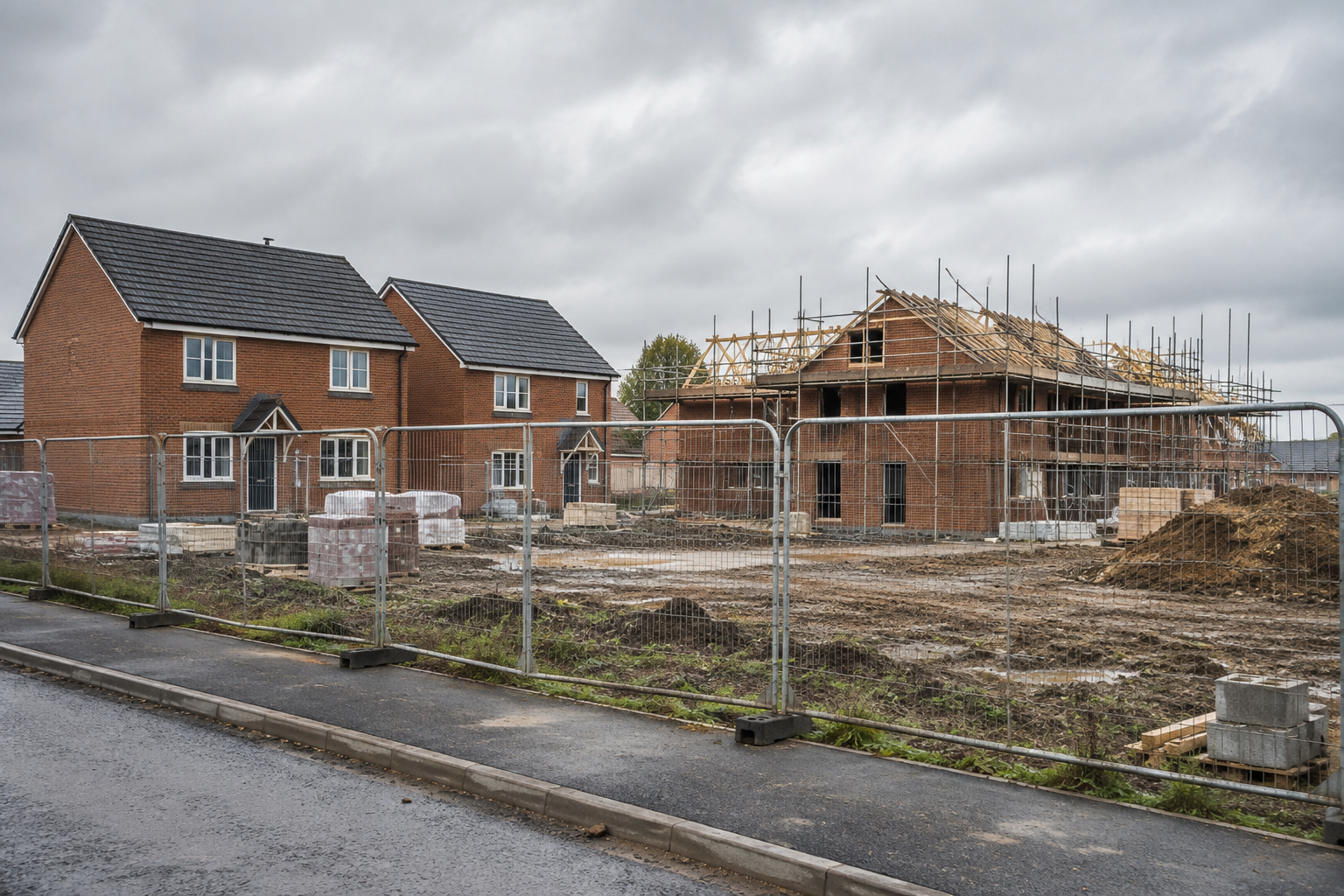
What happened
Planning conditions decisions are taking longer than the statutory eight-week period in almost half of applications examined by the Home Builders Federation (HBF) and Paragon Bank Development Finance. Their research found that councils decided 50.8% of applications within that period in 2024/25. For buyers waiting for a new home, the findings highlight an approval stage that can affect when construction starts.
HBF obtained information from councils through Freedom of Information requests, collecting data covering more than 14,000 applications. The requests concerned applications to discharge planning conditions: the process of getting council approval for details required by an existing permission. These are separate from the original application seeking permission for the development itself.
The proportion decided within eight weeks fell from 55.6% in 2023/24 to 50.8% in 2024/25, a decline of 4.8 percentage points. That means 49.2% of applications in the later period were not decided within eight weeks. These percentages describe applications, rather than establishing that half of all councils missed the deadline in every case.
The research also found substantial differences between local authorities. Some decided more than 75% of discharge applications within the deadline, while others did so in just 18% of cases. The overall figure therefore should not be treated as a forecast for an individual council or building project.
HBF said delays can leave developers unable to follow their planned construction schedules and can weaken the financial case for individual schemes. Its concern is particularly significant where approval is needed before work begins, rather than at a later stage. The research does not provide a figure for how many homes were delayed by the applications examined.
The background
Planning permission can come with requirements that a developer must meet at specified stages of a project. As the research explains, these conditions allow councils to seek further information and manage a development’s adverse effects. A permission can therefore establish that a scheme is acceptable while leaving particular details subject to further approval.
A pre-commencement condition is especially important to the building timetable because it must be formally discharged before the relevant construction begins. Other conditions may apply at later points in a development. The practical question for a buyer is not simply whether permission exists, but whether any outstanding requirements prevent the next stage of work.
Conditions are also distinct from the details left for approval under an outline permission. The outline approval for housing at Allenby Road in Southwell, where design and layout remained to be settled, illustrates another reason why a planning decision may not conclude the approval process. Buyers should establish which type of decision a developer is still awaiting.
Planning conditions are not the only requirements that can apply to building work. Planning permission and building regulations approval serve different purposes, and a project may need both. The separate debate over housebuilding regulations and the safety exception concerns the wider rules governing development, rather than the speed of decisions on conditions.
Owners working on protected properties may also need listed building consent, depending on the proposed changes. That is a separate consideration from discharging conditions attached to a planning permission, as the guidance on listed building energy upgrades and consent explains. Securing one approval should not be taken as confirmation that every necessary consent is in place.
Read moreHousebuilding output falls 4.7% as developers face funding strain
What people are saying
Neil Jefferson, chief executive of HBF, said securing planning permission should move a project significantly closer to construction. He argued that slow decisions on conditions add uncertainty and financial risk after that milestone. His comments focused on the gap between permission being granted and a developer being able to progress with the work.
The report said smaller and medium-sized housebuilders can be particularly exposed to these delays. They may have fewer sites under construction, more limited financial resources and less room to adjust when an approval takes longer than expected. A hold-up on one development can consequently be harder for them to absorb than for a business with a larger spread of projects.
HBF identified several ways that waiting can affect a scheme’s finances. Money can remain committed to a site for longer, while financing and holding costs rise before construction progresses. Those pressures are distinct from the administrative work involved in submitting the application: they concern the cost of keeping a development waiting.
Jefferson described the government’s planning reforms positively but said reform alone would not deliver homes at the required speed and scale. He called for attention to planning capacity, staffing shortages and more consistent public reporting. That position places council resources alongside accountability, rather than treating missed deadlines only as a performance-management problem.
The research was carried out by HBF, which represents homebuilders, and Paragon Bank Development Finance. Its recommendations reflect the pressures developers face when approvals remain outstanding. The supplied report does not include a council or government response, so it does not establish those organisations’ positions on the proposed changes.
What happens next
HBF wants a national framework for recording and publishing how local planning authorities perform when discharging conditions. Such reporting would focus on the stage after permission, rather than relying solely on measures of initial planning decisions. Jefferson said consistent information would make it easier to monitor performance and hold authorities accountable.
The federation also wants the effect of the national default fee on planning authority performance to be monitored. Alongside that, it is calling for councils to have adequate staffing and resources. These are requests from the industry body; the source does not announce a government commitment or a timetable for acting on them.
Another HBF proposal is the prompt introduction of standardised model conditions. This concerns the requirements attached to permissions, as well as the administrative process used to approve the information submitted in response. The source provides no implementation date, so developers should not assume that a new set of conditions is already available.
For someone reserving a new-build home, a useful question is whether any outstanding condition prevents construction from starting or progressing. The developer should be able to identify the relevant requirement and explain what approval remains outstanding. An eight-week decision period is not a promise that a particular home will be completed or ready to occupy within a given time.
Homeowners commissioning work can likewise check the conditions listed on their decision notice before fixing a start date with a contractor. The wording should identify when each requirement must be met, and uncertainty can be raised with the planning authority or an adviser. The research does not create a new obligation for applicants, but it underlines why permission alone may not settle the building timetable.
Why this matters
For buyers waiting for a new home, the distinction between planning permission and approval of its conditions can help explain why construction has not started. HBF’s findings show that the eight-week decision period is frequently missed, although performance varies between councils. Homeowners planning their own building work face the same need to check what their permission requires before setting a start date. The practical issue is which outstanding approvals affect the next stage, not simply whether permission has been granted.
Your questions answered
+How long should a council take to discharge planning conditions?
The HBF research identifies a statutory eight-week period for deciding applications to discharge planning conditions. It found that 50.8% of applications examined were decided within that period in 2024/25.
+What does discharge of planning conditions mean?
It means obtaining council approval for information required by a condition attached to planning permission. Conditions can require developers to submit details at specified stages of a project.
+Can building work start before planning conditions are discharged?
A pre-commencement condition must be formally discharged before the relevant construction begins. Other conditions apply at later stages. The wording of the planning permission determines when each requirement must be met.
+Are planning condition decisions getting slower?
The share decided within eight weeks fell from 55.6% in 2023/24 to 50.8% in 2024/25 in HBF’s research. That is a decline of 4.8 percentage points.
+Does planning permission mean a new home is ready to be built?
Not necessarily. Permission can include conditions requiring further council approval before construction begins. Other approvals may also be needed, so buyers should ask what remains outstanding.
+Why do planning delays affect small housebuilders?
HBF says smaller builders often have fewer active sites and less financial flexibility. Waiting for approval can tie up money, raise financing and holding costs, and disrupt their construction schedules.
+What is HBF asking the government to change?
HBF wants national performance reporting, adequate council planning resources and standardised model conditions. It also wants the impact of the national default fee on planning authority performance to be monitored.
+What should I ask before reserving a new-build home?
Ask whether any outstanding planning condition prevents construction from starting or progressing, and which approvals the developer is awaiting. The eight-week decision period does not guarantee a home’s completion date.
This story draws on reporting first published by Building Design.

Sophie Carrington, Homes & Renovation Writer
Sophie writes about extensions, loft conversions and renovation projects. A former homes magazine sub-editor, she has renovated two Victorian terraces herself and focuses on costs, permissions and avoiding common pitfalls.