Awaab’s Law: private rental repair deadlines put to consultation
Awaab’s Law could bring repair deadlines to private rentals in England, but ministers have yet to settle the timescales, coverage or start date.
What happened
Awaab’s Law could require private landlords in England to meet legal deadlines for addressing dangerous housing conditions under a government consultation reported by Property Reporter. Ministers are seeking views on extending protections already operating in social housing. The announcement does not set out the proposed private rental deadlines or confirm when they would begin.
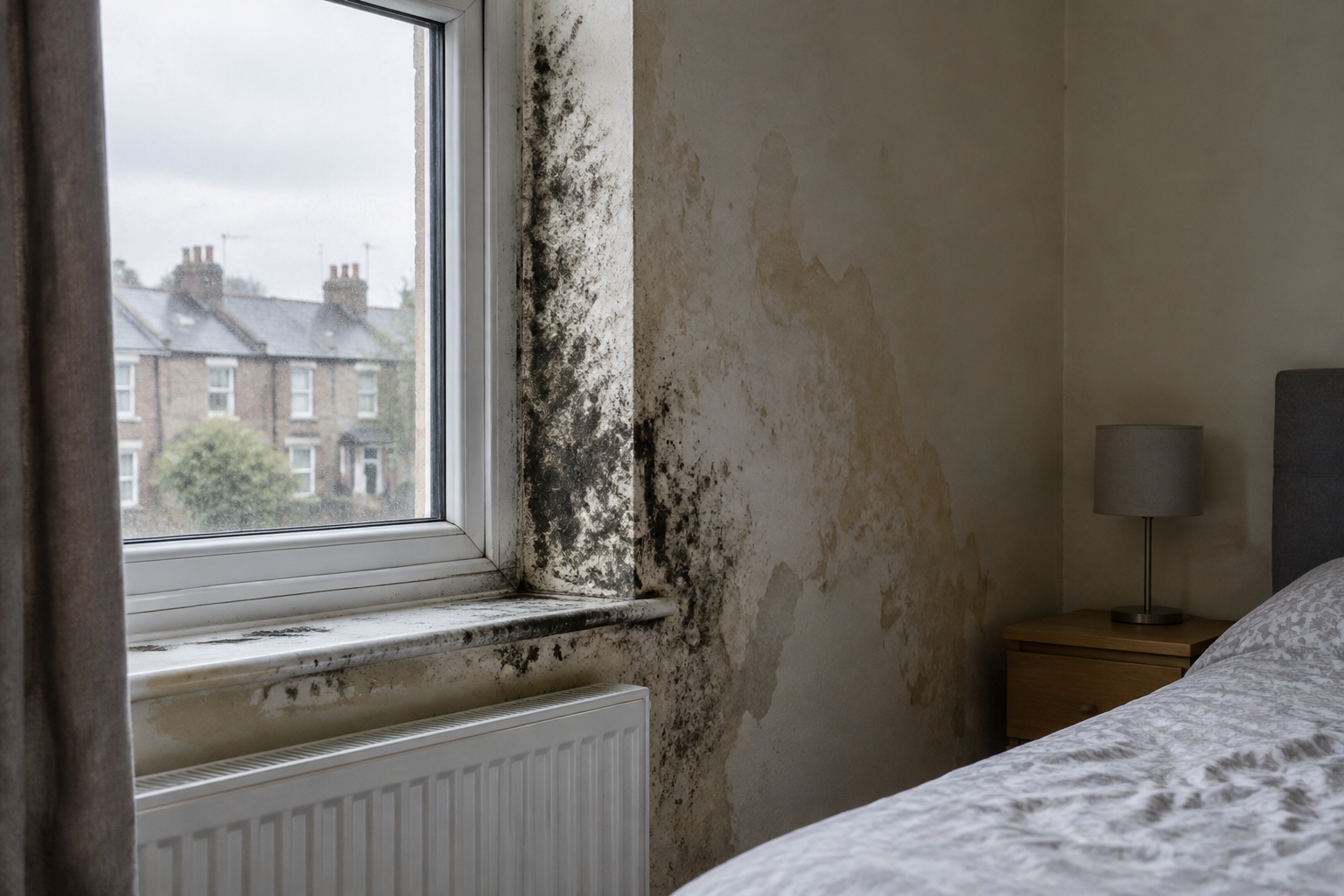
The government says the extension would address hazards including severe damp and mould, with the aim of getting serious problems dealt with sooner. Private landlords already have duties to act where conditions significantly threaten tenants’ health and safety. The proposed change concerns the time allowed for action, rather than whether landlords have a responsibility to respond.
Ministers are also considering accommodation used by homeless households, young people leaving care and residents who need support. That includes temporary accommodation and supported housing, where many older and disabled people live. Whether these settings should be covered is a question for the consultation, not a settled decision.
According to the government, the wider proposals could increase the number of households covered by the repair timescales from 4 million to around 9 million. Housing minister Matthew Pennycook separately referred to England’s 11 million private renters when explaining the policy. Those figures measure different things: the projected coverage counts homes, while the minister’s figure counts people.
The consultation closes on 18 December 2026, and the government says responses will inform implementation in the private rented sector. That includes deciding when the protections take effect. For tenants waiting for repairs, the distinction matters: consulting on new deadlines does not itself bring those deadlines into force.
The background
The law takes its name from Awaab Ishak, who died in 2020 aged two after prolonged exposure to dangerous damp and mould, according to the source report. The government introduced Awaab’s Law for social housing before proposing this wider application. The consultation therefore concerns extending an existing approach to additional rented homes and accommodation.
Around one in 10 privately rented homes contains a category 1 hazard, according to figures cited in the announcement. This is the most serious hazard category and already requires action from landlords. The figure describes serious housing hazards overall; it is not presented as a measure solely of damp and mould.
The government says landlords providing homes in the poorest condition already face enforcement action. Property Reporter reports that the Renters’ Rights Act introduced fines of up to £7,000 where these hazards are found. Ministers present the proposed repair deadlines as an additional requirement alongside those existing consequences, rather than a substitute for enforcement.
The government’s commitments to widen Awaab’s Law appear in both the Renters’ Rights Act and the National Plan to End Homelessness, according to the report. That helps explain why the consultation extends beyond ordinary private tenancies. Some people affected by unsafe conditions live in accommodation provided while they wait for a settled home or receive support.
Property Reporter also describes wider tenant protections introduced through the Renters’ Rights Act, including a ban on evictions without a reason and a route to challenge above-market rent increases. Those changes address tenancy security and rent disputes. The Awaab’s Law consultation deals with a different question: how quickly landlords must investigate or remedy dangerous conditions.
Read moreHousing benefit shortfalls leave almost one million renting households facing a gap
What people are saying
Matthew Pennycook said the government wanted renters to receive timely responses to complaints regardless of whether their landlord was a council, housing association or private owner. He argued that Awaab’s Law was already improving standards in social housing. Generation Rent chief executive Holly Williamson welcomed the proposed extension and called for prompt implementation, saying some renters wait months for action.
Timothy Douglas, head of policy and campaigns at Propertymark, supported wider protection but stressed the practical requirements for making it effective. He called for problems to be identified early, clear ways to report them and access to competent contractors. He also said damp and mould needed proper diagnosis of the underlying cause, rather than temporary treatment.
Francesca Albanese, director of policy and social change at Crisis, welcomed consideration of accommodation beyond the private rented sector. She said the charity supported homeless people living in unsuitable hostels and bed-and-breakfast accommodation affected by damp and mould. Clara Collingwood, director of the Renters’ Reform Coalition, also supported the consultation and urged the public to respond urgently.
Independent Age’s director of policy and influencing, Morgan Vine, said some older renters described mould and pest problems but feared the consequences of requesting repairs. The charity said 96.0% of the older renters it polled supported Awaab’s Law. Vine called for implementation that reflected tenants’ different needs; the source report did not provide the poll’s sample size or dates.
Anela Anwar, chief executive of Become, welcomed the examination of housing standards for young people leaving care. She said some care leavers had experienced disrepair, mould and unsafe accommodation. Her response focused on ensuring that young people had suitable homes as they moved into adulthood, rather than treating the proposals solely as a mainstream private tenancy issue.
What happens next
The government says consultation responses will help determine how the extension operates and when it starts. The announcement leaves the precise private rental repair timescales unresolved. It therefore does not establish a confirmed number of days within which every affected private landlord would have to complete work under the proposed rules.
The scope of the extension also remains important, particularly for households outside conventional private tenancies. Ministers are asking whether temporary, supported and care-leaver accommodation should fall within the law. The government’s estimate of around 9 million homes describes possible wider coverage, not a final total of homes already protected.
Propertymark’s response identifies practical issues for landlords and managing agents to consider as the detail develops: reporting systems, diagnosis and contractor availability. Its position is that clear duties must be workable if they are to produce faster repairs. These operational questions are distinct from the investment considerations covered in Property Pulse UK’s reporting on rental yields and landlord buying patterns.
For tenants facing a serious hazard now, the government’s stated position is that landlords already have responsibilities and can face enforcement. Nothing in the announcement suggests those duties are suspended while new deadlines are considered. The proposed protections should therefore be distinguished from the obligations that apply before the extension takes effect.
Independent Age’s account of older renters’ concerns raises a further implementation question: whether people feel able to report unsafe conditions. Propertymark’s emphasis on clear reporting routes addresses another part of that problem. The consultation will inform the new framework, but the announcement does not specify how those concerns will be reflected in the final arrangements.
Why this matters
For England’s private renters, the proposal could add enforceable repair timescales to landlords’ existing responsibilities for serious hazards. For landlords and agents, Propertymark’s response highlights the importance of reporting arrangements, accurate diagnosis and access to contractors. The immediate distinction is between existing duties and proposed deadlines: the government says unsafe conditions already require action, while the consultation will help settle the extension’s coverage, operation and start date.
Your questions answered
+Does Awaab’s Law apply to private landlords yet?
The announcement concerns a consultation on extending Awaab’s Law to private landlords in England. It does not confirm a start date for that extension. The law already covers social housing.
+When does the Awaab’s Law consultation close?
The government’s consultation closes on 18 December 2026. Responses will inform how the extension operates and when the protections take effect.
+How quickly will private landlords have to fix mould?
The announcement does not specify the proposed private rental deadlines. Ministers are consulting on legal timescales for addressing hazards such as severe damp and mould.
+Do landlords already have to deal with dangerous damp and mould?
Yes. According to the government, private landlords already have duties to act on hazards that seriously threaten tenants’ health and safety. The proposed deadlines would add requirements for timely action.
+Will Awaab’s Law cover temporary accommodation?
The government is considering including temporary accommodation for homeless households. Supported housing and accommodation for young people leaving care are also under consideration, but coverage has not been finalised.
+How many homes could the Awaab’s Law extension cover?
The government says wider coverage could increase the number of households protected by the repair timescales from 4 million to around 9 million.
+Why is it called Awaab’s Law?
The law is named after Awaab Ishak, who died in 2020 aged two following prolonged exposure to dangerous damp and mould.
This story draws on reporting first published by Property Reporter.

Eleanor Whitfield, Property Correspondent
Eleanor covers the UK housing market, from monthly price indices to regional trends. She previously reported on business and economics for regional newspapers in Yorkshire and holds a degree in economics from the University of Leeds.