Surrey mansion ownership dispute puts unmarried partners’ rights in focus
A Surrey mansion ownership dispute concerns an unmarried couple’s competing accounts of property promises, with the High Court yet to decide the £6m home’s ownership.
What happened
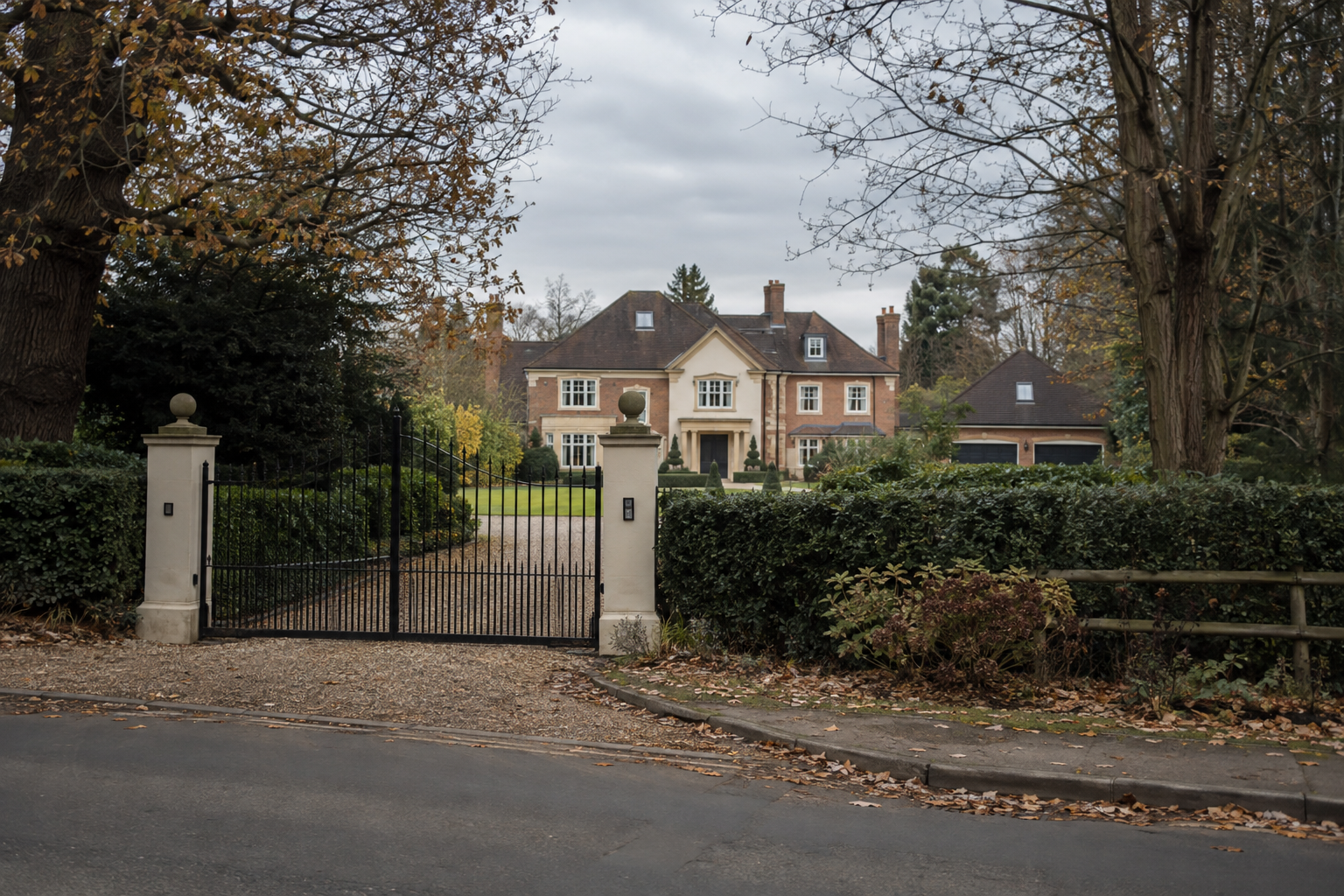
A Surrey mansion ownership dispute has reached the High Court after an unmarried couple’s 45-year relationship ended. According to Property Industry Eye’s report on 16 November 2026, Coral Read is seeking half of a home valued at £6m that is registered solely to her former partner, Dennis Read. The court has not decided her claim.
The property is Woodlands House, a five-bedroom mansion near Cobham in Surrey, with indoor and outdoor swimming pools, the outlet reported. Dennis Read, an 88-year-old former demolition business owner, disputes his former partner’s entitlement to a share. Coral Read is the mother of their three children.
The case involves a separate disagreement about £876,000. According to the report, Dennis Read says he lent Coral Read that sum to help their son settle mortgages on another property. She says the money was given to her rather than lent, leaving the court with competing accounts of the payment’s purpose.
Coral Read is also seeking £215,000 in personal injury damages over allegations of abuse and coercive control, Property Industry Eye reported. Dennis Read denies those allegations. The report describes these as allegations within the proceedings, not findings made by the court.
There is no suggestion that either former partner currently intends to sell or let Woodlands House, according to Property Industry Eye. The dispute is therefore about establishing rights in the property, rather than a reported transaction that has already stalled. Its practical relevance extends to other sales where the person on the register and someone claiming an ownership share disagree.
The background
Coral Read moved into Woodlands House in 1975, shortly after the relationship began, according to the report. The couple never married. That distinction matters because, in England and Wales, living together does not give a couple the same property and financial rights that arise from marriage.
There is no general legal status of “common-law marriage” in England and Wales, regardless of how long a couple lives together. An unmarried partner cannot assume that a long relationship alone creates a right to half the family home. Equally, being absent from the property register does not necessarily rule out every possible claim.
English property law distinguishes legal ownership from a beneficial interest: an entitlement to some or all of a property’s financial value. Property Industry Eye reported that Coral Read’s case relies on principles that can recognise rights without her name appearing on the title. The precise legal basis and supporting court documents were not set out in the report.
The register is an important starting point for checking ownership, but it does not by itself resolve a contested claim based on alleged promises and conduct. The separate question of obtaining official records is covered in Property Pulse UK’s reporting on HM Land Registry fees and access to ownership data. Access to a record and a court’s assessment of competing rights are different matters.
For unmarried couples generally, a declaration of trust can record how a property’s beneficial ownership is divided. A cohabitation agreement can also set out arrangements for finances and property while living together or after separation. These are general options, not documents that the source report says the Reads signed.
Read moreSmart Property Data pilot faces questions over checks and liability
What people are saying
Coral Read’s barrister, Noah Gifford, told the court that Dennis Read repeatedly assured her that the home belonged to her and promised lasting financial support, according to Property Industry Eye. Her account is that she spent decades looking after the property, managing renovation work and giving up career opportunities. She asks the court to recognise an ownership share despite the sole-name registration.
Dennis Read’s barrister, Marc Brittain, argued that his client bought the property before the relationship began, the outlet reported. He said Coral Read made no contribution towards the purchase. His position was that her work within the household did not establish that the property was jointly owned.
These accounts put the alleged assurances and the significance of Coral Read’s contributions at the centre of the disagreement. Her case asks the court to look beyond the registered title; his defence challenges the basis for doing so. Neither account should be treated as a court finding while ownership remains undecided.
Property Industry Eye also raised the implications for estate agents handling properties with disputed interests. Its report said agents should establish who has authority to sell and tell conveyancers about known ownership disagreements. It warned that such disputes can hold up a sale or create difficulties over the distribution of proceeds, without suggesting that Woodlands House is currently being marketed.
What happens next
The High Court adjourned the hearing pending a medical assessment of Dennis Read’s fitness to give evidence, according to Property Industry Eye. The report did not provide a date for the hearing to resume. The adjournment does not settle the ownership dispute or establish either party’s account as correct.
The reported next step concerns his ability to give evidence, rather than an announced sale, transfer or division of the mansion. No outcome for the £876,000 disagreement or the damages claim was given in the report either. Readers should therefore distinguish the sums being claimed from any money awarded by the court.
For buyers in other transactions, a known ownership disagreement is something to raise with the conveyancer rather than try to resolve through an estate agent’s assurances. An agent markets the home, while the conveyancer investigates the legal position for the transaction. Checking the reliability of supplied information is also the subject of guidance on digital sales packs and verified property data.
Incomplete paperwork creates a different problem from a contested ownership claim, although both matter to conveyancing. Property Pulse UK’s reporting on HM Land Registry requisitions and registration delays examines requests for missing or corrected information. Supplying documents can address an administrative query; it should not be confused with resolving a substantive disagreement over who owns a share.
For homeowners living with an unmarried partner, the broader practical issue is whether their intentions are clearly recorded and understood by both people. Independent legal advice can help explain the effect of sole or joint ownership and the options for documenting shares. Where a dispute already exists, advice needs to address the particular evidence rather than assume that relationship length or the title register alone supplies the answer.
Why this matters
For unmarried homeowners in England and Wales, the case illustrates why the registered title and a partner’s claimed rights may need separate consideration. A long relationship does not automatically produce equal ownership, while sole registration does not necessarily prevent a claim. For buyers and agents, a known disagreement needs to reach the conveyancer before assumptions are made about authority to sell. The High Court has yet to decide what rights, if any, Coral Read has in Woodlands House.
Your questions answered
+Who owns Woodlands House near Cobham?
Dennis Read is the sole registered owner, according to Property Industry Eye. Coral Read claims a half share, but the High Court has not yet determined that claim.
+Can an unmarried partner claim half a house?
An unmarried partner does not automatically receive half a home after separation. A claim may be possible even without being named on the register, but its outcome depends on the legal basis and evidence.
+Does common-law marriage exist in England?
There is no general legal status of common-law marriage in England and Wales. Living together for many years does not give unmarried couples the same property and financial rights as marriage.
+What is a beneficial interest in a property?
A beneficial interest is an entitlement to some or all of a property’s financial value. It is distinct from legal ownership and can be relevant where someone claims a share despite not appearing on the register.
+Why was the Woodlands House hearing adjourned?
According to Property Industry Eye, the High Court adjourned the hearing pending a medical assessment of Dennis Read’s fitness to give evidence. The report gave no date for the hearing to resume.
+Is the £6m Surrey mansion being sold?
Property Industry Eye reported no suggestion that either party currently intends to sell or let Woodlands House. The proceedings concern disputed ownership and other financial claims.
+How can unmarried couples record their shares in a home?
A declaration of trust can record beneficial ownership shares. A cohabitation agreement can set out financial and property arrangements. Independent legal advice can explain how these options apply to a couple’s circumstances.
This story draws on reporting first published by Property Industry Eye.

Hannah Greaves, Legal Affairs Reporter
Hannah reports on leasehold reform, freehold rights and property law. She studied law at the University of Bristol before moving into journalism and follows legislation closely as it passes through Parliament.