Cardiff landlord must pay £3,509 after letting flats covered by housing bans
A Cardiff landlord admitted six offences involving prohibited flats and missing registration and licensing, with Rent Smart Wales now due to assess his suitability.
What happened
A Cardiff landlord has been ordered to pay £3,509 after admitting offences involving flats that could not lawfully be occupied as homes. Said Moussef pleaded guilty to six charges at Cardiff Magistrates’ Court, according to the prosecution account reported by Landlord Today on 14 October 2026. The case involved housing restrictions as well as registration and licensing failures.
A complaint made in March 2026 prompted an inspection, which found people living in flats on the first and second floors. Both were covered by prohibition orders, and the work needed to address the restrictions remained unfinished, according to the account. During a cautioned interview, Moussef told officers he had let the flats again in October and November 2025.
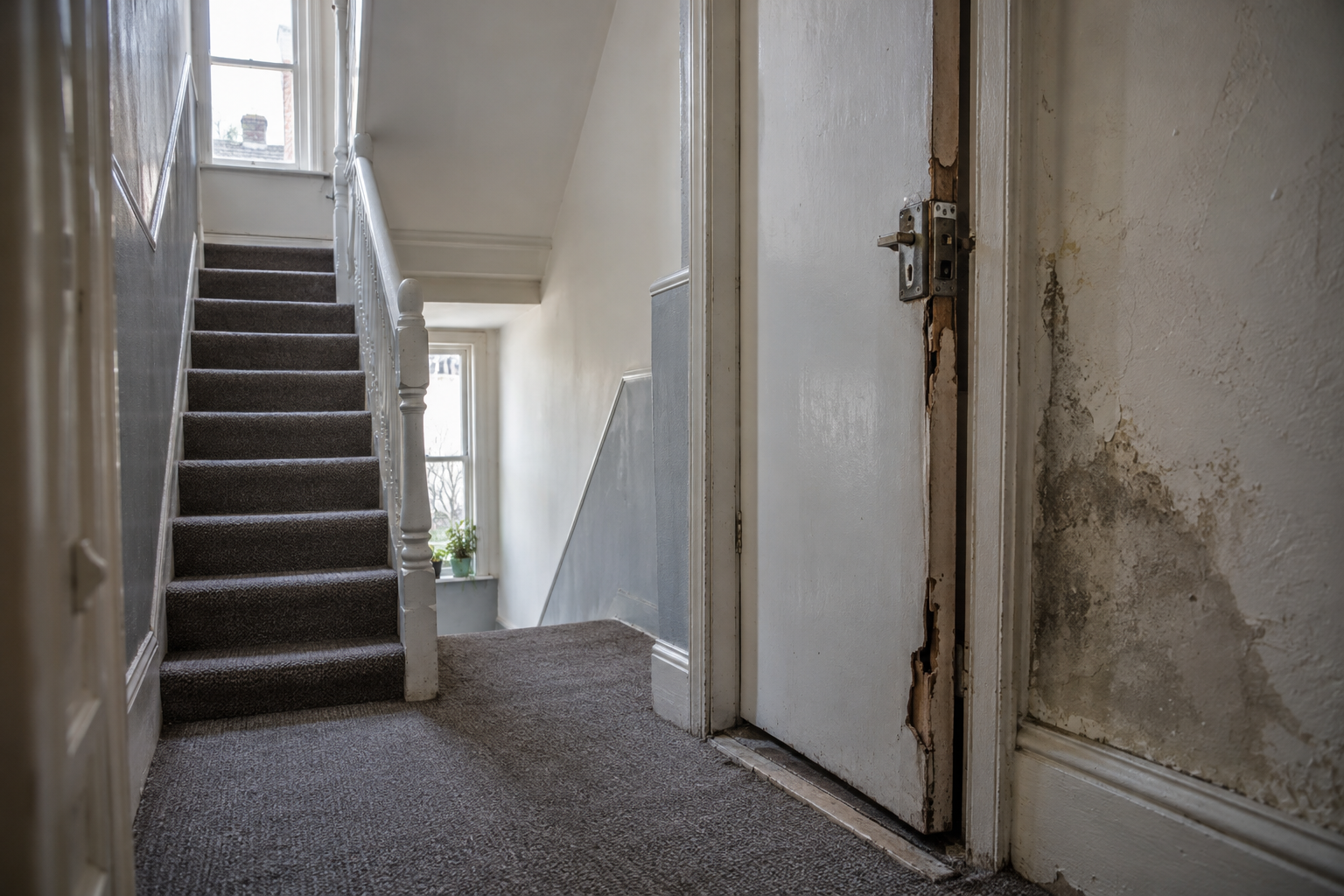
Inspectors reported shortcomings in the fire alarm system and fire doors that were either defective or unfinished. They also identified damp, risks of trips and falls, and concerns about the arrangement of the second-floor accommodation. The account does not explain the specific layout problem or give a separate assessment of the severity of each hazard.
The first-floor occupants could not control their heating, officers found. Their heat came from a boiler inside the ground-floor flat, which they could not enter. That finding concerned tenants’ ability to operate the heating serving their home; the report did not say that the boiler itself was defective.
The financial order comprised £1,520 in fines for the Rent Smart Wales offences and £476 for breaches involving the two prohibition orders. Cardiff council was awarded £750 in costs, and the court imposed a £763 victim surcharge. Those figures total £3,509, so the full amount should not be described as a fine alone.
The background
The registration and licensing charges were brought under sections 4 and 7 of the Housing (Wales) Act 2014, according to the prosecution account. Checks through Rent Smart Wales found no registration for the flats and no licence authorising Moussef to manage them. These were separate failings from allowing occupation in breach of the housing restrictions.
Registration and licensing serve different purposes within the Welsh system, Rent Smart Wales explained in its response to the case. For landlords checking their own position, the distinction matters: a record of a rental property should not be treated as proof that its manager has the necessary authorisation. Here, the checks identified gaps on both sides.
The prohibition orders concerned whether the flats could be used as residential accommodation. According to the reported findings, they remained operative when the homes were re-let and when inspectors subsequently visited. The source does not give the dates when those orders were first made, so it does not establish how long the restrictions had existed before the new lettings.
The case concerns Welsh legislation and should not be confused with separate proposals affecting rental conditions elsewhere. Property Pulse UK’s coverage of the Awaab’s Law consultation on private rental repair deadlines examines a different policy development. A proposed change to repair duties is not the legal basis identified for this Cardiff prosecution.
For owners preparing to let a former home, the case also illustrates why different checks need separate attention. Property Pulse UK’s guide to insurance checks before becoming an accidental landlord covers the insurance side of that decision. Insurance arrangements are distinct from the registration, management and occupation issues described in these proceedings.
Read moreHousing benefit shortfalls leave almost one million renting households facing a gap
What people are saying
Rent Smart Wales said its registration and licensing requirements are intended to improve standards and protect tenants. Its response treated compliance as part of a landlord’s responsibilities, rather than an optional administrative step. The organisation highlighted both the absent registration and the lack of a management licence in explaining the case.
The spokesperson also acknowledged the contribution private landlords make to Cardiff’s available housing. Alongside that recognition, the statement set out the council’s position that it would take enforcement action when landlords neglected their obligations and exposed occupants to risk. It did not announce a new city-wide enforcement programme or additional inspections.
On the condition of these homes, the account centred on inspectors’ observations rather than comments from the occupants. No tenant testimony was included, and the report did not describe injuries or other personal consequences. The identified hazards should therefore be reported as inspection findings, without assuming that a particular accident or illness occurred.
Moussef’s reported position consists of his guilty pleas and his earlier admission to officers about the renewed lettings. The source provides no separate statement from him and no account of mitigation presented to the court. It therefore offers no basis for explaining why he proceeded with the tenancies or why the required work remained outstanding.
What happens next
Details of the prosecution have been passed to Rent Smart Wales for consideration, according to its spokesperson. The organisation will assess whether Moussef satisfies the suitability requirements for a licence to manage his Cardiff rental portfolio. The account reports that assessment as a next step, not as a completed decision.
The wording of that announcement does not establish that a licence has been revoked or that Moussef has been banned from letting property. Nor does the report say that every home in his portfolio has the same registration or licensing history as these flats. The confirmed findings concern the accommodation examined in this prosecution.
No completion date for the outstanding work was provided, and the report does not say whether the prohibition orders have since been lifted. It also leaves the occupants’ current circumstances unexplained. The court’s financial order should not be taken as confirmation that the homes are now suitable or authorised for residential use.
For renters considering another property, this case highlights a distinction between finding an available home and establishing its legal status. Property Pulse UK’s reporting on rental affordability and supply pressures examines the wider difficulty of securing accommodation. Those market pressures do not answer the separate questions raised here about a property’s condition, registration or management.
For landlords, the practical checks suggested by the findings are specific: establish the registration position, confirm the required management authorisation and check for restrictions on occupation. Where an order exists, owners should seek confirmation from the issuing authority about its status before arranging a letting. In this case, the prosecution account says the restrictions were still operative when tenants moved in.
Why this matters
For Welsh landlords, the case shows that registration, management licensing and permission to occupy a property are separate issues requiring attention. For tenants, the reported findings demonstrate why a home’s availability does not establish that it can lawfully be occupied. The £3,509 court order is a confirmed outcome, but the account leaves important questions unanswered: whether repairs have been completed, whether the restrictions remain and what Rent Smart Wales will decide about Moussef’s suitability.
Your questions answered
+Why was the Cardiff landlord prosecuted?
Said Moussef admitted offences involving occupation of two flats covered by prohibition orders, missing rental registration and management without the required licence. He pleaded guilty to six charges at Cardiff Magistrates’ Court.
+How much was Said Moussef ordered to pay?
The total was £3,509: £1,520 in fines for Rent Smart Wales offences, £476 for prohibition-order breaches, £750 in council costs and a £763 victim surcharge.
+What problems did inspectors find in the flats?
Officers identified inadequate fire detection, unfinished or defective fire doors, damp, trip and fall risks, and concerns about the second-floor layout. First-floor tenants also lacked access to the boiler controlling their heating.
+Were the Cardiff flats registered with Rent Smart Wales?
According to the prosecution account, checks found that the flats were not registered. Moussef also lacked the licence required to manage them.
+Can a landlord let a flat covered by a prohibition order?
The orders in this case prevented the flats being occupied as homes. They remained operative when Moussef re-let the accommodation, and breaches of those restrictions formed part of the prosecution.
+Has Said Moussef been banned from managing rental homes?
The report does not announce a ban. Rent Smart Wales said it would consider his suitability to hold a management licence after receiving details of the prosecution.
+Have the flats been repaired since the prosecution?
The report does not confirm that the work has been completed or that the prohibition orders have been lifted. It also gives no update on the occupants’ circumstances.
This story draws on reporting first published by Landlord Today.

Eleanor Whitfield, Property Correspondent
Eleanor covers the UK housing market, from monthly price indices to regional trends. She previously reported on business and economics for regional newspapers in Yorkshire and holds a degree in economics from the University of Leeds.