Cladding remediation bill would put building owners under a legal duty to act
The cladding remediation bill would require responsible building owners to address safety problems, strengthen enforcement and give leaseholders clearer routes to take control when necessary.
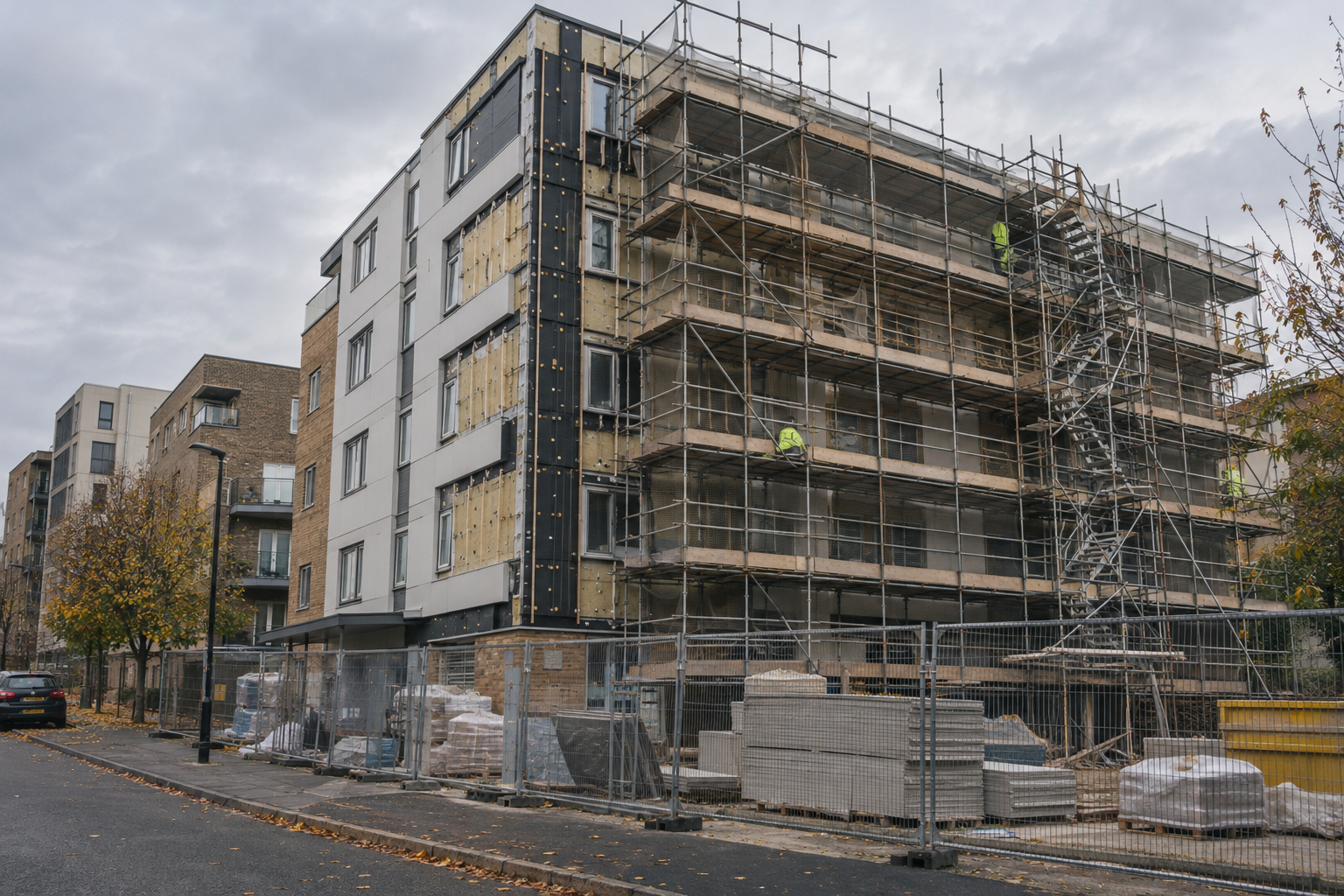
What happened
The cladding remediation bill would make those responsible for building safety, including freeholders, legally responsible for identifying and fixing problems promptly. Mortgage Solutions reported the proposed measures on 14 October 2026. The government's package combines that duty with stronger enforcement, financial penalties and additional routes for intervention when work does not progress.
Under the proposed Remediation of Unsafe Cladding Bill, failure to meet the new duty could lead to criminal penalties. The government also plans to give the First-tier Tribunal power to impose fines of up to £500,000 on responsible entities that fail to comply with a Remediation Order. That financial penalty concerns non-compliance with an order, rather than simply owning a building with unsafe cladding.
A separate proposal would establish a register of all medium-rise residential buildings in England. According to the government's plans, failure to register could attract a fine of up to £7,000. More serious breaches could result in penalties of up to £40,000 or prosecution.
The package would also allow third parties, including Homes England and local authorities, to step in and carry out remediation where those responsible fail to act. The government is therefore proposing an alternative route to getting work done, alongside sanctions against those who do not fulfil their obligations.
The government estimates that the bill would accelerate remediation for around 12,000 residents. That is an expected benefit of the legislation, not a count of people whose buildings have already been repaired. The source report does not give a commencement date for the proposed duties or penalties.
The background
The proposals follow successive government efforts to address unsafe buildings after the Grenfell Tower fire. According to the source report, those efforts have included legislation intended to increase remediation and the public naming of developers that the government considers responsible for unsafe buildings. The new bill would add further legal obligations and enforcement tools.
The government introduced its Remediation Acceleration Plan on 2 December 2024. It says more than 470 additional buildings have completed cladding remediation since then, while acknowledging that further action is needed. That figure measures completed work on buildings; it is separate from the estimate of residents who could benefit from the new bill.
Responsibility for a block's structure and shared areas is distinct from ownership of an individual leasehold flat. As general leasehold context, a flat owner normally holds a lease rather than owning the building's freehold. The proposed duty would apply to those responsible for building safety, with freeholders among the examples identified in the government's plans.
The source report also identifies legal obstacles to recovering remediation costs from cladding manufacturers. Under the proposals, developers, contractors and other parties that have funded safety work would have a simpler route to seek repayment where a manufacturer's products contributed to a building being unsafe. This is a cost-recovery measure, separate from the duty to identify and fix problems.
Read moreHousing benefit shortfalls leave almost one million renting households facing a gap
What people are saying
Building safety minister Baroness Blake said residents had been left waiting too long for those responsible to address dangerous cladding. Her comments focused on the anxiety of living in an unsafe home while waiting for action. The government's stated position is that the progress achieved under its existing programme does not remove the need for further measures.
Charlie Pugsley, acting chief executive of the Building Safety Regulator, said the regulator was working with relevant organisations to help owners repair buildings with known problems more quickly. He also said it would continue supporting the government's work on higher-risk buildings across England. Pugsley described the regulator's intended approach as collaborative and proportionate.
The government's position on missing or unidentified responsible parties is that leaseholders need clearer legal options. Its proposals would make it easier for leaseholders to assume control of building management in those circumstances, so that remediation can proceed. The measure addresses a different obstacle from an identifiable owner who refuses to act.
The source report does not include responses from leaseholder groups, freeholders or cladding manufacturers. It therefore provides no basis for saying whether those groups support the proposals or consider them sufficient. The available comments come from the building safety minister and the regulator, both of whom emphasise the need to get work moving faster.
What happens next
The government continues to expect all buildings over 11 metres with unsafe cladding to have been remediated, or to have a confirmed completion date, by the end of 2029. Those are two different ways of meeting the target. The commitment does not mean that every affected building must necessarily have completed its work by that deadline.
According to the government, stronger enforcement powers would arrive before that target date. However, the source report does not provide a parliamentary timetable or say when particular provisions would take effect. Building owners and residents should distinguish the proposed powers from rules that are already in force.
For leaseholders, the relevant route would depend on the obstacle facing their building. The government proposes enforcement against responsible parties who do not act, third-party intervention where necessary, and clearer management-control routes where no responsible entity can be found. The report does not set out application procedures or the practical conditions for using those routes.
For organisations that have already paid for safety work, the proposed manufacturer provisions could open a simpler path to recovering costs. The government's stated condition is that the manufacturer's products contributed to the building being unsafe. The report does not promise automatic reimbursement or provide details of how individual claims would be assessed.
The proposed building register would be intended to prevent medium-rise residential blocks in England from being missed, according to the government. This building-wide safety programme is distinct from the separate consultation on Awaab’s Law repair deadlines for private rentals. A landlord's obligations within a rented home and responsibility for cladding on an entire block should not be treated as interchangeable.
Why this matters
For leaseholders waiting for safety work, the government's proposals would provide more ways to challenge inaction and allow others to intervene when responsible parties do not act. Freeholders and other responsible organisations would face stronger legal obligations and potentially substantial penalties. The timing remains important: the report does not give commencement dates, and the end-of-2029 target allows a confirmed completion date rather than requiring every affected building's repairs to be finished.
Your questions answered
+What is the Remediation of Unsafe Cladding Bill?
It is proposed legislation that would require those responsible for building safety to identify and fix problems promptly. The government's package also includes stronger enforcement, a building register and additional protections for leaseholders.
+Could freeholders face criminal penalties over unsafe cladding?
Yes. Under the proposals, failure to meet the new legal duty could lead to criminal penalties. Freeholders are among those identified as potentially responsible for building safety.
+What is the proposed £500,000 cladding fine?
The First-tier Tribunal would gain power to impose fines of up to £500,000 on responsible entities that fail to comply with a Remediation Order. The report does not give a start date for this power.
+Does all unsafe cladding have to be removed by 2029?
The government's target is for buildings over 11 metres with unsafe cladding to be remediated or have a confirmed completion date by the end of 2029. It is not a promise that every building's work will be finished.
+What happens if a building owner will not fix unsafe cladding?
The proposals include stronger enforcement and allow third parties, including Homes England and local authorities, to intervene and carry out remediation where those responsible fail to act.
+Can leaseholders take control to get cladding repairs done?
The government proposes clearer legal routes for leaseholders to assume control of building management where no responsible entity can be found. The purpose would be to help remediation proceed; detailed procedures were not supplied in the report.
+Which buildings would join the new cladding register?
The proposed register would cover all medium-rise residential buildings in England. Failure to register could attract fines up to £7,000, with penalties up to £40,000 or prosecution for more serious breaches.
+How many buildings have completed cladding remediation since the acceleration plan?
According to the government, more than 470 additional buildings have completed cladding remediation since the Remediation Acceleration Plan was introduced on 2 December 2024.
This story draws on reporting first published by Mortgage Solutions.

Thomas Hale, Planning Editor
Thomas has spent more than a decade covering planning policy, building regulations and the Building Safety Act. He is known for translating dense government guidance into clear advice for homeowners.