Warmer Homes London: £10m backing for home upgrades announced in 2025
Warmer Homes London targeted lower-income households with retrofit support, while separate government proposals sought higher energy standards for private rentals in England and Wales by 2030.
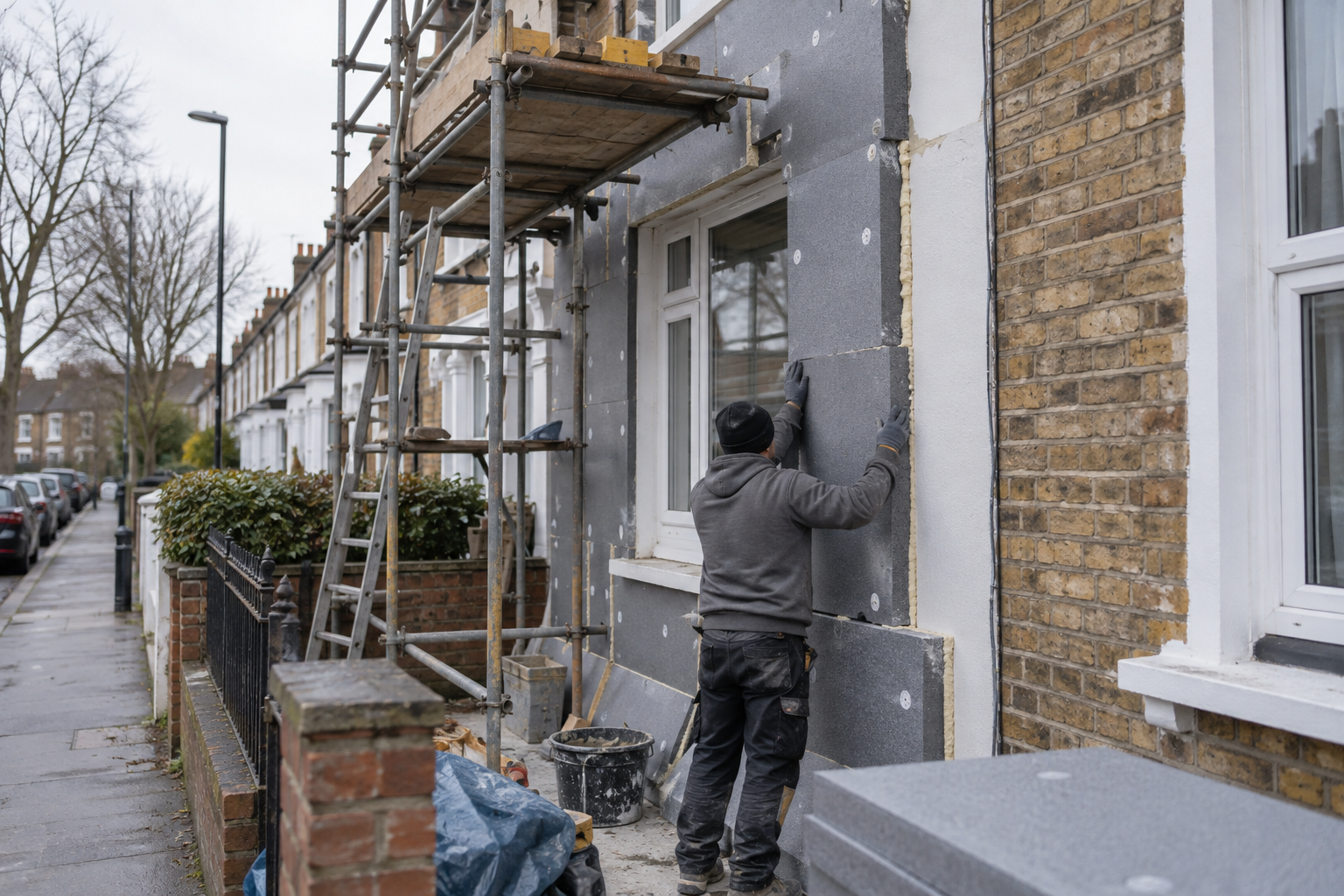
What happened
Warmer Homes London was announced with £10m of Greater London Authority funding to support energy upgrades across the capital, according to details reported on 7 February 2025. The GLA said it would deliver the initiative with London Councils, bringing borough retrofit work into a shared programme. This account covers that announcement and the government consultations reported alongside it, rather than confirming their status on 23 October 2026.
The announced eligibility groups were low-income owner-occupiers, low-income private tenants and social landlords. Support was intended for insulation, solar panels and low-carbon heating, including heat pumps. Those categories described the programme’s intended reach; the report did not provide income thresholds, individual grant limits or a household application process.
The GLA said the initiative would operate for about four years, while London boroughs would collectively provide £400,000 towards its start-up costs. The announcement also referred to central government funding, without giving a figure for that contribution. The £10m GLA commitment should therefore not be read as a confirmed total budget covering every source of support.
The London announcement coincided with a separate UK government consultation on requiring privately rented homes in England and Wales to reach at least Energy Performance Certificate band C by 2030. Ministers proposed limiting landlords’ required retrofit spending to £15,000 per property, with a £10,000 limit for properties with substantially lower rents or council tax bands. Those figures were consultation proposals, not spending requirements established by this report.
For households, the distinction was between access to improvement funding and a possible future obligation on landlords. Warmer Homes London addressed delivery within the capital, whereas the rental proposals covered England and Wales. Neither announcement established that a particular household would receive a grant or that its landlord would have to install a specific technology.
The background
The GLA said London boroughs had previously sought retrofit money separately, following central government funding rounds. It argued that this created application costs and uncertainty over future work. Its proposed shared approach was intended to give boroughs a more dependable basis for arranging improvements across their areas.
Retrofit means upgrading an existing building rather than replacing it. Insulation reduces heat loss, while solar panels generate electricity and heat pumps provide heating using electricity and heat drawn from the surroundings. These measures perform different jobs, so their inclusion in the announcement did not mean every supported home would receive the same package.
Funding arrangements also matter because a grant is different from borrowing secured against a home. The London announcement concerned support for eligible groups, rather than a mortgage product available to every homeowner. Property Pulse UK’s coverage of retrofit mortgages and social housing finance explains other approaches to paying for improvements, which should not be confused with this programme.
The proposed rental standard revived a policy pursued before Labour took office in 2024. Earlier Conservative plans had considered a 2028 compliance date, but Rishi Sunak abandoned the proposed requirement in September 2023. Labour then included a commitment to higher rental energy standards in its 2024 general election manifesto, according to the February 2025 report.
Around half of England’s privately rented homes were below EPC C at the time of the report. It also cited government figures showing that 56% of households in poorly energy-efficient social rented homes were living in fuel poverty. The latter figure concerned that particular group, not all social tenants or all London households.
Read moreTraditional building retrofit centre planned for former Falkirk factory
What people are saying
Councillor Claire Holland, chair of London Councils, said the initiative should improve “tens of thousands of homes”. She linked the programme’s climate aims with better living conditions and emphasised cooperation between different levels of government. Her statement expressed an ambition for delivery, rather than a count of homes already upgraded.
The GLA’s case focused on how funding would be organised. It said a common London hub would make retrofit activity more efficient and help boroughs deliver work more quickly and widely. The authority also argued that closer links with central government would improve long-term funding certainty, although the report did not set out guaranteed annual allocations.
The UK government’s separate assessment was that progress towards its existing fuel-poverty ambition had been inadequate. Its consultation material pointed particularly to the preceding five years, when energy prices had limited reductions in the number of households experiencing fuel poverty. That assessment formed part of a review of the 2021 Fuel Poverty Strategy.
The government said proposed minimum energy standards across private and social renting aimed to take more than one million households out of fuel poverty. However, its consultation material also estimated that two million households would remain in fuel poverty in 2030 without further intervention. These were policy aims and projections, not outcomes achieved by Warmer Homes London.
Ministers were also considering an additional fuel-poverty indicator that would include households unable to afford adequate warmth regardless of their home’s efficiency. The existing measure discussed in the consultation covered inefficient homes. The proposal recognised a distinction between a building’s energy performance and a household’s ability to pay for heating.
What happens next
The rental standards consultation was scheduled to close on 2 May 2025. The February report did not contain the government’s subsequent response, final rules or details of implementation. Landlords should therefore treat the proposed 2030 deadline and spending caps here as a record of that consultation, not confirmation of current legal duties.
For London households, the practical gaps in the announcement were eligibility detail, application routes and the work available at individual addresses. Naming low-income tenants as an eligible group did not explain how applications involving a property owner would be handled. Those details would need to come from the programme’s delivery arrangements before a household could establish whether it qualified.
The report also left the operation of the proposed landlord spending limits unresolved. It did not specify the exact rent or council tax thresholds for the lower cap, or explain how spending would be counted. A consultation ceiling is not the same as a quote for making a particular home more efficient.
Any improvement plan also needs to suit the building, especially where older construction or protected features are involved. Property Pulse UK’s report on a traditional building retrofit centre planned in Falkirk provides related context on specialist retrofit work. That project is separate from the London scheme and does not establish its technical requirements.
Households arranging work should also check whether their home insurer needs advance notice, since requirements depend on the policy and the project. The practical questions are covered in Property Pulse UK’s guide to insurance checks before home renovation. The London launch report did not specify contractor arrangements, installation guarantees or insurance conditions.
Why this matters
For London households struggling with heating costs, the announcement identified potential support for improvements that might otherwise be difficult to fund. For landlords, the separate consultation signalled a possible future requirement, not a confirmed bill or grant entitlement. The practical distinction remains important: programme eligibility, the work a building needs and legal compliance are different questions. This February 2025 account does not establish which funding routes or rental rules apply today.
Your questions answered
+What is Warmer Homes London?
Warmer Homes London was announced in February 2025 as a home retrofit initiative delivered by the Greater London Authority and London Councils. It was intended to support energy-efficiency improvements, solar panels and low-carbon heating.
+Who was eligible for Warmer Homes London funding?
The announcement named low-income owner-occupiers, low-income private tenants and social landlords. The report did not give income thresholds, household grant limits or an application process.
+How much funding was announced for Warmer Homes London?
The GLA committed £10m, while London boroughs were to contribute £400,000 collectively towards start-up costs. Central government funding was also mentioned, but the report did not state its value.
+Does Warmer Homes London cover heat pumps and solar panels?
The announced programme included support for heat pumps, solar panels and insulation. It did not establish which measures would be available at each property or confirm that every eligible home would receive all three.
+Do rented homes have to reach EPC C by 2030?
The February 2025 consultation proposed EPC C by 2030 for privately rented homes in England and Wales. This report does not establish the final rules or current legal position.
+Was the proposed landlord retrofit spending cap £15,000?
Yes. The government proposed a £15,000 cap per property, reduced to £10,000 for properties with substantially lower rents or council tax bands. The report did not give the exact thresholds for the lower limit.
+Can I apply for Warmer Homes London now?
The February 2025 report does not establish current availability or provide an application route. It describes the launch plans, so it cannot confirm whether applications are open on 23 October 2026.
This story draws on reporting first published by Edie.

Eleanor Whitfield, Property Correspondent
Eleanor covers the UK housing market, from monthly price indices to regional trends. She previously reported on business and economics for regional newspapers in Yorkshire and holds a degree in economics from the University of Leeds.