West Acton subsidence: residents seek lasting repairs as Peabody says homes are safe
West Acton subsidence concerns have left residents fearing for their homes, while Peabody says the building is safe and tree removal will allow permanent repairs.
What happened
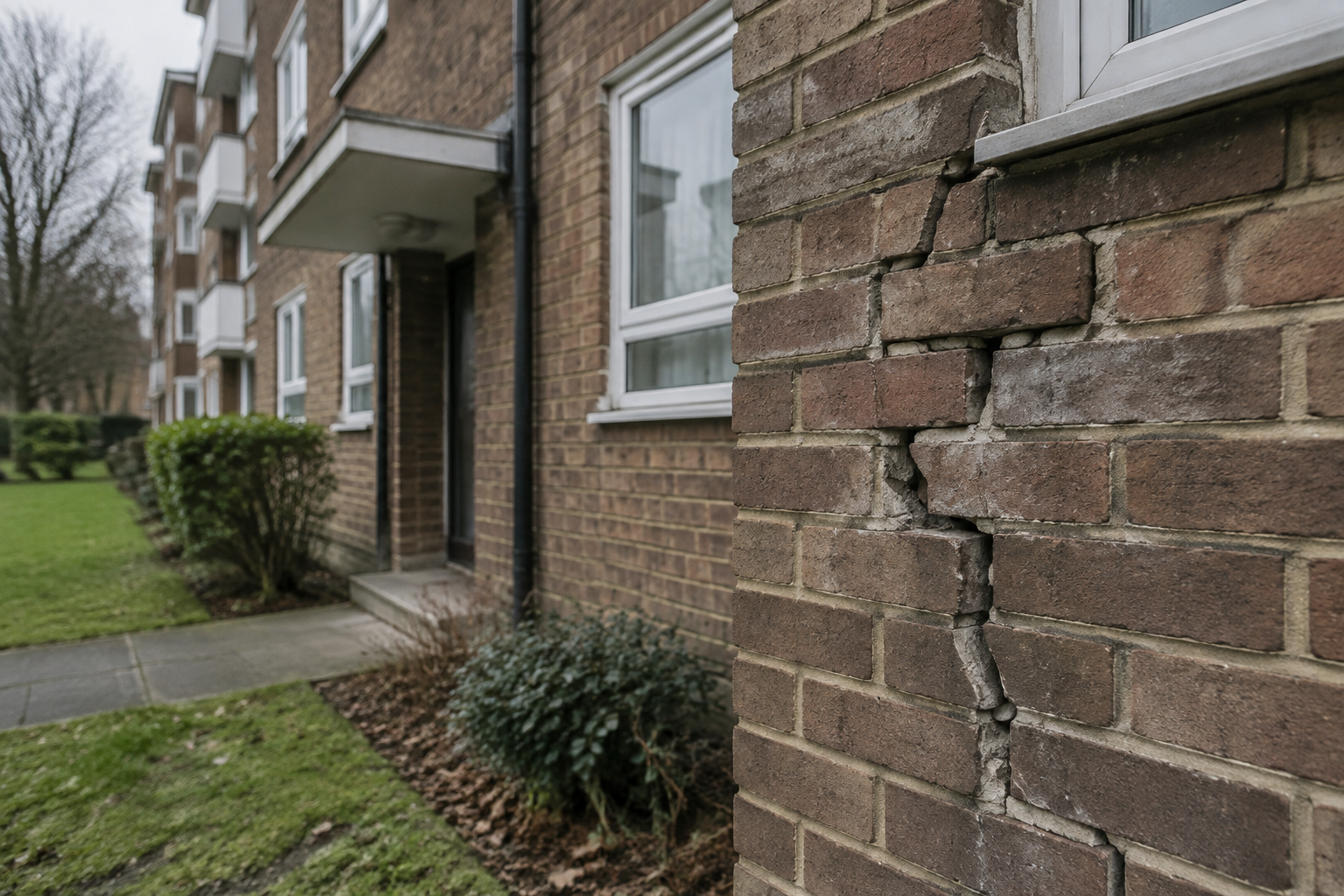
West Acton subsidence concerns have left homeowners and tenants seeking a lasting solution at 31-49 Hanger View Way in Ealing, west London. In a BBC report published on 21 October 2026, residents described widening cracks, loose brickwork and disruption stretching back years. Housing association Peabody said the building remained safe to occupy and attributed the movement to a nearby tree.
Residents told the BBC that they first raised concerns about possible subsidence in 2002 and that the condition of their homes had continued to worsen. Their accounts include problems inside individual flats and recent movement in external brickwork. The dispute centres on both the cause of that movement and whether the response has adequately protected the people living there.
Cameron Kermani, who moved into a ground-floor flat in 2020 after 30 years in council housing, described a recent incident involving his front door. He said it came out of its frame as he tried to open it at about 5am and struck him. According to his account, the glass remained intact when the door fell.
Kermani also told the BBC that substantial cracks run through his flat. He said fear that his bedroom ceiling could collapse had led him to sleep on the living-room sofa for the past two years. That is his account of the effect on his daily life, rather than an independently established finding that the ceiling is at risk of collapse.
The background
Another ground-floor resident, Michael Brady, has lived in the building since 2006. He told the BBC that he reported cracks and peeling wallpaper to Peabody in 2017, followed by worsening problems involving leaks, black mould and apparent building movement. His account describes several maintenance concerns alongside the structural cracking.
Brady said he spent more than a year in temporary accommodation while work took place. He returned in 2023, but said structural cracks subsequently appeared again. His experience makes the durability of previous repairs a central issue: the question for residents is not simply whether work has been undertaken, but whether it has addressed the underlying problem.
A tree was removed in 2022, according to the BBC report, but residents said the problems continued. Peabody has since identified another tree as responsible for the movement. The earlier removal and the proposed further removal are separate interventions; residents' account of continuing damage after the first does not, on its own, establish what is causing the current movement.
Residents believe the foundations are too shallow and told the BBC that a site investigation identified gaps beneath load-bearing parts of the building. Peabody disputes those claims. The report does not provide an independent technical conclusion resolving that disagreement, so the residents' explanation should not be presented as an established defect.
In general, subsidence occurs when the ground supporting a building moves downwards, and trees can contribute by drawing moisture from shrinkable soils. That wider mechanism is relevant to reporting on subsidence and clay-soil risks for homebuyers, but it does not prove the cause at Hanger View Way. The BBC report does not identify the soil type beneath these homes.
Read moreSubsidence payouts reach £297m as clay-soil risks affect homebuying
What people are saying
Peabody apologised for the time taken to resolve the problems and said: “The building is safe to live in and we're keeping a close eye on it.” It also said it had investigated concerns about an earlier borehole and the way it had been filled. According to the association, that borehole is not responsible for the movement.
The association's position is that the remaining tree must be removed before it can proceed with permanent repairs. Peabody said the tree stands on school land and that it is working with the school to arrange its removal. The school was not named in the report, and no separate statement from it was included.
Ground-floor resident Layla Fatima, who has two chronically ill children, described the situation as deeply stressful and said she feared the building could collapse. Her family spent four months away from their home. She told the BBC that the council could not find them a permanent alternative and that they therefore had to return to Hanger View Way.
Brady said he feared somebody would be seriously harmed before the problems were resolved. He also said he had not fully unpacked after returning because he might have to move again. His uncertainty illustrates the practical consequences of an unresolved repair process, a separate issue also explored in reporting on a family's prolonged subsidence repair dispute with LV=. That case does not establish Peabody's responsibilities or the appropriate remedy here.
What happens next
Peabody said it would continue checking the building while working towards removal of the tree. It also committed to addressing problems as they arise, including cracks and faults affecting doors and windows. Those interim measures are distinct from the permanent repairs that the association says depend on dealing with the tree first.
The BBC report did not give a confirmed date for tree removal, a start date for permanent repairs or a completion timetable. It also did not describe the full scope of the proposed permanent work. Those details remain important for residents trying to plan around possible disruption, particularly households that have already spent time in temporary accommodation.
Peabody said it would keep talking to residents and updating them. A useful distinction in those updates will be between checks on present safety, work to address the reported cause and repairs to the resulting damage. Each concerns a different part of the response; a repair to a door or crack does not itself explain how the wider movement will be resolved.
For owners considering arranging work themselves, repair responsibilities and any buildings-insurance requirements need checking first. General insurance checks before home renovation work provide relevant context, but the BBC report does not establish that an insurance claim is funding this case. Nor does it set out individual lease terms or identify who would meet any particular resident's costs.
Why this matters
For the households at Hanger View Way, the unresolved questions affect how they use their homes and whether they can settle after temporary moves. Peabody's assurance on safety and residents' accounts of continuing damage remain sharply different. For other homeowners and tenants facing suspected subsidence, the case highlights the importance of distinguishing a diagnosis from interim repairs, and of having clear information about monitoring, responsibility for work and the timetable for a lasting repair.
Your questions answered
+Where is the West Acton subsidence dispute?
The dispute concerns homes at 31-49 Hanger View Way in West Acton, Ealing, west London. Residents say they first raised concerns about possible subsidence in 2002.
+Are the homes at Hanger View Way safe?
Peabody says the building is safe to occupy and is being monitored. Residents describe fears about collapse. The BBC report does not provide an independent technical conclusion resolving their concerns.
+What does Peabody say is causing the subsidence?
Peabody attributes the movement to a nearby tree on school land. It says it is working with the school to arrange removal so permanent repairs can proceed.
+Was a tree already removed at Hanger View Way?
One tree was removed in 2022, according to the BBC report. Residents say the problems continued afterwards. Peabody has since identified a different tree as the cause.
+Have residents moved out during repairs?
Michael Brady says he spent more than a year in temporary accommodation before returning in 2023. Layla Fatima says her family moved out for four months before returning.
+When will Peabody carry out permanent repairs?
The BBC report gives no confirmed timetable. Peabody says tree removal must come first and that it will continue monitoring the building and addressing cracks, doors and windows meanwhile.
+Are shallow foundations causing the problems?
Residents believe the foundations are too shallow and say an investigation found gaps beneath load-bearing sections. Peabody disputes those claims. The report does not independently establish the cause.
This story draws on reporting first published by BBC.

Robert Ashdown, Period Property Specialist
Robert writes about caring for older, listed and period homes, including damp, structural movement and conservation rules. He has reported on heritage and housing for over fifteen years.