Flood risk: half of buyers say they would abandon a purchase
Flood risk would prompt half of surveyed homebuyers to abandon a purchase, according to Lyons Bowe, which urges buyers to examine the individual property's circumstances.
What happened
Flood risk could cause buyers to abandon a purchase even after they have begun the legal process, according to research by Lyons Bowe Solicitors. Half of the 1,090 homebuyers surveyed said they would withdraw if their conveyancer discovered a flood risk designation. The findings were reported by Today's Conveyancer on 12 November 2026 and concern buyers' stated intentions, rather than recorded sales falling through.
The survey also found that 77% would not consider buying in a flood risk area in the first place. That question concerns the homes buyers might shortlist, whereas the withdrawal question concerns information uncovered during a purchase. The two percentages should therefore not be treated as competing estimates of how many agreed sales would fail.
Price was another concern: 59% said they would expect a substantial discount compared with an otherwise similar property outside a flood risk area, according to Lyons Bowe. The reported findings do not put a percentage or cash value on that expected reduction. They describe buyers' expectations, not evidence of the discounts sellers have accepted or a valuation rule for affected homes.
The account of the research gives the sample size but does not provide fieldwork dates, a geographical breakdown or details of how respondents were recruited. It also does not show how answers differed between properties facing different levels of risk. Those gaps limit how confidently the results can be applied to a particular local market, property or group of buyers.
The background
Today's Conveyancer reported alongside the survey that 4.7 million homes in England were considered at risk of flooding. Its account did not identify the underlying assessment or reference date for that figure, so it should not be read as a new count produced by Lyons Bowe. The wider awareness problem has also featured in an Environment Agency warning about households unaware of flood risk.
As general homebuying context, flooding can arise from rivers, the sea or surface water when heavy rain overwhelms drainage. A property's distance from a river is therefore not a complete guide to its exposure. The relevant question is which type of flooding an assessment identifies, rather than whether a home simply sits near visible water.
Conveyancing checks and a physical survey serve different purposes in a purchase. Searches can flag environmental issues that need investigation, while a building survey considers the property's condition within the scope agreed with the surveyor. Neither a viewing on a dry day nor the absence of visible water damage establishes that a home has no future flood exposure.
Insurance is a separate practical issue from deciding whether the level of physical risk is acceptable. Buyers can seek quotations for the exact address and examine flood cover, exclusions and the excess before committing; a general estimate of home insurance costs cannot answer those questions. The potential cost difference is explored in Property Pulse UK's report on home insurance premiums after flooding.
Read moreSmart Property Data pilot faces questions over checks and liability
What people are saying
Paul Lyons, managing director of Lyons Bowe Solicitors, said buyers may not always be able to avoid flood risk when looking for a home. His position is that a designation gives buyers information they need for their decision, rather than establishing that flooding will happen. That distinction challenges an automatic rejection of every flagged property without dismissing the underlying concern.
Lyons said the assessment needs to be specific to the home. He identified the kind and degree of risk, the surrounding environment, the effectiveness of flood defences and any protective measures as relevant considerations. His comments do not suggest that all homes within a designated area face the same exposure or that every risk can be adequately addressed.
In the survey, 20% said evidence of effective flood defences would make them more comfortable proceeding, while 19% would draw reassurance from a professional flood risk assessment. These answers concern confidence, not a guarantee that respondents would complete a purchase. The findings do not state whether the same people selected both forms of reassurance, so the percentages cannot simply be added together.
The source report placed the findings in the context of a recently launched government flood taskforce, but did not give its launch date, remit or delivery timetable. That reference does not establish what protection any particular property will receive. For a separate example of local work, Property Pulse UK has reported on the Severn Stoke flood scheme and its protection for homes.
What happens next
For a buyer whose searches raise a concern, the next useful step is to ask the conveyancer to explain exactly what the report identifies. Questions can cover the source of flooding, the assessed level of risk and whether further specialist advice is needed. This separates a broad warning from the evidence needed to decide whether the individual home remains suitable.
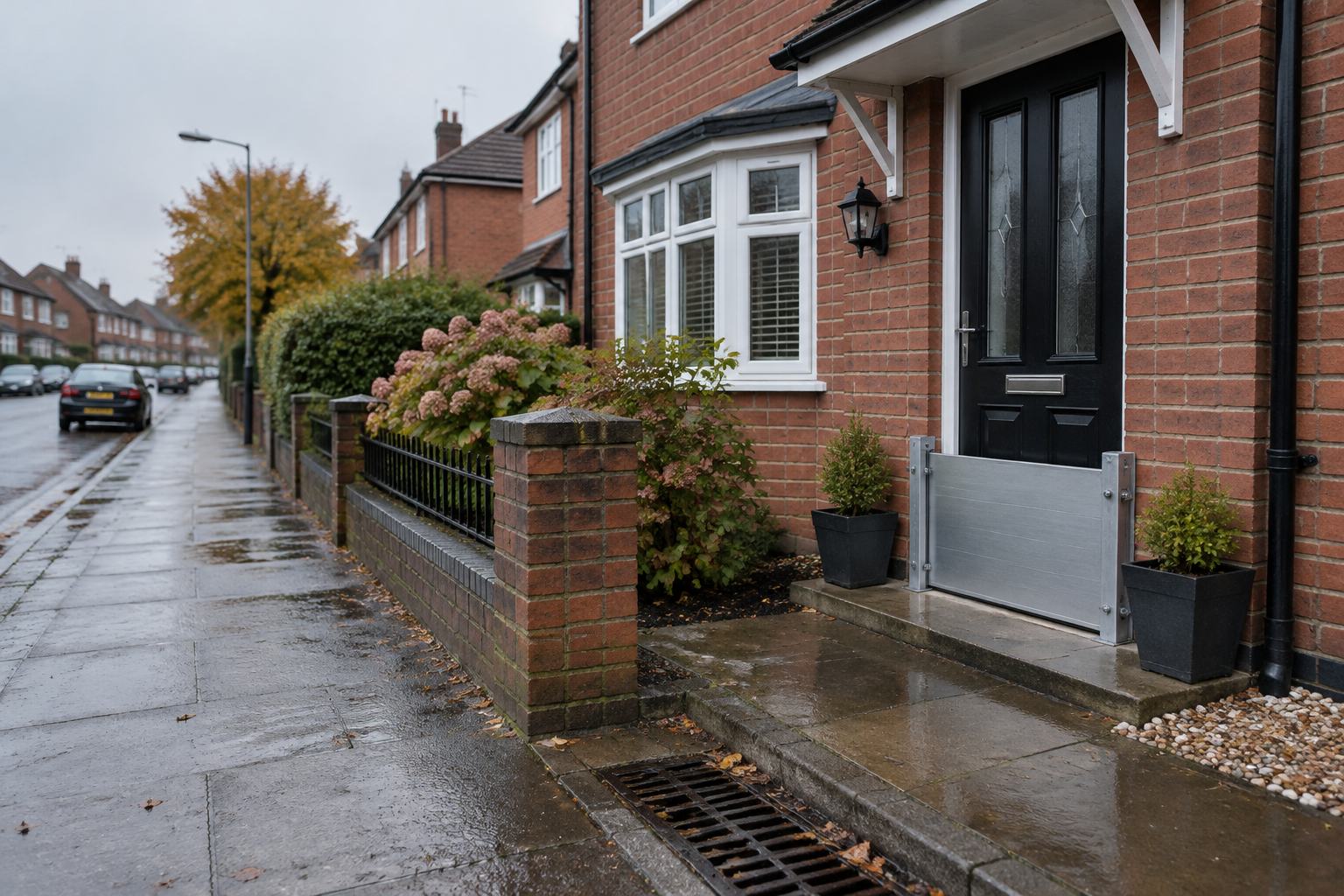
If existing flood defences are part of the reassurance offered, buyers can ask what those measures protect against and what supporting information is available. A proposal for future work is different from a completed scheme, and neither should be assumed to remove every possible source of flooding. The survey's finding about confidence in defences makes the quality of that evidence particularly relevant.
Buyers should also distinguish an unsuccessful online insurance quotation from a full assessment of available cover. Property Pulse UK's reporting on online home insurance refusals and specialist cover explains why a refusal through one route need not settle the question. Any alternative quotation still needs checking for its price, terms and suitability for the property and any mortgage requirements.
For sellers, the practical questions are what is known about the property's flood history, which assessments are available and what protective work has been completed. Those are matters to discuss with the conveyancer when preparing information for a buyer. The survey supplies no basis for choosing a standard asking-price reduction: any negotiation still needs to consider the particular home, the evidence and the buyer's position.
Why this matters
For buyers, the Lyons Bowe findings highlight a decision that involves more than the asking price: whether the evidence, insurance terms and level of flood exposure are acceptable for a particular home. For sellers, they show how strongly a risk designation could influence interest and negotiations. The research does not establish inevitable flooding, a standard discount or certain withdrawal. It makes understanding the property's circumstances more useful than treating every warning as the same.
Your questions answered
+Would buyers pull out of buying a house because of flood risk?
Half of the 1,090 homebuyers surveyed by Lyons Bowe said they would withdraw if their conveyancer uncovered a flood risk designation. This measures stated intentions, not the proportion of actual purchases that fall through.
+Does a flood risk designation mean a house will flood?
No. Paul Lyons of Lyons Bowe says a designation does not establish that flooding will happen. The type and level of risk, local conditions, flood defences and protective measures need consideration for the individual property.
+How much discount should I ask for on a flood risk house?
The survey offers no specific figure. Although 59% expected a substantial discount against a comparable home outside a flood risk area, it did not quantify that reduction or report discounts achieved in completed sales.
+Will flood defences reassure homebuyers?
According to Lyons Bowe, 20% of respondents said evidence of effective flood defences would make them more comfortable proceeding. That is not the same as a commitment to buy or proof that all flood risk has gone.
+Should I get a professional flood risk assessment before buying?
Ask your conveyancer whether the search findings need specialist investigation. In the Lyons Bowe survey, 19% said a professional flood risk assessment would give them some reassurance, but the research does not establish that every flagged property needs one.
+Can a house flood if it is not near a river?
Yes. Surface water flooding can occur when heavy rain overwhelms drainage. Distance from a river alone does not establish whether a property is exposed to flooding.
+What insurance checks should I make before buying a flood risk home?
Seek quotations for the exact address and check flood cover, exclusions and the excess. An online refusal does not necessarily mean no cover is available, but any alternative policy still needs checking for suitability.
This story draws on reporting first published by Today's Conveyancer.

Robert Ashdown, Period Property Specialist
Robert writes about caring for older, listed and period homes, including damp, structural movement and conservation rules. He has reported on heritage and housing for over fifteen years.