Shakespeare Institute move paused, leaving Stratford future undecided
The Shakespeare Institute will stay in Stratford-upon-Avon while the University of Birmingham explores its future, leaving the proposed relocation unresolved after a campaign.
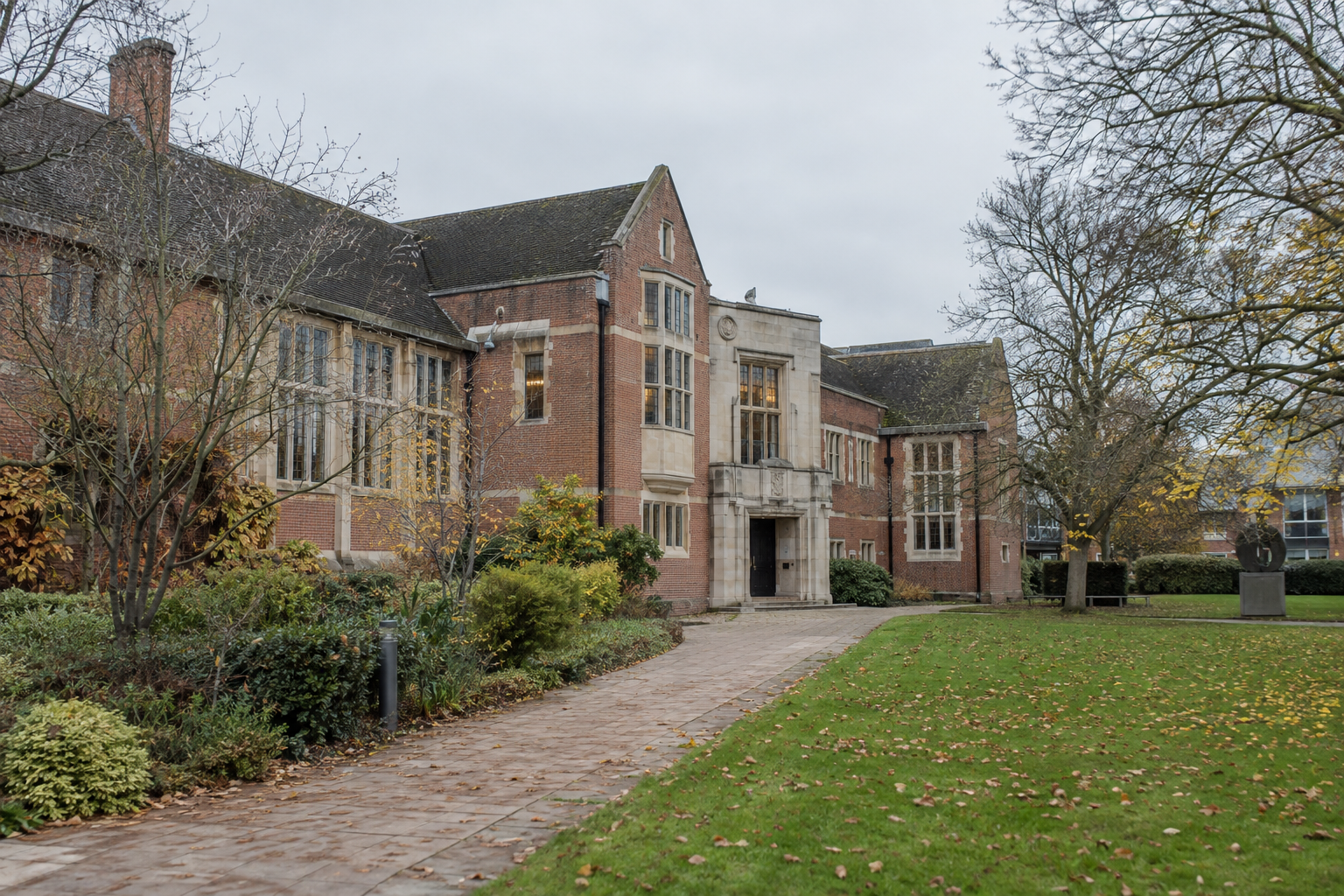
What happened
The Shakespeare Institute’s proposed departure from Stratford-upon-Avon has been put on hold by the University of Birmingham. Vice-chancellor and principal Professor Adam Tickell announced the pause on 17 November 2026, following opposition from academics, actors and supporters internationally. His statement left open whether the institute would remain in the town permanently.
The university had proposed transferring the institute and its 60,000-volume library to its Edgbaston campus in Birmingham, according to the Guardian. Staff and students had been told about that decision the previous week. The pause therefore interrupts an announced relocation rather than settling the institute’s long-term location.
A petition led by actors Samuel West and Dame Janet Suzman attracted 15,000 signatures, the Guardian reported. Opposition also spread through social media, where supporters challenged the case for taking the institute out of Shakespeare’s home town. The campaign brought together objections to the move from people involved in scholarship and performance.
For Stratford-upon-Avon, the immediate issue is the continued presence of a specialist institution and its library. The announcement concerns their location, not a published proposal to sell or redevelop the premises. The source report gives no details of any property disposal, alternative building use or works associated with the proposed move.
The background
Tickell said demand to study in Stratford-upon-Avon had remained low for several years. He contrasted that with growth in related subjects at the university’s Birmingham campus. The source report provides no enrolment totals, financial figures or cost comparison between keeping the institute in Stratford and relocating it.
The university’s argument also extends beyond student recruitment. Tickell said Birmingham’s creative industries offered opportunities for Shakespeare research and scholarship. That places the proposed move within a wider academic strategy, rather than presenting it solely as a decision about accommodation or the library’s storage.
The Royal Shakespeare Company and the Shakespeare Birthplace Trust are among the partners named in the university’s plans for further work. Tickell acknowledged that the institute mattered to those organisations, to Stratford-upon-Avon and to Shakespeare enthusiasts elsewhere. However, the source report does not set out a separate proposal from either partner for securing its future.
The distinction between an institution’s future and a building’s future matters in heritage reporting. Property Pulse UK’s coverage of the heritage at risk register concerns identified threats to historic places; this announcement concerns where an academic institute should operate. The source does not establish the condition, designation or repair requirements of the institute’s premises, so it cannot support conclusions about their physical preservation.
Read moreReedham House demolition: Manchester office plan exposes heritage divide
What people are saying
Tickell said the university remained committed to Shakespeare studies, while arguing that it needed to address the institute’s challenges and opportunities. His statement proposed exploring whether a sustainable future in Stratford-upon-Avon could be achieved. It did not promise to retain the current location regardless of the outcome of that work.
Professor Michael Dobson, the institute’s director, welcomed the interruption but wanted the relocation decision withdrawn, the Guardian reported. He had said he would resign if the move proceeded. His response makes clear that management and the institute’s director had not reached the same position on what should happen next.
Dobson said he would continue trying to persuade university management that the institute could have a permanent, viable future in Stratford-upon-Avon. His position is therefore not simply opposition to change: he wants the university to accept that remaining in the town can work. The report does not include a detailed funding or recruitment plan supporting that case.
West said the campaign would keep gathering signatures despite the pause. He argued that the value of specialist academic work in a distinctive location should not be judged only through numbers, according to the Guardian. His response welcomed the immediate reprieve while challenging the university’s emphasis on recruitment and its wider assessment of viability.
What happens next
Tickell set out a six-month period of work involving the institute, the Royal Shakespeare Company, the Shakespeare Birthplace Trust and other partners. Students and alumni will also be involved, he said. The stated aim is to strengthen the institute’s role in scholarship and performance across both Birmingham and Stratford-upon-Avon.
The announcement does not explain how that involvement will be organised or who will make the eventual location decision. It also supplies no recruitment target, funding commitment or test against which a permanent Stratford presence would be assessed. Those omissions mean supporters cannot yet tell what evidence would persuade the university to abandon relocation.
Any later property proposal would need to be assessed separately from the university’s academic decision. In England, changing a building’s use can raise planning questions, while conversion may also require building work and regulatory approval. The Historic England guide to bringing vacant buildings into housing use covers a separate issue; no housing conversion is announced in this source report.
For owners of historic homes, there is also a distinction between deciding how to use a property and obtaining permission to alter it. In England, works affecting a listed building’s special architectural or historic interest require listed building consent. The separate guidance on consent for listed-building energy upgrades explains that principle, but the source provides no basis for applying a particular designation or proposed alteration to the institute.
The next substantive development will be the university’s account of the work it has announced, rather than an assumed move or permanent reprieve. The source gives no revised relocation date and no timetable for moving the library. West’s commitment to continue the petition and Dobson’s intention to press management indicate that opposition to leaving Stratford will continue during that process.
Why this matters
For Stratford-upon-Avon residents, the pause leaves the future location of an academic institution and its 60,000-volume library unresolved. For homeowners and buyers, it is important not to confuse that uncertainty with an announced property sale or redevelopment: the source reports neither. The university’s next steps concern whether the institute can remain viable in the town. Any later proposal affecting its premises would need to be considered on its own terms.
Your questions answered
+Is the Shakespeare Institute leaving Stratford-upon-Avon?
The proposed move is paused. The University of Birmingham has not guaranteed that the institute will remain in Stratford-upon-Avon permanently.
+Where was the Shakespeare Institute going to move?
The university proposed moving the institute and its 60,000-volume library to its Edgbaston campus in Birmingham.
+Why did Birmingham University propose moving the Shakespeare Institute?
Vice-chancellor Professor Adam Tickell said interest in studying in Stratford had been low for several years. He also pointed to growth in related subjects and opportunities within Birmingham’s creative industries.
+How many people signed the Shakespeare Institute petition?
The petition led by Samuel West and Dame Janet Suzman gathered 15,000 signatures, according to the Guardian’s report published on 17 November 2026.
+When will the Shakespeare Institute’s future be decided?
Tickell announced six months of work with the institute, partners, students and alumni. The source report does not give a fixed date for a final location decision.
+Will the Shakespeare Institute building be sold?
The source report does not announce a sale, redevelopment or alternative use for the premises. The decision being reconsidered concerns relocating the institute and its library.
+Has the campaign to keep the Shakespeare Institute in Stratford ended?
No. Samuel West said the petition would continue, while institute director Professor Michael Dobson said he would keep pressing for a permanent, viable future in Stratford-upon-Avon.
This story draws on reporting first published by Guardian Heritage.

Thomas Hale, Planning Editor
Thomas has spent more than a decade covering planning policy, building regulations and the Building Safety Act. He is known for translating dense government guidance into clear advice for homeowners.