Warm Home Loans launch: what borrowers need to check before upgrading
Warm Home Loans offer households finance for low-carbon upgrades, but borrowers need to weigh repayments against potential savings as heat pump grants face Budget uncertainty.
What happened
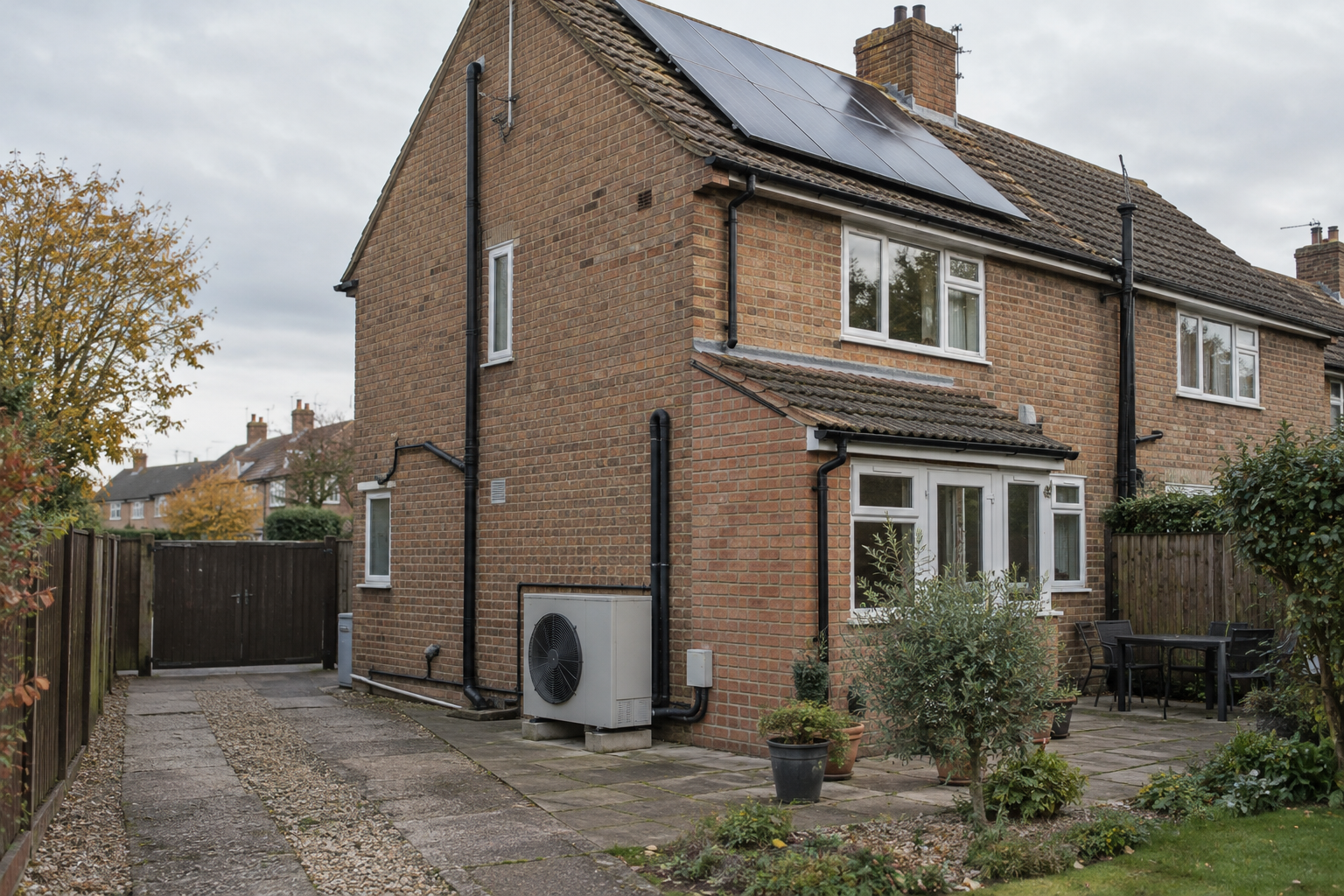
Warm Home Loans launched on 27 October 2026, offering government-backed finance for household energy upgrades, according to the Guardian. The scheme provides interest-free or low-interest borrowing for technologies including heat pumps, home batteries and solar panels. Its practical purpose is to spread installation costs rather than require households to find the money upfront.
The Guardian reported loan amounts ranging from £7,500 to £35,000, with the available sum depending on the technology. Borrowers seeking an air-source heat pump could obtain up to £10,000, while loans for ground-source systems could reach £35,000. Those figures are borrowing limits, not published prices for every installation or guarantees that every applicant will receive the maximum.
British Gas has partnered with Tandem Bank, while E.On has partnered with HomeServe, according to the report. The suppliers will offer finance directly to customers, with rates described as discounted against those available from high street lenders. The report does not give a complete list of interest rates, repayment periods or eligibility conditions.
The government estimates that installing a heat pump, battery and solar panels together could cut annual energy bills by up to £550. It says a time-of-use electricity tariff could add a further £300 in yearly savings. These are potential reductions in energy bills, not a calculation of what a household would save after making loan repayments.
For borrowers, the important distinction is between avoiding an upfront payment and receiving a free upgrade. A loan still has to be repaid, even when it carries no interest, while an interest-bearing agreement adds financing costs. The reported launch details do not establish whether projected bill savings would cover repayments for any particular household.
The background
The new lending offer sits alongside existing government support for replacing fossil-fuel heating, according to the Guardian. Its report says households could combine loans with grants, rather than necessarily choosing one form of funding. That distinction matters because a grant reduces the cost left to fund, whereas borrowing spreads that remaining cost over time.
The Guardian cited £13,600 as the cost of installing a heat pump and said the Boiler Upgrade Scheme had typically provided grants of up to £7,500. On those figures, a household receiving the full grant would still need to fund £6,100. This illustrates the remaining funding requirement, rather than providing a quote for an individual property.
The launch came immediately before the Budget scheduled for 28 October 2026. The Guardian reported that ministers were expected to reduce the Boiler Upgrade Scheme’s £2.7bn five-year budget by hundreds of millions of pounds, rather than abolish it. Those possible reductions were based on sources and were not confirmed policy in the launch report.
According to the Guardian, grants of up to £9,000 were likely to remain for households off the gas grid that rely on heating oil. The newspaper reported that these grants could work alongside low-interest borrowing to cover a heat pump’s full installation cost. However, the expected protection for those households should not be treated as a settled Budget announcement.
This scheme follows other attempts to make home upgrades affordable through lending and housing finance. Property Pulse UK’s guide to retrofit mortgages and social housing finance in 2024 provides context on earlier approaches, rather than the terms of this new offer. For consumers, the useful comparison is the total cost and conditions of each agreement, not simply whether it is labelled green finance.
Read moreWarm homes plan could cut household bills by £1bn a year, study finds
What people are saying
Miatta Fahnbulleh, identified in the Guardian’s report as the energy secretary, presented the loans as a way to make home improvements accessible without upfront costs. She said: “Energy is an everyday essential that must be affordable for everyone.” Her statement linked the scheme to warmer homes and lower running costs.
The government believes the finance could help thousands more households install low-carbon energy technology, according to the report. Its case rests on spreading payments over several years while reducing energy spending. The launch coverage did not provide a numerical installation target or a timetable for reaching that additional group of households.
E.On UK chief executive Chris Norbury pointed to a trial involving customers experiencing fuel poverty in Coventry. He said participants saved more than £250 a year on average by pairing a home battery with a time-of-use tariff. That is a different combination from the heat pump, battery and solar package behind the government’s £550 estimate.
Norbury described the loan scheme as a means of widening access to low-carbon equipment, according to the Guardian. The Coventry example illustrates E.On’s position that equipment and electricity tariffs need to be considered together. The reported trial result does not establish what a different household would save, or how much it would pay to finance its battery.
The Guardian attributed the expected grant reductions to Treasury concerns that the Boiler Upgrade Scheme mainly benefits middle-class households. That reported position highlights a separate question from whether the technology can reduce bills: which households receive public support towards installation. The launch report did not contain a confirmed replacement grant structure or a detailed distributional assessment.
What happens next
The immediate policy question is what the Budget confirms about heat pump grants. The loan launch was reported as a completed announcement, while reductions to grant funding remained an expectation in the same coverage. Households considering both forms of support need confirmed grant conditions before treating a combined funding package as available to them.
The wider list of participating finance providers includes HTG Finance, Propensio, Secure Trust Bank and Selina Finance, according to the Guardian. It also names South Manchester Credit Union, Sunsave, The Money Co-op and This Bank. The report does not set out which products, rates or loan terms each organisation will offer.
Before accepting finance, a borrower should establish the interest rate, repayment period, monthly payment and total amount repayable. Any fees and early-repayment conditions also belong in that comparison. As a basic borrowing check, compare repayments with a property-specific savings estimate rather than assuming the government’s maximum projected saving will apply.
Funding is also separate from permission to alter a property. Owners of listed homes may need consent for work affecting the building’s special character, regardless of how the installation is paid for. The guide to listed building energy upgrades and consent rules explains why those checks belong before commissioning work.
Households should also check their insurance position before an installation begins, as renovation work can affect the cover required. Property Pulse UK’s article on insurance checks before home renovation covers that separate preparation. Neither access to finance nor an estimate of lower energy bills removes the need to check the installation contract and existing policy conditions.
Why this matters
Warm Home Loans could give households another way to fund energy equipment without paying the installation bill upfront. But the government’s projected energy savings are not the same as savings after debt repayments. For homeowners weighing an upgrade, the key figures are the confirmed grant, installation price and total borrowing cost. Reported Budget changes add uncertainty, making it important to separate an available loan offer from grant support that has not yet been confirmed.
Your questions answered
+What is the Warm Home Loans scheme?
It is a government-backed scheme offering interest-free or low-interest loans for upgrades including heat pumps, batteries and solar panels. According to the Guardian, it launched on 27 October 2026.
+How much can I borrow through Warm Home Loans?
The Guardian reported loans ranging from £7,500 to £35,000. It cited limits of £10,000 for air-source heat pumps and £35,000 for ground-source systems. Individual eligibility conditions were not detailed in the report.
+Are all Warm Home Loans interest-free?
No. The reported scheme includes both interest-free and low-interest lending. The launch coverage did not provide a complete rate list, so borrowers need to check the terms of the specific agreement offered.
+Can I use a Warm Home Loan with a heat pump grant?
The Guardian reported that loans could be combined with government grants. However, it also reported possible Budget changes to grant funding, so households need to check confirmed grant conditions before relying on both.
+How much could solar panels, a battery and a heat pump save?
The government estimates annual energy bill savings of up to £550 for the combined installation, with a further £300 possible through a time-of-use tariff. Those estimates do not deduct loan repayments.
+Which energy suppliers offer Warm Home Loans?
British Gas and E.On are participating through partnerships with Tandem Bank and HomeServe respectively, according to the Guardian. The report also names several other participating finance providers.
+Is the Boiler Upgrade Scheme being scrapped?
The Guardian reported that cuts were expected, rather than abolition. Those potential changes were unconfirmed ahead of the Budget scheduled for 28 October 2026.
This story draws on reporting first published by The Guardian.

Eleanor Whitfield, Property Correspondent
Eleanor covers the UK housing market, from monthly price indices to regional trends. She previously reported on business and economics for regional newspapers in Yorkshire and holds a degree in economics from the University of Leeds.