South West Water leaks prompt supply warning as households are urged to save
South West Water leaks are increasing supply risks for drought-hit households, regulators warn, as the company asks customers to use less water and prepares a repair plan.
What happened
South West Water leaks are increasing the risk of supply interruptions for households already facing severe drought, according to a joint warning from regulators and the government. In a letter dated 26 October 2026, Ofwat, the Environment Agency and the Department for Environment, Food and Rural Affairs gave the company six weeks to produce an action plan.
The letter, reported by the Guardian on 5 November 2026, said the company had failed to meet targets for reducing leakage and repairing burst pipes for seven years. South West Water serves 1.8 million people across south-west England. The warning concerns the reliability of that service during drought, rather than an announcement that all customers will lose their supply.
According to the letter, 113.5 million litres escape from the company’s pipes and other infrastructure each day. That is 5.7 million litres more each day than the previous year, while leakage stands 18.5% above forecast. Regulators said the deterioration was making customers more vulnerable while water resources remained under pressure.
The source report identified about 325,000 people, alongside thousands of businesses in Exeter and mid and east Devon, as affected by continuing severe drought. It said those areas faced the possibility of repeated interruptions over the following weeks and months. School closures and losses for businesses were potential consequences, not outcomes confirmed in the report.
South West Water had written to households in the affected areas asking them to cut consumption to help protect supplies. According to the Guardian, those communications did not acknowledge how the company’s own leakage was contributing to the risk of outages. That omission matters to the dispute: customers were being asked to conserve water while losses from the network were rising.
The background
The warning followed the driest April-to-September period in more than a century, according to the source report, which linked the exceptional conditions to climate change. Around 82% of England was still in drought when the report was published. Severe drought had been declared in parts of Devon, Cornwall, Dorset, Somerset, East Sussex and West Sussex.
The Met Office said rainfall equivalent to 120% of the usual amount was needed over seven months to bring the country fully out of drought. That assessment concerned recovery across the country, rather than a forecast for any individual reservoir. It helps explain why rainfall returning to an area does not, by itself, establish that its water shortage has ended.
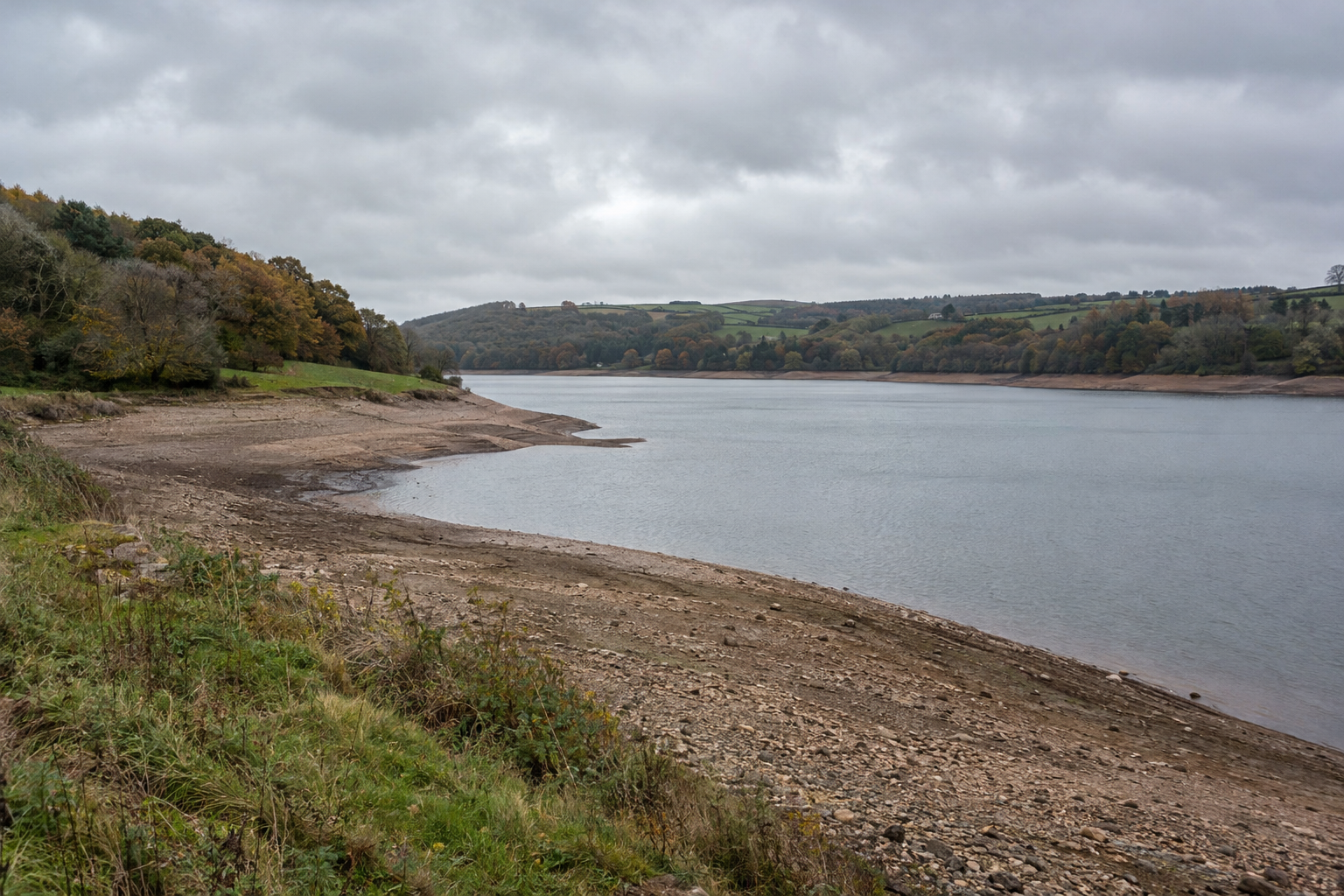
Wimbleball reservoir held 16% of its storage capacity at the time of the report. It supplies South West Water customers in east Devon, north Devon, Somerset and west Dorset, as well as Wessex Water customers in west Somerset. The report also identified concerns about several smaller South West Water reservoirs supplying homes in Devon and Cornwall.
The regulators said poor leakage performance had weakened their confidence in the company’s ability to maintain supplies without emergency abstraction from rivers. Their concern therefore extended beyond household taps to the environmental damage that additional river withdrawals could cause. Water availability also features in separate reporting on calls for safeguards after the Stourbridge wildfire, although that case concerns a different incident and location.
For property owners, drought-related supply pressure is distinct from damage to the building itself. Separate reporting on subsidence claims following summer heat examines another consequence of dry conditions. The South West Water warning does not establish that affected homes have structural damage; its focus is the amount of water available and how much the network loses.
Read moreWildfire water supplies: MPs seek safeguards after Stourbridge homes destroyed
What people are saying
Ofwat, the Environment Agency and Defra said the leakage shortfall was unacceptable in the continuing drought. Their joint letter also drew attention to the company’s credibility when asking households to reduce consumption. The organisations’ position was that South West Water needed to deliver its own planned reductions while seeking help from customers.
Devon County Council leader Julian Brazil criticised the contrast between the conservation requests sent to households and the company’s performance. He said residents and businesses had been told dry weather explained the need to save water, despite years of warnings about leakage. He also raised concerns about prolonged harm to rivers and wildlife if pressure on supplies continued.
Brazil presented the problem as a long-running failure rather than an isolated response to an unusually dry season. He criticised the company’s bills, pollution record and shareholder dividends as part of that argument. Those comments were his assessment of the company’s wider conduct; the specific regulatory demand in the letter was for a plan to address leakage.
South West Water’s drought programme director, Richard Stanbrook, said recent rain had improved water resources, but supplies remained under significant pressure. He said sustained rainfall in the right locations was necessary to restore rivers and reservoirs. His response described a recovery that had begun, rather than saying the drought-related risks had passed.
Stanbrook said the company was repairing leaks, transferring water around its network and taking practical measures to strengthen supplies and reduce losses. He also said it would continue working to protect supplies as conditions improved. The response reported in the source did not provide a dated timetable for bringing leakage back to the forecast level.
What happens next
The next formal requirement is South West Water’s action plan to the government and regulators, due within six weeks of the 26 October letter. That is a deadline for submitting a plan, not a promise that all necessary repairs will be finished within six weeks. The source did not set out a separate completion date for the repair work.
For households, the warning is about an increased risk of interruptions, not a published programme of cuts. The source supplied no street-by-street outage timetable or confirmed dates for restrictions. It would therefore be wrong to treat the regional warning as proof that a particular home will lose water on a particular day.
The National Drought Group was preparing to meet on 5 November 2026, according to the report published that day. The supplied account does not include the meeting’s conclusions or a later update on reservoir storage. Its drought coverage and Wimbleball figure should therefore be read as dated information, not measurements confirmed for 14 November 2026.
Alongside the company-specific warning, the government announced eight regional water councils to bring together local leaders, customers and businesses. It said the bodies would help set water-company priorities and shape billions of pounds of investment in water and flood infrastructure. That broader remit also concerns homeowners facing the different risks covered in reporting on flood-risk awareness in England.
The government asked local leaders to submit proposals for running the new councils by the end of 2026. The announcement concerned how investment priorities would be shaped; it did not provide a schedule of local leak repairs. South West Water’s six-week action-plan requirement remains the specific response demanded by the joint regulatory letter.
Why this matters
For homeowners, renters and landlords in the affected areas, the regulators’ warning concerns the reliability of an essential household service. It also raises an accountability question: customers are being asked to save water while network losses exceed forecasts. The six-week deadline requires a plan, not completed repairs, and the report gives no property-level outage schedule. Residents therefore face a documented regional supply risk without confirmation that their own home will experience an interruption.
Your questions answered
+Why have regulators warned South West Water about leaks?
Regulators said the company had missed leakage reduction and burst-pipe repair targets for seven years. They warned that rising losses increased the risk to customers’ supplies during the continuing drought.
+How much water does South West Water lose through leaks?
The regulators’ letter put daily losses at 113.5 million litres. That was 5.7 million litres a day higher than the previous year, with leakage 18.5% above forecast.
+Will South West Water cut off my water?
The report warned of possible repeated interruptions in drought-hit areas, but supplied no confirmed outage schedule. It does not establish whether or when an individual property will lose its supply.
+Which areas face severe drought in the South West Water warning?
The report highlighted about 325,000 people and thousands of businesses in Exeter and mid and east Devon. Severe drought had also been declared in parts of several other counties.
+How full is Wimbleball reservoir?
Wimbleball was at 16% capacity in the report published on 5 November 2026. That is a dated figure, not a storage reading confirmed for 14 November 2026.
+When must South West Water submit its leak repair plan?
The joint letter dated 26 October 2026 gave the company six weeks to submit an action plan. It did not say all repairs had to be completed within that period.
+What does South West Water say it is doing about the drought?
Drought programme director Richard Stanbrook said the company was repairing leaks, moving water around its network and strengthening supplies. He said recent rain had helped, but sustained rainfall was still needed.
+What are the new regional water councils?
The government announced eight councils involving local leaders, customers and businesses. They are intended to help set water-company priorities and shape water and flood infrastructure investment, with leadership proposals requested by the end of 2026.
This story draws on reporting first published by Guardian Drought.

Priya Raman, Environment & Homes Reporter
Priya reports on how weather and climate affect British homes, from flooding to drought-driven subsidence. She trained at Cardiff University's school of journalism and has covered environment stories across Wales and the South West.